

Table of Contents
- Why Sensitive Skin Needs Different Insect Repellent
- Active Ingredients: DEET, Picaridin, and Plant-Based Alternatives
- How to Prevent Bug Bites Without Harsh Chemicals
- Insect Repellent Patch Benefits and How They Work
- Health Canada Approved Insect Repellent: What You Need to Know
- Patch Testing and Identifying Skin Irritation
- Post-Application Skin Care and Safety Tips
- Frequently Asked Questions
Last Updated: August 31, 2026
Why Sensitive Skin Needs Different Insect Repellent
Sensitive skin reacts differently to insect repellents than typical skin does. Standard formulations designed for the general population often trigger irritation, redness, or allergic responses in people with compromised skin barriers. A safe insect repellent for sensitive skin requires careful ingredient selection and lower concentration levels to maintain protection without causing harm.
The challenge lies in balancing efficacy with tolerability. Most conventional insect repellents rely on potent active ingredients that work well for the majority but can overwhelm sensitive skin. People with conditions like eczema, rosacea, or contact dermatitis face a genuine dilemma: protect themselves from tick and mosquito-borne illness or avoid ingredients that trigger flare-ups. This guide from TickFree Outdoors explores how to navigate that choice and find formulations that deliver both safety and reliable protection.
Sensitive skin isn't a single condition. It encompasses a spectrum of reactions: some people experience mild itching after application, while others develop hives or systemic allergic responses. Understanding your specific sensitivity pattern is the first step toward selecting an appropriate repellent. The wrong choice can mean weeks of skin recovery. The right one delivers peace of mind without compromise.
Active Ingredients: DEET, Picaridin, and Plant-Based Alternatives
Insect repellents work by creating a chemical barrier that deters mosquitoes and ticks from landing on your skin. Different active ingredients achieve this through distinct mechanisms, and each carries different safety profiles for sensitive skin.
DEET vs. Picarikin for Sensitive Skin
DEET (diethyltoluamide) remains the gold standard for insect protection, with decades of safety data supporting its use. However, DEET's potency comes with a cost for sensitive skin users. Concentrations above 20% can trigger irritation, burning sensations, or dermatitis in susceptible individuals (Health Canada advises consumers to follow product label instructions and cautions regarding concentration levels). The ingredient also tends to feel greasy and can degrade certain plastics and synthetics.
Picaridin offers a gentler alternative with comparable efficacy at lower concentrations. Studies consistently show that 10% picarikin provides protection equivalent to 20% DEET, making it ideal for sensitive skin (peer-reviewed research). Picarikin absorbs faster into the skin, leaves less residue, and causes fewer reports of irritation. Many practitioners recommend picarikin as the first choice for people with known skin sensitivities.
The key difference: DEET provides longer duration but higher irritation risk, while picarikin balances protection with comfort. For sensitive skin, picarikin typically delivers better tolerability without sacrificing coverage.
Plant-Based Options: Oil of Lemon Eucalyptus and Geranium Oil
Natural doesn't automatically mean safer, but certain plant-derived ingredients do offer gentler profiles for sensitive skin. Oil of lemon eucalyptus (OLE) is Health Canada approved and provides measurable tick and mosquito protection, typically lasting 4-6 hours with reapplication.
Geranium oil and other botanical extracts appeal to people seeking non-synthetic options. However, plant oils carry their own irritation risk. Some individuals react to essential oils more severely than to synthetic repellents. Geranium oil, in particular, can trigger contact dermatitis in people with plant allergies or fragrance sensitivities.
The trade-off with plant-based formulas: shorter protection windows and variable efficacy depending on concentration and formulation quality. A natural repellent that wears off after two hours requires frequent reapplication, which paradoxically increases total skin exposure and irritation risk. This is where the customer questions about durability become critical, applying a less potent formula repeatedly throughout a hiking trip may cause more cumulative irritation than a single application of a stronger formula.
For sensitive skin specifically, plant-based options work best in low-exposure situations: a quick walk in your yard, an hour-long garden session, or a hike in an area with light tick pressure. For extended outdoor time or high-risk zones, the protection window becomes too short.
How to Prevent Bug Bites Without Harsh Chemicals
Repellents are one layer of defense. Behavioral and physical barriers often prove equally important, especially for people with sensitive skin trying to minimize chemical exposure.
Clothing serves as your first line of defense. Ticks and mosquitoes cannot bite through fabric, so covering exposed skin reduces your reliance on topical products. Long sleeves, long pants, and socks tucked into boots eliminate direct skin contact entirely. Light-colored clothing makes ticks easier to spot before they attach. This approach works particularly well for tick prevention in wooded areas, where behavioral modification can reduce your need for chemical repellents.
Environmental management prevents bites before they happen. Ticks thrive in tall grass and leaf litter. Maintaining a clear perimeter around your home, mowing regularly, removing dead leaves, and creating a gravel or mulch barrier between lawn and forest, reduces tick populations on your property. Mosquitoes breed in standing water, so eliminating bird baths, clogged gutters, and other water sources removes breeding habitat.
Timing matters as well. Ticks are most active during dawn and dusk in spring and fall. Mosquitoes peak at similar times. Scheduling outdoor activities for midday, when tick activity drops, reduces exposure without any product application. This strategy alone won't eliminate risk in endemic areas, but it meaningfully reduces the frequency of encounters.
The combination approach, clothing, environmental management, and timing, can reduce your reliance on topical repellents by 50% or more (according to Public Health Agency of Canada guidelines). For people with sensitive skin, this layered approach often provides sufficient protection without triggering skin reactions.
Insect Repellent Patch Benefits and How They Work
Patches represent a newer delivery method that appeals to people with sensitive skin. Rather than applying liquid or cream directly to skin, patches release repellent in controlled doses over time, typically lasting 12-24 hours per patch.
The mechanism is straightforward: a patch contains a matrix of active ingredients that slowly diffuse through a permeable backing onto the skin surface. This creates a localized protective barrier without saturating large areas. For sensitive skin, patches offer several advantages. First, the controlled release prevents sudden high concentrations from overwhelming your skin. Second, you can easily remove a patch if irritation develops, whereas a liquid repellent requires washing off. Third, patches don't leave a greasy residue or unpleasant odor.
However, patches have limitations. Coverage is localized, a single patch protects an area roughly the size of your hand. Protecting your entire body requires multiple patches, which becomes impractical and costly. Patches also work best for stationary protection (sitting on a porch, sleeping in a tent) rather than active movement through tick-infested areas.
TickFree Outdoors offers repellent patches as part of a comprehensive protection strategy. The patches work best combined with clothing barriers and environmental controls rather than as a standalone solution. For day hikes or yard work, patches on exposed areas like the neck and ankles provide meaningful supplemental protection without the irritation risk of full-body liquid application.
Health Canada Approved Insect Repellent: What You Need to Know
Health Canada regulates insect repellents as non-prescription drugs, meaning approved products have undergone safety and efficacy review. Understanding what "approved" means helps you make informed choices.
Health Canada approves active ingredients based on evidence that they work and that they're safe at specified concentrations. DEET, picarikin, and oil of lemon eucalyptus are all approved. This approval doesn't mean they never cause reactions, it means the benefit-to-risk ratio is favorable for the general population. For sensitive skin, approved doesn't automatically mean appropriate for your specific condition.
Approved products must clearly label their active ingredient, concentration, and usage instructions. This transparency allows you to compare formulations side by side. A product labeled as containing 10% picarikin will deliver consistent protection, whereas unlabeled or vaguely described "natural" repellents may contain variable concentrations of botanical extracts with unpredictable efficacy.
When selecting a Health Canada approved safe insect repellent for sensitive skin, prioritize clarity of labeling. If a product doesn't clearly state its active ingredient and concentration, that's a red flag. Reputable manufacturers, including TickFree Outdoors, provide complete ingredient lists and safety information because transparency builds trust and helps users make decisions appropriate for their skin condition.
The regulatory approval process also means that approved products have been tested for skin irritation and allergic reactions in clinical settings. This data, while not perfect, provides a baseline of safety information that unregulated products cannot match.
Patch Testing and Identifying Skin Irritation
Before committing to any new insect repellent, patch testing reveals how your skin will respond. This simple protocol takes less than 24 hours and prevents larger reactions.
Apply a small amount of the repellent to a discrete area, your inner arm or behind your ear work well because they're easy to monitor and less visible if irritation develops. Leave the application uncovered and observe for 24 hours. Watch for redness, itching, burning, hives, or swelling. Some reactions appear within minutes; others develop over several hours. A negative patch test doesn't guarantee you'll tolerate the product everywhere on your body, but it significantly reduces the risk of a severe reaction.
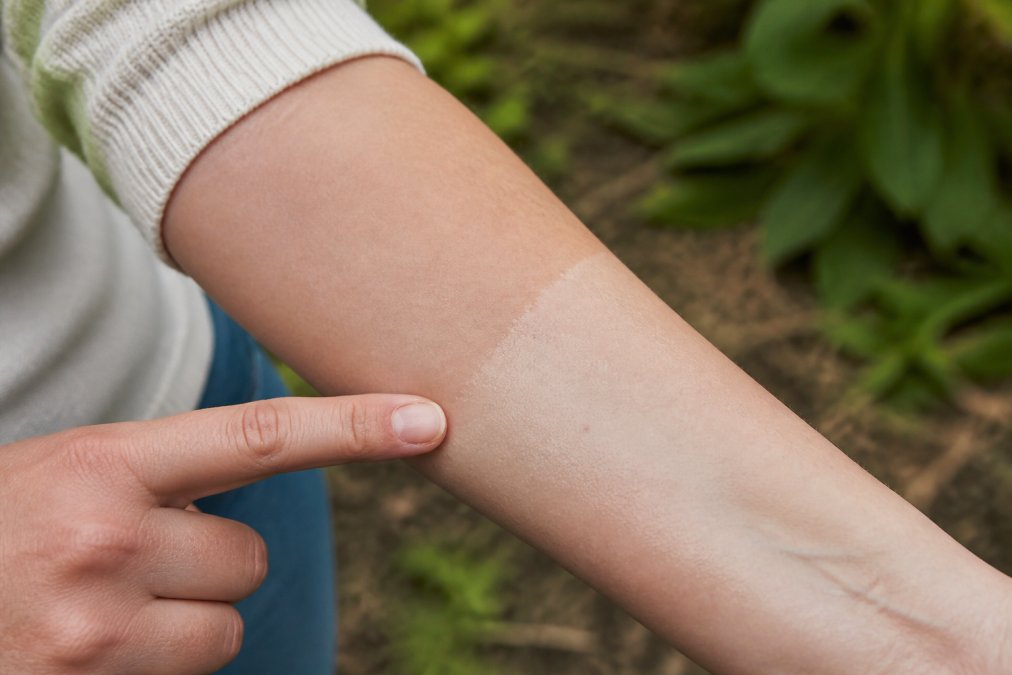
Skin irritation from insect repellents typically manifests in predictable ways. Mild irritation appears as slight redness or a sensation of warmth at the application site. This often resolves within a few hours of washing the product off. Moderate irritation includes localized swelling, itching that persists beyond washing, or a rash confined to the treated area. Severe reactions involve systemic symptoms: hives spreading beyond the application site, difficulty breathing, or facial swelling. Severe reactions require immediate medical attention.
Contact dermatitis, an allergic response to a specific ingredient, differs from irritant reactions. It often develops after repeated exposures and can worsen with each application. If you develop a rash after using a repellent multiple times, discontinue use immediately. Your skin has become sensitized to that formula.
Common mistake: applying a new repellent to large areas without testing first. People often assume that because a product is approved or natural, it won't cause problems. Sensitive skin doesn't follow that logic. Patch testing takes minimal time and prevents weeks of skin recovery.
Post-Application Skin Care and Safety Tips
What you do after applying insect repellent significantly impacts how your skin responds. Proper post-application care minimizes irritation risk and maintains your skin barrier.

Wash off repellent as soon as you come indoors or when protection is no longer needed. Leaving repellent on your skin for extended periods increases irritation risk, particularly with DEET-based formulas. Use lukewarm water and gentle soap, avoid hot water, which can further irritate sensitive skin. Pat dry gently rather than rubbing.
After washing, apply a fragrance-free moisturizer to restore your skin barrier. Insect repellents can be drying, and sensitive skin needs immediate hydration to prevent secondary irritation. Choose moisturizers formulated for sensitive skin: look for ingredients like ceramides, glycerin, or hyaluronic acid. Avoid products with fragrance, alcohol, or strong preservatives, which can compound irritation.
If you experience itching or mild irritation after using a repellent, resist the urge to scratch. Scratching breaks your skin barrier and introduces infection risk. Instead, apply a cool compress and use a fragrance-free anti-itch cream if needed. Most mild reactions resolve within 24 hours of washing off the product.
For people with conditions like eczema or rosacea, consider timing your repellent application strategically. Apply it immediately before heading outdoors rather than hours in advance. This minimizes the duration of skin exposure. If you're in an area with high tick pressure and need extended protection, reapply repellent to clothing and gear rather than your skin when possible.
Never apply insect repellent to broken skin, sunburned areas, or skin already irritated by other products. Your compromised barrier cannot tolerate the additional stress. Wait until your skin has fully healed before using repellents on those areas.
Choosing a safe insect repellent for sensitive skin requires understanding both the active ingredients available and your own skin's specific triggers. Picarikin at 10% concentration offers an excellent balance of protection and tolerability for most sensitive skin types. Patch testing before full application prevents larger reactions. TickFree Outdoors provides comprehensive tick and mosquito protection options designed with sensitive skin in mind, backed by fast shipping and dedicated customer support to help you find the right formula for your outdoor adventures. Visit TickFree Outdoors to explore repellent sprays, patches, and yard treatments that deliver peace of mind without compromising skin health.
Frequently Asked Questions
What is the best insect repellent for people with sensitive skin?
The best choice depends on your specific sensitivities. Picaridin at 20% concentration offers strong protection with lower irritation risk than DEET for many people. If you prefer plant-based options, oil of lemon eucalyptus (OLE) and geranium oil work for some users, though they may require more frequent reapplication. Always patch test first, regardless of the product. Health Canada approves several formulations designed for sensitive skin; check labels for hypoallergenic and fragrance-free options.
Is DEET safe for sensitive skin?
DEET can work for sensitive skin, but concentration matters. Lower concentrations (10-15%) reduce irritation risk while still providing protection. Higher concentrations (30%+) may trigger reactions in people with dermatological sensitivities. Start with a patch test on a small area before full application. If redness, itching, or burning occurs, discontinue use and rinse thoroughly. Many people with sensitive skin tolerate picaridin better, so it's worth comparing both options.
How do insect repellent patches work, and are they effective?
Insect repellent patches release active ingredients slowly over time, creating a protective barrier around your body without direct skin contact. They're convenient for extended outdoor stays and reduce the need for frequent reapplication. Effectiveness depends on the active ingredient and environmental conditions. Patches work best when combined with clothing barriers and are ideal for people who want to avoid topical application altogether. They're particularly useful for sensitive skin since they minimize dermal absorption.
How do I patch test a new insect repellent safely?
Apply a small amount (about the size of a coin) to clean, dry skin on your inner forearm or behind your ear. Wait 24-48 hours and observe for redness, itching, swelling, or burning. If no reaction occurs, the product is likely safe for broader use. If irritation develops, rinse immediately with soap and water and discontinue use. Always patch test before full-body application, even if you've used the brand before, since formulations can change. Keep the test area uncovered to allow observation.
This article was written using GrandRanker