

Table of Contents
- Why Sensitive Skin Needs Different Tick Repellent
- Quick Comparison: Top Tick Repellents for Sensitive Skin
- Health Canada Approved Tick Repellent Options
- DEET vs Picaridin for Sensitive Skin: Which Works Better
- How to Apply Tick Repellent Safely on Sensitive Skin
- Tick Bite Prevention Tips Canada: Beyond Repellent
- When to Seek Medical Attention After a Tick Bite
- Conclusion
Tick Repellent for Sensitive Skin: Safe & Effective Options
Last Updated: August 3, 2026
When planning outdoor adventures in Canada's forests, tick repellent for sensitive skin becomes critical as tick populations expand northward and Lyme disease cases rise. At TickFree Outdoors, we understand that choosing the right protection means balancing effectiveness with skin safety. Many assume all repellents trigger irritation, but the reality is more nuanced. The key difference lies in active ingredients, concentration levels, and formulation technology that separates products safe for reactive skin from those that cause problems.
This guide covers everything you need to know about selecting tick repellent for sensitive skin that actually works without compromising your skin health.
Why Sensitive Skin Needs Different Tick Repellent
Standard tick repellents often contain ingredients that trigger dermal sensitivity in reactive skin types. The concentration of active compounds, solvent bases, and preservatives in mass-market formulas can overwhelm skin barriers or activate histamine responses. When your skin is already compromised by eczema, rosacea, contact dermatitis, or general reactivity, exposure to certain repellent chemicals accelerates inflammation.
Products designed for sensitive skin typically use gentler compounds like icaridin or natural alternatives instead of high-dose DEET, employ lower concentrations that maintain efficacy without irritation, and use non-irritating carrier oils or alcohol-free bases. According to Health Canada's guidance on insect repellent safety, certain active ingredients are preferred for individuals with known skin sensitivities.
Patch testing before full application is non-negotiable for sensitive skin. A small amount applied to inner wrist or behind the ear for 24 hours reveals whether your skin will tolerate the product, preventing the frustration of discovering incompatibility mid-hike.
Quick Comparison: Top Tick Repellents for Sensitive Skin
| Product | Active Ingredient | Protection Duration | Best For | Key Advantage |
|---|---|---|---|---|
| PiACTIVE Insect Repellent | Icaridin 20% | Up to 12 hours | Extended outdoor days | Health Canada registered; gentle formulation |
| Sawyer Products 20% Picaridin | Picaridin 20% | Up to 12 hours | All-day protection | Recommended by Public Health Agency of Canada |
| OFF! Botanicals | Oil of Lemon Eucalyptus 10% | Up to 2 hours | Short excursions | Plant-based; minimal irritation risk |
| Natrapel Lemon Eucalyptus | Oil of Lemon Eucalyptus 30% | Up to 6 hours | Moderate outdoor time | CDC-recommended active ingredient |
| PureGard Botanical Repellent | Eucalyptus Citriodora extract | Up to 6 hours (ticks) | Families and pets | All-natural; Health Canada approved |
| OFF! Gentle Insect Repellent | Icaridin 10% | Up to 5 hours | Everyday outdoor use | Odorless; suitable for children 6+ months |
Health Canada Approved Tick Repellent Options
Regulatory approval matters more than marketing claims when choosing tick repellent for sensitive skin. Health Canada's Pest Management Regulatory Agency (PMRA) evaluates insect repellents for safety and efficacy, ensuring approved products meet strict standards for both effectiveness and dermal tolerance.
PiACTIVE Insect Repellent with 20% icaridin holds Health Canada registration and is recommended by the Canadian Pediatric Society for families with young children and sensitive skin. It delivers up to 12 hours of protection against ticks without the irritation profile associated with higher-dose DEET formulations.
Sawyer Products 20% Picaridin is recognized by the Public Health Agency of Canada's Canadian Advisory Committee on Tropical Medicine and Travel as a repellent of first choice for children aged 6 months to 12 years. Picaridin functions similarly to icaridin but has a slightly different molecular structure that some dermatologists find gentler on reactive skin.
PureGard Botanical Repellent is the first all-natural, Health Canada-tested tick repellent derived from Eucalyptus Citriodora tree leaves. Safe for use on humans, dogs, and horses, it eliminates irritation risk associated with synthetic chemicals, though protection duration is moderate at up to 6 hours for ticks.
DEET vs Picaridin for Sensitive Skin: Which Works Better
DEET dominates the repellent market globally, but it's not the best choice for sensitive skin. Concentrations above 20% increase irritation risk, and DEET can dissolve certain plastics and synthetic fabrics. For sensitive skin, picaridin offers comparable tick protection at lower concentrations without these drawbacks.
A 20% picaridin formulation delivers 12 hours of tick protection equivalent to 20-30% DEET while producing fewer dermal side effects. Picaridin doesn't damage plastics or synthetic gear and has a less oily feel on skin. If you have sensitive skin and need 12-hour protection, picaridin 20% is the superior choice.
Icaridin: A Gentler Alternative
Icaridin is structurally similar to picaridin but has a slightly different irritation profile that many dermatologists prefer for reactive skin. Available in 10% and 20% concentrations, icaridin balances protection duration with skin tolerance. The 20% concentration matches picaridin's 12-hour protection window, while the 10% version provides 5 hours for shorter outings.
What makes icaridin particularly valuable for sensitive skin is its non-greasy formulation and minimal odor. Many users report that icaridin feels lighter on skin compared to DEET or picaridin, reducing the sensation of a chemical barrier. Icaridin also works effectively against a broader range of biting insects, including black flies and mosquitoes.
Natural Alternatives: Oil of Lemon Eucalyptus
Oil of lemon eucalyptus (OLE, also called p-menthane-3,8-diol) represents the most effective natural repellent option for sensitive skin. Unlike most essential oils, OLE has undergone rigorous clinical testing and carries Health Canada recognition as an effective tick repellent.
OFF! Botanicals uses 10% OLE and provides up to 2 hours of protection against ticks, suitable for short nature walks or yard work. Natrapel Lemon Eucalyptus offers 30% OLE, extending protection to 6 hours. For individuals committed to avoiding synthetic chemicals, 30% OLE represents a reasonable compromise between skin safety and practical protection duration.
The trade-off with natural alternatives is reapplication frequency. A 2-hour product requires reapplication every 2 hours for all-day protection, while synthetic options extend to 12 hours. For sensitive skin users in moderate-risk environments, this trade-off is often acceptable.
How to Apply Tick Repellent Safely on Sensitive Skin
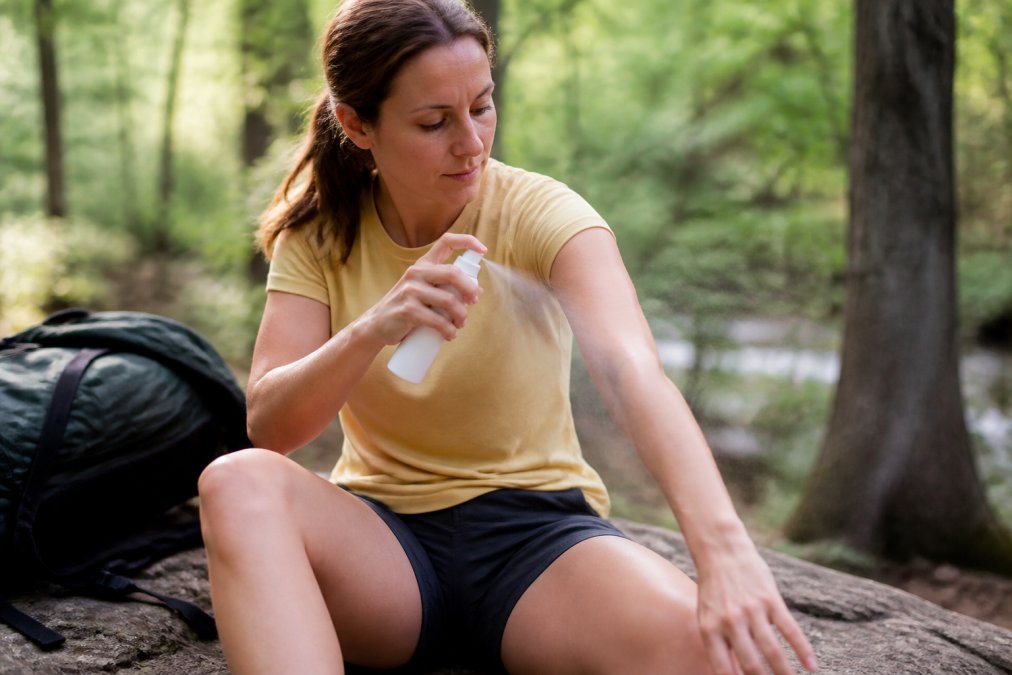
Proper application technique reduces irritation risk and maximizes protection. Apply repellent to your hands, then rub it onto exposed skin areas: arms, legs, neck, and behind ears. Avoid touching your face or eyes during application. For spray products, apply in a well-ventilated area and never spray directly onto your face; instead, spray onto your hands and then apply to facial areas.
Apply repellent to clothing edges as well as skin. Ticks often climb up fabric before finding bare skin, so treating the tops of socks, pant cuffs, and shirt collars provides an additional barrier. Allow the repellent to dry completely before dressing, typically 10-15 minutes. Reapply according to product directions, as sweating, water exposure, and friction all reduce efficacy.
Patch Testing Before Full Application
Before using any new repellent product on sensitive skin, conduct a 24-hour patch test. Apply a small amount (roughly the size of a dime) to the inner surface of your wrist or behind your ear. Observe the test area for 24 hours. Normal results include no visible changes or minimal redness that fades within an hour. Concerning results include itching that persists beyond 30 minutes, hives, blistering, swelling, or increasing redness. If concerning symptoms appear, wash the area thoroughly with cool water and mild soap, then avoid that product.
Post-Application Skin Care
After returning indoors, wash off repellent with soap and cool water. Residual repellent accumulates on skin and can trigger irritation over multiple applications. For sensitive skin, use a gentle, fragrance-free cleanser and avoid harsh scrubbing or hot water.
Apply a fragrance-free moisturizer while skin is still slightly damp to lock in hydration and restore your skin barrier. A barrier-repair moisturizer containing ceramides or hyaluronic acid is particularly beneficial. If irritation develops, apply a hydrocortisone cream (1%) to affected areas. If irritation persists beyond 48 hours or worsens, consult a dermatologist.
Tick Bite Prevention Tips Canada: Beyond Repellent
Repellent is one layer of defense, but comprehensive tick prevention requires multiple strategies. Ticks thrive in specific environments and attach through predictable behaviors. Tick activity peaks in spring and early summer across most Canadian provinces, with peak activity in temperatures between 7°C and 27°C. They congregate in tall grass, leaf litter, shrubby areas, and forest edges.
Avoiding high-risk environments when possible is the first line of defense. Stick to cleared trails and avoid brushing against vegetation. Walk in the center of trails rather than along edges where ticks wait on grass and shrubs. This simple behavior change dramatically reduces tick encounters.

Clothing Treatment with Permethrin
Permethrin is an insecticide that kills ticks on contact. Unlike DEET or picaridin, it doesn't repel ticks but eliminates them before they can bite. Treating clothing, gear, and footwear with permethrin creates a toxic barrier that protects you even if a tick makes contact with your clothing.
Permethrin is applied to fabric, not skin. You can purchase pre-treated clothing or treat garments yourself using permethrin spray or wash-in formulations. One application typically lasts through multiple washes. Lay out your clothing on a clean surface, apply permethrin spray according to product directions (usually 2-3 light coats), and allow the fabric to dry completely before wearing.
Permethrin is safe for clothing but should never be applied to skin. For comprehensive protection, combine permethrin-treated clothing with a skin-applied repellent like picaridin or icaridin. This dual approach provides strong defense against tick attachment.
Identifying High-Risk Environments
Wooded areas with thick undergrowth, particularly those adjacent to deer populations, carry high tick risk. Grasslands and meadows pose moderate risk, particularly in spring and early summer. Urban parks and residential yards adjacent to wooded areas have increasing tick populations as wildlife corridors expand.
Before heading outdoors, research tick activity in your specific region. Provincial health authorities publish tick distribution maps showing areas with established tick populations. This information helps you calibrate your protection strategy.
When to Seek Medical Attention After a Tick Bite
Despite best efforts, tick bites occasionally occur. If you find an attached tick, remove it promptly using fine-tipped tweezers. Grasp the tick as close to the skin as possible and pull straight upward with steady pressure. Avoid twisting or crushing the tick, which can inject pathogens into your skin. After removal, clean the bite area with soap and water, then apply an antiseptic.
Monitor the bite site for the next 30 days. Early Lyme disease presents as a circular rash (erythema migrans) that expands outward from the bite site, often reaching several centimetres or larger. The rash typically appears 3-30 days after the tick bite. If you develop this rash, seek medical attention immediately. Early antibiotic treatment is highly effective at preventing Lyme disease progression.
Other symptoms warranting medical attention include fever, chills, fatigue, joint pain, or neurological symptoms (headache, facial paralysis) appearing within weeks of a tick bite. Contact your healthcare provider or visit an urgent care clinic if these symptoms develop.
TickFree Outdoors recommends keeping a tick removal kit in your hiking pack. These small kits contain fine-tipped tweezers and antiseptic wipes, ensuring you can remove ticks safely even in remote locations. Prompt removal is your best defense against infection.
Conclusion
Protecting yourself from ticks while managing sensitive skin requires choosing the right active ingredient and applying it correctly. The evidence strongly supports icaridin and picaridin as the safest synthetic options for reactive skin, while oil of lemon eucalyptus serves those committed to natural alternatives. Health Canada-approved products like PiACTIVE and Sawyer's picaridin formulation combine safety with efficacy, delivering 12-hour protection without irritation.
Tick prevention doesn't have to mean choosing between skin safety and outdoor protection. TickFree Outdoors offers comprehensive tick protection solutions, premium sprays, repellent patches, and yard treatments, designed specifically for Canadian outdoor enthusiasts who refuse to compromise on either effectiveness or skin health. With fast shipping, great prices, and exceptional customer service, TickFree Outdoors makes it simple to safeguard your family, pets, and yard environment for all your outdoor adventures. Shop all tick protection options and enjoy the outdoors with confidence.
Frequently Asked Questions
What active ingredients in tick repellent are safest for sensitive skin?
Picaridin and icaridin are recommended by Health Canada and the Public Health Agency of Canada for sensitive skin, including use on children 6 months and older. Both are DEET-free and less likely to cause irritation. Oil of Lemon Eucalyptus (OLE) is a natural alternative, though it provides shorter protection (up to 6 hours) compared to synthetic options. Always patch test any new repellent on a small area of skin 24 hours before full application.
How long does tick repellent for sensitive skin typically last?
Duration varies by active ingredient. Icaridin products typically provide 10-12 hours of protection against ticks, while picaridin offers similar duration. Oil of Lemon Eucalyptus products last 5-6 hours. Natural balm-based repellents require more frequent reapplication. Check the product label for specific duration claims, as this affects how often you need to reapply during outdoor activities.
Is patch testing necessary before using a new tick repellent on sensitive skin?
Yes, patch testing is strongly recommended for sensitive skin. Apply a small amount of the repellent to a 2-3 cm area on your inner forearm or behind your ear and wait 24 hours to check for allergic reactions or irritation. This simple step helps identify potential dermal sensitivity before full-body application. If redness, itching, or burning occurs, discontinue use and rinse thoroughly with soap and water.
Can I use tick repellent on my dog if my dog has sensitive skin?
No, tick repellents formulated for human skin should never be applied to pets. Some ingredients safe for humans are toxic to dogs. Instead, consult your veterinarian about tick prevention options specifically designed for pets with sensitive skin. Some natural botanical repellents are marketed as pet-safe, but verify with your vet before use. Your veterinarian can recommend prescription or over-the-counter products appropriate for your dog's skin condition.
Are Health Canada approved tick repellents more effective than natural alternatives?
Health Canada approved repellents like icaridin and picaridin have undergone rigorous testing and typically provide longer-lasting protection (10-12 hours) against ticks compared to most natural alternatives. Natural options like Oil of Lemon Eucalyptus are effective but generally last 5-6 hours and require more frequent reapplication. For high-risk tick areas or extended outdoor exposure, Health Canada approved options offer more reliable protection, though natural formulas may suit those with severe chemical sensitivities.
This article was written using GrandRanker