

Table of Contents
- Why DEET-Free Repellents Matter for Outdoor Protection
- Active Ingredients in DEET-Free Repellents: What Works
- Picaridin vs Oil of Lemon Eucalyptus: Which Suits Your Needs
- Insect Repellent Efficacy Duration: How Long Protection Lasts
- Health Canada Approved Insect Repellents: Safety and Standards
- Choosing by Skin Sensitivity and Application Method
- Application Tips and Reapplication Schedules
- Matching Repellent Choice to Your Environment
Last Updated: August 26, 2026
Why DEET-Free Repellents Matter for Outdoor Protection
Choosing a DEET-free insect repellent has become increasingly important for outdoor enthusiasts who want effective tick and mosquito protection without synthetic chemicals. At TickFree Outdoors, we understand that many people prefer alternatives to DEET while still needing reliable defense against vector-borne diseases like Lyme disease and West Nile virus.
A DEET-free insect repellent uses active ingredients other than N,N-diethyl-meta-toluamide to create a protective barrier against biting insects. These alternatives work through different mechanisms, some repel insects through volatile compounds, others through dermal absorption patterns that disrupt insect behavior.
Active Ingredients in DEET-Free Repellents: What Works
The most effective DEET-free insect repellents rely on proven active ingredients that have undergone rigorous safety and efficacy testing. Health Canada recognizes these ingredients as legitimate alternatives, each with distinct characteristics influencing protection duration, skin feel, and insect coverage.
Picaridin: Efficacy and Protection Profile
Picaridin is a synthetic compound that has become the gold standard for DEET-free protection. At 20% concentration, picaridin provides protection duration comparable to DEET formulations, typically lasting 8 to 14 hours depending on activity level and environmental exposure. The ingredient works by creating a sensory barrier that disrupts an insect's ability to locate and land on skin.
For Canadian outdoor environments, picaridin offers broad-spectrum efficacy against both mosquitoes and ticks. A 20% picaridin spray applied to exposed skin and clothing provides substantial protection without the greasy feel some people report with DEET. The formulation absorbs quickly, doesn't degrade clothing or gear materials, and maintains its protective barrier during physical activity or light perspiration, making it ideal for hikers and hunters.
Oil of Lemon Eucalyptus: Natural Alternative Benefits
Oil of lemon eucalyptus (OLE), also known as para-menthane-3,8-diol or PMD, is a natural extract derived from the Australian lemon eucalyptus tree and approved by Health Canada as an active repellent ingredient. At 10% concentration, OLE provides protection duration of approximately 6 to 8 hours, making it suitable for shorter outdoor excursions or supplemental reapplication strategies.
OLE carries a mild citrus scent that many users find pleasant and doesn't leave a heavy residue on skin. For gardeners spending a few hours tending their yard or families on a casual picnic, OLE offers adequate protection with a more natural feel. However, protection duration is shorter than picaridin, requiring more frequent reapplication for full-day outdoor activities in high-tick environments where Lyme disease risk is significant.
IR3535 and Other Health Canada Approved Options
IR3535 is another synthetic active ingredient approved by Health Canada that offers a middle ground between picaridin and natural alternatives. This ingredient provides moderate protection duration, typically 4 to 8 hours, and works through a different mechanism than picaridin, making it valuable for people who prefer variety in their rotation of repellents or who experience skin sensitivity to specific formulations.
Health Canada's approval process for active ingredients involves rigorous testing of safety and efficacy data, ensuring that any repellent labeled with an approved active ingredient has demonstrated effectiveness against target insects and acceptable dermal safety profiles.
Picaridin vs Oil of Lemon Eucalyptus: Which Suits Your Needs
The choice between picaridin and OLE depends on your specific use case, exposure level, and personal preferences regarding formulation and scent.
Picaridin wins for extended outdoor time in high-tick environments. If you're a hunter spending 8 to 10 hours in the field, a hiker tackling a full-day trail, or someone managing a property adjacent to wooded areas where tick exposure is constant, picaridin's 8 to 14-hour protection duration means you can focus on your activity rather than reapplication schedules. The ingredient's stability under perspiration and UV exposure makes it reliable for physical activity.
Oil of lemon eucalyptus suits shorter exposures and people prioritizing natural formulation. A gardener spending two to three hours tending beds, a family on a weekend picnic, or someone taking a casual evening walk benefits from OLE's pleasant citrus scent and lighter feel. In regions where Lyme disease prevalence is high and tick season extends for months, picaridin's extended protection duration justifies its use. In lower-risk areas or during shoulder seasons with fewer ticks, OLE provides adequate protection with a formulation many people prefer.
Insect Repellent Efficacy Duration: How Long Protection Lasts
Protection duration is one of the most practical factors influencing your choice of DEET-free insect repellent. A repellent that wears off after two hours requires constant reapplication, while one lasting eight hours lets you focus on your activity.
Efficacy duration depends on several factors beyond the active ingredient itself. Concentration of the active ingredient matters significantly, a 20% picaridin formulation outlasts a 10% version. Environmental conditions influence duration: heat, humidity, and direct sunlight can accelerate breakdown of volatile compounds. Physical activity and perspiration reduce protection time because moisture on skin dilutes the repellent layer.
For picaridin at 20% concentration applied to exposed skin, expect 8 to 14 hours of protection under typical outdoor conditions. For OLE at 10% concentration, protection typically lasts 6 to 8 hours under similar conditions, with shorter duration in hot weather.
Health Canada Approved Insect Repellents: Safety and Standards
Health Canada's regulatory framework for insect repellents ensures that approved products meet strict safety and efficacy standards. The approval process requires manufacturers to submit data demonstrating that the active ingredient is safe for human use at specified concentrations and that the product delivers the claimed protection against target insects.
A repellent with a Health Canada-approved active ingredient has undergone safety testing for dermal absorption, toxicity, and potential adverse effects. Safety guidelines emphasize that approved repellents should be applied to exposed skin and clothing, not under clothing or on broken skin. For children under three years old, Health Canada recommends consulting a healthcare provider before using repellents. For children three and older, repellents with approved active ingredients are considered safe when applied according to label directions.
Choosing by Skin Sensitivity and Application Method
Different people tolerate different formulations, and skin sensitivity often determines which DEET-free repellent works best for you.
For Sensitive Skin and Children
People with sensitive skin often find picaridin better tolerated than DEET, but individual responses vary. Picarikin at 20% concentration generally absorbs quickly and doesn't leave a heavy residue. For people with eczema, dermatitis, or reactive skin, testing a small amount on a patch of skin before full application helps identify potential irritation.
Oil of lemon eucalyptus appeals to many people with sensitive skin because of its natural origin and lighter feel. However, some individuals experience irritation from essential oils, so patch testing remains important.
For children, Health Canada-approved repellents are safe when used according to label directions. Never apply repellent to a child's hands, as they may transfer it to their mouth. Instead, apply to your own hands first, then rub onto the child's exposed skin and clothing. For very young children, clothing that covers skin provides a physical barrier that reduces reliance on chemical repellents.

Sprays, Patches, and Clothing Treatments
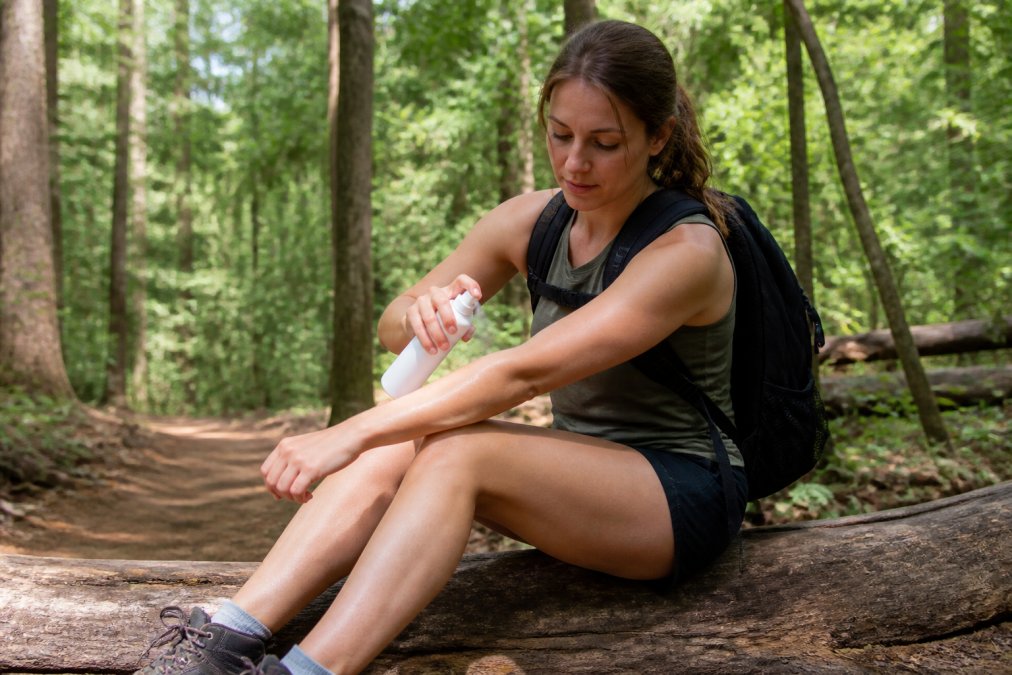
Spray formulations offer broad coverage and quick application, making them practical for hikers and hunters who need to reapply during outdoor time. Sprays allow you to target specific exposed areas, ankles, wrists, neck, without covering your entire body.
Patches represent a newer delivery method where active ingredient is embedded in an adhesive patch worn on clothing. Patches provide consistent, hands-free protection without the need to reapply spray throughout the day. However, patches typically cover only a small area, so they work best as supplemental protection on high-exposure zones like ankles and wrists.
Clothing treatments involve applying repellent directly to fabric rather than skin. This approach keeps the active ingredient off your skin while still providing protection. Clothing treatments often last longer than skin applications because fabric doesn't absorb moisture the way skin does. For hunters and hikers, treating clothing at the start of the season provides season-long protection without daily reapplication.
Application Tips and Reapplication Schedules
Proper application technique significantly influences how effectively your DEET-free repellent protects you. For spray repellents, apply in short bursts to exposed skin and clothing. Cover ankles thoroughly, ticks often climb from ground level and encounter repellent-treated ankles first. Treat wrists, neck, and any gaps between clothing where skin shows. For hikers wearing long pants, spray the outside of pant legs and tuck pants into socks to create a barrier. Allow spray to dry before putting on clothing or touching your face.
Reapplication timing depends on the active ingredient and your activity level. Picaridin at 20% typically requires reapplication every 8 to 14 hours, but sweating, swimming, or heavy rain necessitates more frequent reapplication. Oil of lemon eucalyptus may need reapplication every 4 to 6 hours in active use.
Matching Repellent Choice to Your Environment
Your specific outdoor environment should influence which DEET-free repellent you choose.
High-tick environments, particularly areas where Lyme disease is endemic, demand longer protection duration and broader-spectrum efficacy. Picaridin at 20% concentration is the appropriate choice for hunters, hikers, and homeowners in these regions. The extended protection duration means you're covered throughout a full day of outdoor activity without relying on frequent reapplication.
Moderate-exposure environments, suburban yards with some wooded edges, casual hiking on maintained trails, or seasonal outdoor work, suit oil of lemon eucalyptus well. The shorter protection duration becomes less problematic when your outdoor time is measured in hours rather than full days. During peak tick season when nymphs are most active and disease transmission risk is highest, using the longest-lasting protection available makes sense.
According to Health Canada's guidance on insect repellent safety, choosing an approved active ingredient appropriate to your exposure level and following application instructions ensures maximum protection.
Research from the Canadian Medical Association Journal on vector-borne disease prevention emphasizes that consistent repellent use remains one of the most effective personal protection strategies against tick-borne illnesses.
For outdoor enthusiasts managing tick exposure across multiple seasons and environments, TickFree Outdoors offers premium DEET-free sprays, patches, and clothing treatments that address the specific protection needs of Canadian outdoor environments. Our product line includes picaridin-based sprays for extended protection, OLE formulations for shorter exposures, and clothing treatments that provide season-long defense. With fast shipping and dedicated customer service, TickFree Outdoors makes it simple to maintain consistent tick protection across all your outdoor activities.
| Active Ingredient | Protection Duration | Best For | Skin Feel | Scent |
|---|---|---|---|---|
| Picarikin 20% | 8-14 hours | Full-day outdoor activities, high-tick areas | Quick-absorbing, light | Minimal |
| Oil of Lemon Eucalyptus 10% | 6-8 hours | Shorter outings, casual exposure | Light, natural feel | Citrus |
| IR3535 | 4-8 hours | Variable exposure, rotation option | Moderate | Minimal |
Choosing the right DEET-free insect repellent means balancing your exposure level, activity duration, and personal preferences around formulation and scent. Picarikin delivers the longest protection for serious outdoor enthusiasts in high-tick regions, while oil of lemon eucalyptus suits shorter exposures and people preferring natural formulations. Health Canada-approved active ingredients ensure safety and efficacy, regardless of which option you select. Start with the repellent that matches your most common outdoor scenario, then expand your toolkit as you encounter different exposure levels and environments. TickFree Outdoors provides the premium DEET-free products and expert guidance you need to protect yourself, your family, and your pets throughout every season of outdoor activity.
Frequently Asked Questions
What is the most effective DEET-free insect repellent active ingredient?
Picaridin at 20% concentration offers strong protection among DEET-free options, providing efficacy comparable to lower-concentration DEET products. Oil of lemon eucalyptus (OLE) and IR3535 are Health Canada approved alternatives, though picaridin typically delivers longer-lasting protection. Your choice depends on exposure level, skin sensitivity, and how long you need protection to last.
How long does DEET-free insect repellent efficacy last on skin or clothing?
Protection duration varies by active ingredient and concentration. Picaridin at 20% typically lasts 8-14 hours on skin; oil of lemon eucalyptus lasts 6-8 hours; IR3535 provides 4-8 hours. Reapplication frequency increases in heavy tick areas or after swimming. Clothing-based treatments and patches often extend protection compared to skin application.
Are DEET-free repellents as effective as DEET-based products?
Health Canada approved DEET-free repellents are effective against ticks and mosquitoes when used correctly. Picaridin at 20% matches DEET efficacy for most scenarios. However, in high-risk vector-borne disease areas, DEET-based products may offer slightly longer protection windows. Effectiveness also depends on proper application, concentration levels, and reapplication schedules.
Which DEET-free repellents does Health Canada approve?
Health Canada approves picaridin, oil of lemon eucalyptus (OLE), and IR3535 as active ingredients in registered insect repellents. Always check product labels for the Natural and Non-prescription Health Products Directorate (NNHPD) registration number to confirm approval. Approved products meet safety and efficacy standards for tick and mosquito protection.
This article was written using GrandRanker