

Table of Contents
- How Essential Oils Work as Mosquito Repellents
- Top Essential Oils for Mosquito Protection
- How Long Do Essential Oil Repellents Last on Your Skin
- Risks of Using Essential Oils on Skin and Safety Precautions
- Health Canada Approved Mosquito Repellents: Where Essential Oils Stand
- Essential Oils vs. Synthetic Repellents: What the Science Shows
- Realistic Expectations and Limitations of Natural Repellents
- Conclusion
Last Updated: August 28, 2026
How Essential Oils Work as Mosquito Repellents
Essential oils repel mosquitoes through volatile organic compounds that mask or interfere with the insects' ability to locate hosts. When applied to skin, aromatic molecules evaporate into the air, creating a chemical barrier that disrupts the mosquito's olfactory detection system. Mosquitoes locate humans primarily by sensing carbon dioxide and lactic acid, and certain essential oil compounds can overwhelm or confuse these sensory pathways (peer-reviewed research).
Essential oils like eucalyptus, citronella, and lavender contain compounds such as limonene and geraniol that interfere with the insect's ability to detect a host. However, this protection is temporary. Because essential oils are volatile by nature, they evaporate quickly from your skin and clothing. This volatility is both their strength and critical weakness, they work through airborne chemical signals that dissipate over time.
At TickFree Outdoors, we understand that many people turn to essential oils hoping for a natural alternative to synthetic repellents. The appeal is clear: plant-derived compounds feel safer and more environmentally friendly. But the chemistry reveals an important reality: volatility that makes essential oils smell pleasant also means their repellent efficacy drops significantly within hours of application.
The effectiveness of an essential oil repellent depends on several factors: the specific oil used, the concentration applied, environmental conditions like temperature and humidity, and the intensity of mosquito activity in your area. A diluted essential oil applied in a cool, shaded environment may provide modest protection for a short period, while the same oil applied in direct sunlight will evaporate faster, reducing protection to minutes rather than hours.
Top Essential Oils for Mosquito Protection
Not all essential oils offer equal repellent properties. Research has identified several oils with measurable mosquito-deterrent compounds, though their protection duration remains limited compared to synthetic alternatives.
Eucalyptus citriodora contains high concentrations of citronellal, a compound specifically recognized for its repellent properties against mosquitoes, including the Aedes aegypti species that transmits dengue and other diseases (peer-reviewed research). When applied at proper dilution ratios, eucalyptus oil can provide protection for 2-4 hours in ideal conditions.
Citronella oil is perhaps the most traditional natural mosquito repellent. Its primary active compound, citronellal, has been used in botanical repellents for decades. However, citronella's volatility is particularly pronounced, it evaporates rapidly, which is why citronella candles require continuous burning to maintain any protective effect.
Lavender oil offers a gentler option that many people find less irritating to apply directly to skin. While lavender does contain repellent compounds, its mosquito-deterrent properties are weaker than eucalyptus or citronella.
Lemongrass and peppermint oils contain compounds that can repel mosquitoes, though their duration of protection is similarly short. Peppermint can cause skin sensitization in some individuals, especially when applied undiluted or in high concentrations.

The challenge with all these oils is consistency. The repellent compounds in essential oils vary based on plant source, growing conditions, and extraction methods. This variability is one reason synthetic repellents like DEET and Picaridin have become the standard for serious mosquito protection, their chemical composition is consistent and their efficacy has been rigorously tested across diverse conditions.
How Long Do Essential Oil Repellents Last on Your Skin
Essential oil repellents typically provide meaningful protection for 30 minutes to 2 hours, depending on the specific oil, dilution ratio, and environmental conditions. In many practical scenarios, effective protection falls toward the shorter end of that range.
Temperature and humidity dramatically affect protection duration. In hot, humid conditions, exactly the environments where mosquito exposure is highest, essential oils evaporate faster. A repellent that lasts 2 hours in a cool, shaded setting might last only 45 minutes in direct sun with high humidity. Sweating accelerates evaporation further, reducing protection time significantly during physical activity.
The dilution ratio you use also determines duration. A proper dilution in a carrier oil (typically 3-10% essential oil concentration) creates a more stable barrier, extending protection somewhat, though still not to the 6-8 hour range that synthetic repellents provide.
Reapplication frequency becomes the practical cost of using essential oil repellents. For extended outdoor time, especially in high-risk areas for mosquito-borne diseases, you're looking at reapplying every 1-2 hours. For short outdoor activities like a 30-minute walk or sitting on a patio for an hour, essential oils can work adequately.
Risks of Using Essential Oils on Skin and Safety Precautions
Essential oils are not automatically safe simply because they're natural. Some compounds can cause skin sensitization, phototoxicity, or allergic reactions in susceptible individuals.
Skin sensitization is the most common concern. Certain essential oil compounds, particularly citronella and lemongrass, can trigger contact dermatitis or allergic reactions with repeated application. Symptoms may include redness, itching, burning, or rash development.
Phototoxicity is a specific risk with citrus-derived oils like lemongrass. These oils contain compounds that can react with UV radiation, causing severe burns or hyperpigmentation on exposed skin.
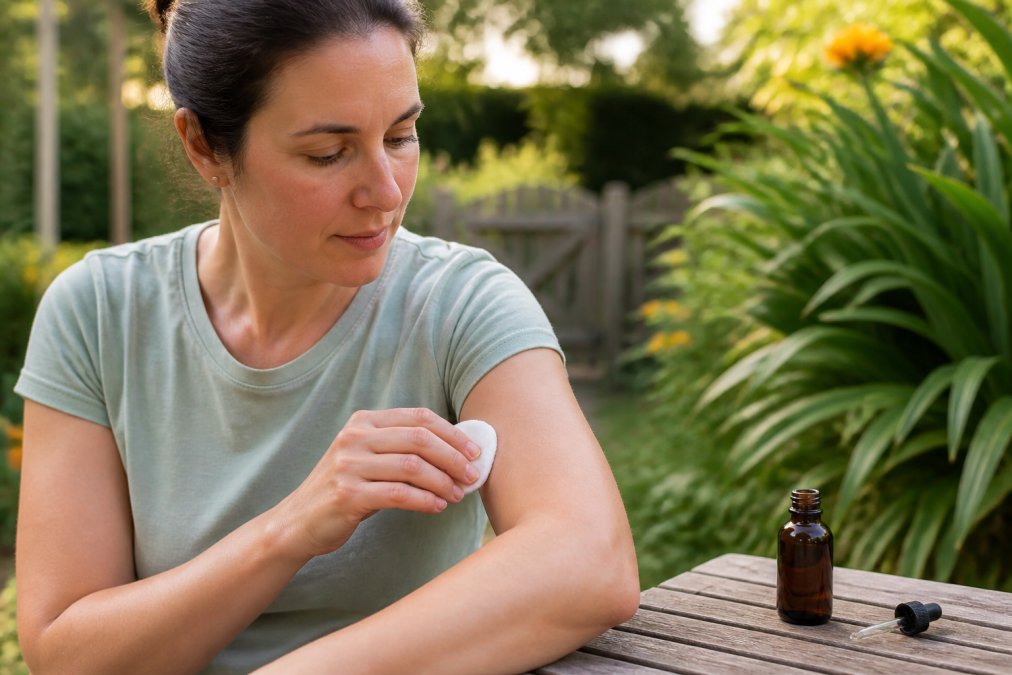
Proper dilution is non-negotiable. Essential oils should never be applied undiluted to skin. A safe dilution ratio for topical application is typically 2-5% essential oil in a carrier oil (such as coconut, jojoba, or almond oil). This means mixing roughly 6-15 drops of essential oil per tablespoon of carrier oil.
Patch testing before full application prevents unexpected reactions. Apply a small amount of your diluted essential oil blend to a small area of skin and wait 24-48 hours. If no redness, itching, or irritation develops, the dilution is likely safe for broader use.
Age-specific safety guidelines matter significantly. Essential oils should not be applied to infants or very young children without explicit guidance from a pediatrician. Pregnant individuals should consult healthcare providers before using certain essential oils, as some compounds may pose risks during pregnancy.
Individuals with sensitive skin, eczema, or a history of allergic reactions should avoid essential oil repellents entirely or use them only under medical supervision.
Health Canada Approved Mosquito Repellents: Where Essential Oils Stand
Health Canada regulates mosquito repellents through the Pest Control Products Act. Approved active ingredients for topical mosquito repellents include DEET, Picaridin, and IR3535. These synthetic compounds have undergone rigorous safety and efficacy testing, with documented protection durations and established safe application guidelines.
Essential oils are not currently approved by Health Canada as active ingredients in registered pest control products for mosquito repellency. While some essential oil-based products are sold in Canada, they are typically marketed as cosmetics or natural products rather than as regulated pest control products. This regulatory distinction matters: approved pest control products have documented efficacy claims and must meet specific safety standards, while unregulated natural products make no such guarantees.
For serious mosquito protection, particularly in areas with mosquito-borne disease risk, Health Canada-approved repellents with DEET or Picaridin provide the most reliable protection. DEET concentrations of 20-30% provide 4-6 hours of protection against mosquitoes, significantly outperforming essential oils. Picaridin at 20% concentration offers similar protection duration with a lower likelihood of skin irritation for some users.
TickFree Outdoors recognizes that many customers prefer natural options when possible, but we also understand the importance of genuine protection in high-risk environments. Our approach balances both preferences: we offer natural repellent options for lower-risk situations while recommending Health Canada-approved products for serious mosquito exposure.
Essential Oils vs. Synthetic Repellents: What the Science Shows
The core difference between essential oils and synthetic repellents comes down to volatility, consistency, and duration. Synthetic repellents like DEET and Picaridin are designed to remain on skin longer, providing extended protection.
Protection duration is where the gap is most obvious. DEET at 20-30% concentration provides 4-6 hours of protection. Picaridin at 20% offers similar duration. Essential oils typically provide 1-2 hours at best, often much less in warm or humid conditions. For a full day of outdoor activity, you're looking at 3-4 reapplications with essential oils versus one application with a synthetic repellent.
Consistency and reliability favor synthetics. Every bottle of DEET-based repellent from a major manufacturer contains the same concentration and composition. Essential oils vary based on source, processing, and storage, making it difficult to predict how much protection you'll actually get from any given application.
Skin irritation is sometimes cited as an advantage of essential oils, but the data is mixed. While some people find DEET irritating, others have no issues. Essential oils can cause sensitization and allergic reactions in susceptible individuals. Neither category is universally "safer", individual tolerance varies significantly.
The honest assessment: synthetic repellents are more effective for serious mosquito protection. Essential oils offer a lower-barrier option for casual outdoor exposure when protection duration is less critical.
Realistic Expectations and Limitations of Natural Repellents
Essential oil repellents work best when expectations are aligned with their actual capabilities. They're not a substitute for Health Canada-approved repellents in high-risk situations, but they can provide modest protection for low-risk scenarios.
Where essential oils make sense: A short walk in your neighborhood during early evening, a backyard gathering when mosquito activity is light, or casual outdoor time in areas with low disease transmission risk.
Where essential oils fall short: Extended hiking or camping in wooded areas, travel to regions with high mosquito-borne disease transmission, or any situation where you'll be outdoors for more than 2-3 hours without shelter. The constant reapplication required becomes impractical.
Application frequency protocols matter more with essential oils than with synthetics. If you're using an essential oil repellent, set a timer for reapplication every 60-90 minutes, depending on conditions. Don't rely on smell as an indicator, by the time you notice the scent fading, protection may already be compromised.
A common mistake is assuming that because something is natural, it requires no safety precautions. Essential oils demand the same careful handling as any topical product: proper dilution, patch testing, and attention to individual sensitivity.
Understanding these limitations upfront helps you choose the right tool for your actual situation.
Conclusion
Essential oils offer a natural-feeling option for mosquito repellency, but their effectiveness is limited by fundamental chemistry: volatile compounds that smell pleasant evaporate quickly, leaving you with protection measured in hours rather than the full day that serious outdoor exposure demands. They work best for brief, low-risk outdoor activities in areas with light mosquito pressure.
For genuine protection against mosquito-borne disease risk or extended outdoor time, Health Canada-approved repellents with DEET or Picaridin remain the evidence-based choice. TickFree Outdoors provides both options because we understand that protection needs vary. Whether you're looking for a natural repellent for casual outdoor time or a serious solution for tick and mosquito protection during extended outdoor adventures, our premium sprays and repellent patches are designed to keep you safe. Health Canada's guidance on pest control products confirms that approved active ingredients offer the most reliable protection. Shop all TickFree Outdoors solutions and get the outdoor safety you can trust, with fast shipping and exceptional customer service.
Frequently Asked Questions
Q: Which essential oils are most effective at repelling mosquitoes?
A: Eucalyptus citriodora, lavender, citronella, and peppermint show the strongest repellent properties in research. Eucalyptus citriodora is particularly noted for its geraniol content, which masks the carbon dioxide and lactic acid signals mosquitoes use to locate hosts. However, effectiveness depends heavily on concentration, carrier oil quality, and application frequency, essential oils alone rarely provide reliable protection for extended outdoor exposure.
Q: How long do essential oil repellents actually last on skin?
A: Most essential oil repellents last 30 minutes to 2 hours on skin, depending on the oil's volatility and dilution ratio. Volatile organic compounds in essential oils evaporate quickly, especially in warm weather or with perspiration. This short protection window is a major limitation compared to synthetic alternatives like DEET or Picaridin, which can provide 4-8 hours of protection at standard concentrations.
Q: What are the main risks of applying essential oils directly to skin?
A: Undiluted essential oils can cause skin sensitization, allergic reactions, and phototoxicity (sun damage) with certain oils like citronella and bergamot. Patch testing is essential before widespread use. Additionally, some essential oils are not safe for children or pregnant individuals. Always dilute oils in a carrier oil before topical application, follow age-specific guidelines, and consult product labels for contraindications.
Q: Are essential oil repellents approved and regulated by Health Canada?
A: Health Canada regulates mosquito repellents through the Pest Control Products Act. Most essential oil products sold as repellents are not formally approved as pesticides; they're marketed as cosmetics or natural products with limited regulatory oversight. Products claiming to repel disease-carrying mosquitoes should carry proper Health Canada registration. Always check product labeling to confirm regulatory status before purchase.
This article was written using GrandRanker