

Table of Contents
- Quick Comparison Table
- How We Evaluated Yard Tick Sprays
- Professional Tick Control Services
- DIY Yard Sprays and Treatments
- Natural Tick Repellent for Yard Protection
- When to Spray for Ticks: Timing and Seasonality
- How to Prevent Ticks in Backyard: Integrated Strategies
- Which Solution Should You Choose?
Last Updated: August 19, 2026
Quick Comparison Table
| Product/Service | Type | Best For | Key Advantage | Duration |
|---|---|---|---|---|
| TickFree Outdoors | Personal & Yard Protection | Comprehensive tick defense | Canadian-made, multi-use solutions | Varies by product |
| BuzzSkito Tick Control | Professional Service | Yard-wide control | Health Canada-approved residual treatment | Up to 30 days per application |
| Mosquito Shield Tick Shield | Professional Service | Hands-off protection | Long-lasting barrier treatment | Up to 30 days |
| Sawyer Permethrin | DIY Clothing Treatment | Gear and apparel | 6-week fabric protection | 6 weeks or 6 washes |
| Safer's End-All II | Organic Spray | Garden and limited yard use | OMRI-listed for organic gardening | Contact kill |
| PureGard Botanical Repellent | Personal Use | Skin and pet application | 30% refined lemon eucalyptus, Health Canada-registered | 5 hours |
| AtlanTick Tick Attack | Personal Use | Skin and pet application | Natural OLE formula, safe for sensitive skin | 5 hours |
How We Evaluated Yard Tick Sprays
Choosing the right yard spray for ticks requires understanding what works in your environment. We evaluated each solution across effectiveness against different tick life stages, safety for children and pets, residual protection duration, ease of application, and suitability for your region's tick ecology.
Professional services dominate when you need comprehensive coverage, targeting blacklegged ticks and American dog ticks at every life stage. DIY sprays work best as part of an integrated approach paired with habitat modification. Personal repellents protect you and your pets during outdoor time, not your yard itself.
The distinction matters. Yard sprays create a protective perimeter; personal products keep ticks off your skin and clothing. Most people need both strategies working together.
Professional Tick Control Services
Professional services represent the gold standard for yard-wide tick management. These strategically applied treatments create a residual protective zone around your property.
BuzzSkito Tick Control
BuzzSkito operates across Ontario with a Health Canada-approved residual acaricide targeting blacklegged ticks. They focus on perimeter and microhabitats where ticks congregate: lawn-to-woods transitions, brush edges, and dense leaf litter areas.
A standard treatment costs from $99 per application, with seasonal packages running $497-$597 for the recommended 5-spray program (May through September). Each application provides up to 30 days of protection and is safe for children and pets after a 30-minute drying period.
BuzzSkito's strength is their seasonal timing strategy. They understand that nymphs emerge in late spring and adults become active in fall. Their 5-spray schedule aligns with these windows, maximizing effectiveness. The residual protection means you're not reapplying weekly like DIY sprays.
Professional services don't eliminate all ticks, wildlife constantly reintroduces them. You're reducing population density, not achieving zero ticks. For properties bordering wooded areas, expect ongoing reintroduction, especially in fall.
Ontario's blacklegged tick ecology and Lyme disease risk
Mosquito Shield Tick Shield
Mosquito Shield operates nationally with a barrier treatment system designed for residential yards. Their tick shield service applies a specially formulated treatment lasting up to 30 days per application.
Pricing for single visits in Ontario typically ranges from $99-$200 for standard residential lots, with seasonal packages available. They recommend reapplication every 60-75 days for sustained protection. The treatment is family and pet-safe after drying.
Mosquito Shield's strength is their integrated approach, they address both ticks and mosquitoes with the same service. Their barrier treatment targets ticks at all life stages, reducing population density across your entire yard rather than just perimeter areas.
The trade-off is dependence on scheduling appointments. If you miss a window, protection lapses.
Tick Shield Ontario
Tick Shield Ontario specializes exclusively in Ontario's tick and mosquito challenges, offering targeted perimeter and yard treatments with seasonal protection plans designed for the region's specific pest ecology.
Pricing is available by quote only, which makes upfront budgeting harder but allows customization based on your property size and tick risk assessment.
Their advantage is hyperlocal expertise. They understand Ontario's blacklegged tick emergence timing, risk zones, and seasonal patterns that drive treatment scheduling. The downside is limited transparency on cost and availability.
DIY Yard Sprays and Treatments
DIY solutions give you control over timing and budget but require more hands-on effort and frequent reapplication than professional services.
Sawyer Permethrin for Clothing and Gear
Sawyer's 0.5% permethrin spray treats clothing, boots, socks, and camping gear, not yards. You spray it on fabric and it bonds for up to 6 weeks or 6 washes, whichever comes first.
Permethrin kills ticks on contact and repels them. It's odorless after drying and won't stain most fabrics. A 24 oz bottle costs roughly $24-$38 CAD and treats multiple outfits.
The appeal is durability. Once applied to clothing, you get persistent protection through multiple outdoor outings without reapplication. This makes it ideal for hunters, hikers, and campers.
The critical limitation: it's not for skin application. Higher-concentration permethrin products used for yard spraying are restricted to licensed applicators in Canada, making DIY yard spraying with permethrin impractical for most homeowners.
Safer's End-All II Insecticide Miticide Acaricide
Safer's End-All II is an organic-compliant spray containing potassium salts of fatty acids, pyrethrin, and neem oil. It's OMRI-listed for organic gardening and kills insects on contact.
The product is marketed primarily for plant pests, not yard tick control. It requires direct contact with insects and lacks residual protection, so you'd need to reapply frequently, potentially multiple times per week during peak tick season.
A 1-liter ready-to-use bottle costs approximately $15-$25 CAD. The advantage for gardeners is organic compliance and safety for food-growing areas. The disadvantage for tick control is that it's not purpose-built for yard-wide tick management.
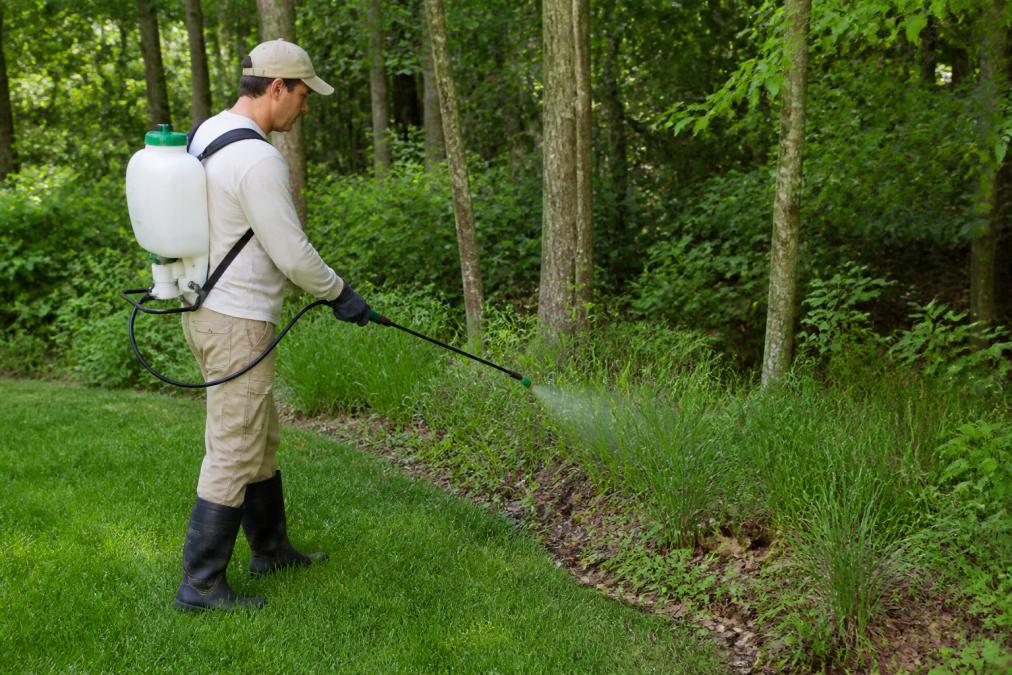
Natural Tick Repellent for Yard Protection
Natural repellents repel ticks rather than kill them, making them suitable for personal use and limited yard applications, but not replacements for professional yard treatments when you need comprehensive control.
PureGard Botanical Repellent Spray
PureGard is a Canadian-made, Health Canada-registered botanical repellent containing 30% refined lemon eucalyptus extract (OLE). It delivers documented 5-hour tick protection when applied to skin and clothing and is safe for humans and dogs.
A 60ml bottle costs $12.99 CAD, and a 240ml bottle costs $34.99 CAD. The scent is light and fresh. PureGard's strength is that it's locally produced and Health Canada-registered, meeting Canadian safety and efficacy standards.
The limitation is duration. Five hours means you need to reapply during a full day outdoors or before evening activities.
AtlanTick Tick Attack Botanical Insect Repellent
AtlanTick Tick Attack uses oil of lemon eucalyptus (OLE) as its active ingredient and is Health Canada-approved for tick repellency. It provides up to 5 hours of protection and is safe for humans, dogs, and pregnant women.
At $12.99 CAD for a 60ml bottle, it's similarly priced to PureGard. Both products rely on OLE, which is well-established as an effective tick repellent. The choice often comes down to scent preference and packaging size.
When to Spray for Ticks: Timing and Seasonality
Tick seasonality in Canada varies by region, but nymphs emerge in late spring and peak through early summer. Adults become active again in fall. Winter dormancy slows tick activity significantly.
For professional yard treatments, the optimal window is late April through May, before nymphs reach peak activity. A second application in late August through September targets adult tick emergence. The recommended 5-spray seasonal program aligns with these peak activity windows.
If you're using DIY sprays, timing matters equally. Applying a yard spray in October when tick activity is declining wastes product and effort. The sweet spot is just before nymphs emerge and again as adults become active in fall.
Personal repellents should be applied before any outdoor activity in tick-prone areas, regardless of season.
Humidity matters as much as temperature. Ticks are most active in humid conditions. Monitor local conditions and adjust your treatment timing accordingly.
Public Health Agency of Canada guidance on Lyme disease risk and tick seasonality
How to Prevent Ticks in Backyard: Integrated Strategies
The most effective tick control combines multiple approaches. Professional yard treatment alone won't eliminate ticks if your property provides ideal tick habitat. Habitat modification alone won't protect you during outdoor time. Personal repellents alone won't reduce the tick population in your yard. Integrated pest management (IPM) uses all three.
Habitat Modification
Ticks thrive in dense leaf litter, tall grass, and brush. Removing this habitat makes your yard less attractive to ticks.
Start at the yard-to-woods transition. Clear leaf litter, trim brush back 1-2 meters, and mow grass short. Create a buffer zone that's visibly open. Remove fallen branches and deadwood where ticks shelter. Stack firewood away from the house and off the ground.
If you have a wooded edge, consider selective thinning to reduce density. More sunlight means drier conditions, which ticks dislike.
Barrier Treatment Application
If using a professional service, they'll handle application. For DIY sprays, focus on tick microhabitats: the lawn-to-woods edge, brush areas, leaf litter zones, and tall grass patches. Spot treatment of high-risk areas is more efficient than broadcast application.
Post-Application Lawn Care
Avoid the treated area for the drying period (typically 30 minutes to 2 hours). Don't rake or disturb treated leaf litter for at least 24 hours. Mowing the lawn after treatment is generally safe once it's dry, but check the product label.
Equipment Maintenance
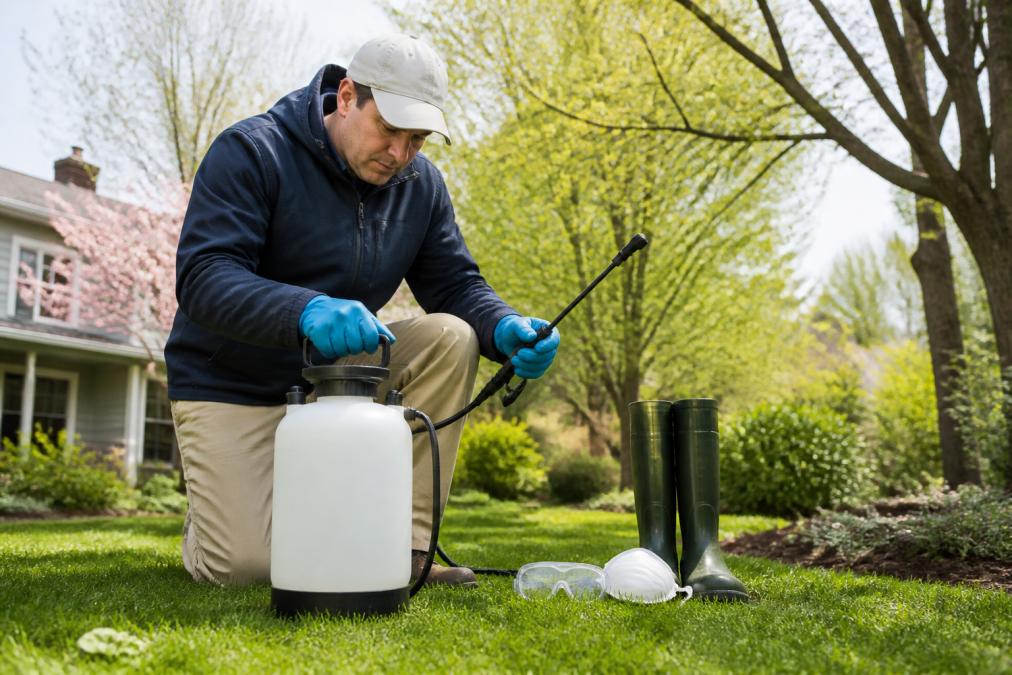
If using a handheld sprayer for DIY applications, clean it thoroughly after each use. Drain the tank, rinse with clean water, and store in a dry location.
Personal Protection During Outdoor Time
Treat your clothing and gear with permethrin before outdoor activities in tick-prone areas. Apply personal repellent before heading out. Tuck pants into socks when hiking in tall grass or brush.
Check yourself and your pets for ticks after outdoor time. Early removal (within 24 hours) significantly reduces the risk of tick-borne disease transmission.
Which Solution Should You Choose?
Your choice depends on your property, budget, and risk tolerance.
Choose professional yard treatment if:
- Your property borders wooded areas or green belts
- You have young children or pets who play outdoors frequently
- You've had tick encounters on your property
- You want the most effective tick control and can allocate budget for recurring seasonal service
BuzzSkito and Mosquito Shield are both solid options. BuzzSkito's seasonal program is specifically timed to Ontario's tick ecology. Mosquito Shield offers broader geographic coverage and integrated tick-mosquito management.
Choose DIY habitat modification plus personal protection if:
- Your tick exposure is primarily during outdoor activities (hiking, camping) rather than yard-based
- Your property has minimal wooded adjacency
- Budget is a primary constraint
- You prefer hands-on control over your tick management strategy
Sawyer Permethrin for clothing, paired with PureGard or AtlanTick for skin, plus aggressive habitat modification, can be effective for lower-risk properties.
Choose a hybrid approach if:
- You want both yard protection and personal protection
- You're willing to invest in one professional treatment, then supplement with DIY maintenance
- Your property has moderate tick risk
Many homeowners hire a professional service in May, then use DIY sprays and personal repellents throughout the season as needed.
TickFree Outdoors offers comprehensive tick protection across personal, pet, and yard solutions. Whether you choose professional services or DIY approaches, having a complete strategy, not just a single product, is what separates effective tick management from frustration.
Tick-borne diseases like Lyme disease remain a real risk in many regions. Effective tick control requires more than hoping a single product will solve the problem. Professional yard treatments, habitat modification, and personal protection working together create the most reliable defense. TickFree Outdoors provides the tools and guidance to build that layered protection, with fast shipping, competitive pricing, and customer support to answer questions when you need it. TickFree Outdoors comprehensive tick protection solutions
Frequently Asked Questions
What is the best yard spray for ticks in tick-heavy regions?
Professional barrier treatments like BuzzSkito and Mosquito Shield offer the most effective yard-wide protection, targeting all tick life stages with residual acaricides that last up to 30 days. These services are especially valuable in areas with high Lyme disease risk. For DIY options, permethrin-based sprays and botanical acaricides work best when applied to lawn perimeters and wooded edges where ticks shelter in leaf litter and brush.
How long does natural tick repellent for yard actually last?
Natural botanical sprays like PureGard and AtlanTick typically provide 5 hours of protection against ticks on treated surfaces. However, they degrade faster than synthetic pyrethroids in sunlight and rain. For lasting yard protection, reapplication is needed every 5-7 days, or after rainfall. Professional services using synthetic residual treatments offer superior durability, protecting your yard for 30 days per application.
When should I spray for ticks to get the best results?
Begin tick treatments in spring (April-May) when temperatures consistently reach 10°C and nymph activity peaks. Apply every 60-75 days through September for maximum protection. Early morning or late afternoon applications work best, as tick activity is highest in cool, moist conditions. Avoid spraying during heavy rain or when temperatures exceed 25°C, as this reduces effectiveness and increases chemical breakdown.
Are tick sprays safe for dogs and children?
Most professional yard treatments are safe for pets and children after 30 minutes of drying time. Personal repellents like Ben's Picaridin and PureGard are Health Canada-approved for children over 6 months and safe for dogs. Avoid applying permethrin directly to skin; it's for clothing and gear only. Always read product labels, as some botanical oils (like those in PureGard) are toxic to cats. Consult your veterinarian before using any product around pets with sensitivities.
Is professional tick control worth the cost?
Professional services cost $99-$200 per treatment or $497-$597 for seasonal packages, but they reduce tick populations by 80-90% compared to DIY methods. For homeowners bordering wooded areas with high Lyme disease risk, the investment prevents tick encounters and protects against vector-borne disease. DIY sprays are budget-friendly but require frequent reapplication and manual effort. Your choice depends on yard size, tick pressure, and time availability.
This article was written using GrandRanker