

Table of Contents
- 1. Treat Your Clothing and Gear with Permethrin
- 2. Choose the Right Clothing and Layering Strategy
- 3. Apply Tick Repellent to Skin and Exposed Areas
- 4. Perform Thorough Tick Checks After Camping
- 5. How to Remove a Tick Safely
- 6. Recognize Lyme Disease Symptoms in Canada
- 7. Protect Your Pets and Decontaminate Gear
- Tick Protection for Camping Starts Before You Leave
Last Updated: August 8, 2026
Tick season in Canada runs year-round in many regions, peaking in spring and fall when nymphal ticks are most active. These tiny parasites carry serious pathogens, including the bacteria that causes Lyme disease. If you spend time hiking, camping, or working outdoors in wooded areas, tick protection is essential. This guide from TickFree Outdoors covers seven evidence-based strategies that work together to keep ticks off your skin, out of your gear, and away from your pets.
Quick Picks
- Best Overall Protection: Permethrin treatment on clothing combined with skin repellent (picaridin or icaridin)
- Best for Natural Preference: Botanical repellents like PureGard for those avoiding synthetic chemicals
- Best for Pets: Long-lasting collar solutions or yard-based tick control for your camping area
- Best for Removal: Dual-tipped tick removal tools that work on both humans and pets
1. Treat Your Clothing and Gear with Permethrin
Permethrin is an insecticide that kills ticks on contact. When applied to fabric, it bonds to fibers and remains effective through multiple wash cycles, making it one of the most reliable barriers against ticks.
Sawyer Permethrin Insect Repellent for Clothing, Gear & Tents is the gold standard. A single 24-oz bottle treats multiple sets of clothing, tents, and backpacks. The product kills ticks, mosquitoes, chiggers, and over 55 other insects on contact. Once dry (about 24 hours), it's non-toxic to humans but lethal to insects for up to six weeks of wear or through six wash cycles.
How to apply permethrin:
- Treat clothing outdoors or in a well-ventilated space
- Spray all seams, cuffs, collars, and pant legs thoroughly
- Pay special attention to waistbands, sock lines, and sleeve cuffs
- Allow 24 hours for complete drying before wearing
- Reapply after six wash cycles or if protection seems reduced
Permethrin-treated clothing kills ticks before they can bite, a tick landing on your treated pants leg dies on contact, never reaching your skin.
Important caution: Permethrin is highly toxic to cats. Ensure treated clothing dries completely and store it separately from feline camping companions. Dogs tolerate permethrin-treated clothing well once fully dry.
2. Choose the Right Clothing and Layering Strategy
What you wear matters as much as what you apply to it. Nymphal ticks are the size of a poppy seed and climb upward looking for exposed skin. Your clothing strategy should make their job harder.
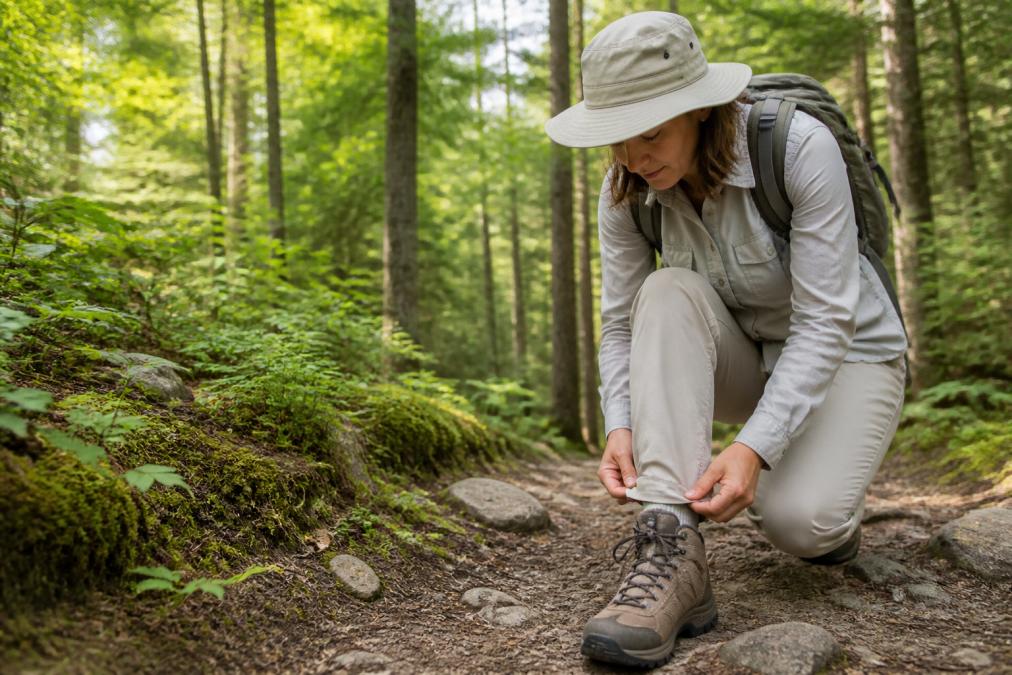
Light colors are non-negotiable. Wear light gray, tan, or white clothing to spot ticks crawling on your clothes before they attach.
Long sleeves and long pants are standard. Ticks can't bite through fabric. Wear sleeves that extend to your wrists and pants that go to your ankles.
Tuck your pants into your socks. This is the single most effective clothing tactic for tick protection. It creates a physical barrier that forces ticks to crawl over the outside of your footwear rather than up your leg, significantly reducing tick attachment.
Wear closed-toe hiking boots. Boots protect your feet and ankles, two common tick attachment sites, and make the tuck-pants-into-socks strategy work effectively.
Add a hat. A wide-brimmed hat or cap reduces the likelihood of ticks reaching your scalp and hairline.
3. Apply Tick Repellent to Skin and Exposed Areas
Skin repellents create a chemical barrier that ticks find unpleasant. Unlike permethrin, which kills on contact, repellents deter ticks from approaching exposed skin.
Picaridin (20% concentration) is the best choice for most campers. Ben's Tick Repellent contains 20% icaridin, providing 12-hour protection against ticks. Icaridin repels ticks and other biting insects without the greasiness or odor of older repellents like DEET. It won't damage synthetic fabrics or plastics.
Apply icaridin to all exposed skin: face, neck, hands, and any gaps between clothing and skin. Reapply after swimming or heavy sweating.
For those preferring natural options: PureGard Botanical Tick Repellent is a Health Canada-registered formula made with botanical ingredients including oil of lemon eucalyptus. It provides five hours of tick protection and is safe for humans, dogs, and horses. The trade-off is shorter duration, you'll need to reapply every five hours during extended outdoor time.
Application tips:
- Apply repellent to exposed skin, not clothing (unless the product label permits)
- Cover all exposed areas: face, ears, neck, hands, and any skin gaps
- Reapply after swimming or heavy sweating
- Wash repellent off when you return indoors
The combination of permethrin-treated clothing plus skin repellent creates overlapping protection. Your clothes kill ticks on contact, and your skin repellent deters any ticks that land on exposed areas.
4. Perform Thorough Tick Checks After Camping
Tick checks are your last line of defense. Even with permethrin-treated clothing and skin repellent, a tick might still attach. Finding and removing it within 24 hours dramatically reduces the risk of disease transmission.
A thorough tick check takes 10-15 minutes and should happen as soon as you return from camping, ideally before you shower or change clothes.
How to perform a tick check:
- Start with clothing. Remove all outer layers and inspect them carefully, paying attention to seams, waistbands, and cuffs.
- Check your entire body systematically. Start at your feet and work upward, examining skin folds, behind knees, groin area, armpits, and the back of your neck.
- Pay special attention to the hairline and scalp. Part your hair and look for small dark specks.
- Use a mirror or ask for help. Hard-to-see areas like your back benefit from a second set of eyes.
- Check your pets. Dogs and cats should be inspected the same way.
- Wash all clothing in hot water and dry on high heat. This kills any ticks hiding in fabric.
Nymphal ticks, the size of a poppy seed, are easy to miss. Look for any small dark bump on your skin that wasn't there before.
5. How to Remove a Tick Safely
If you find an attached tick, proper removal technique matters. The goal is to remove the entire tick, including its mouthparts, without squeezing the body or leaving fragments behind.
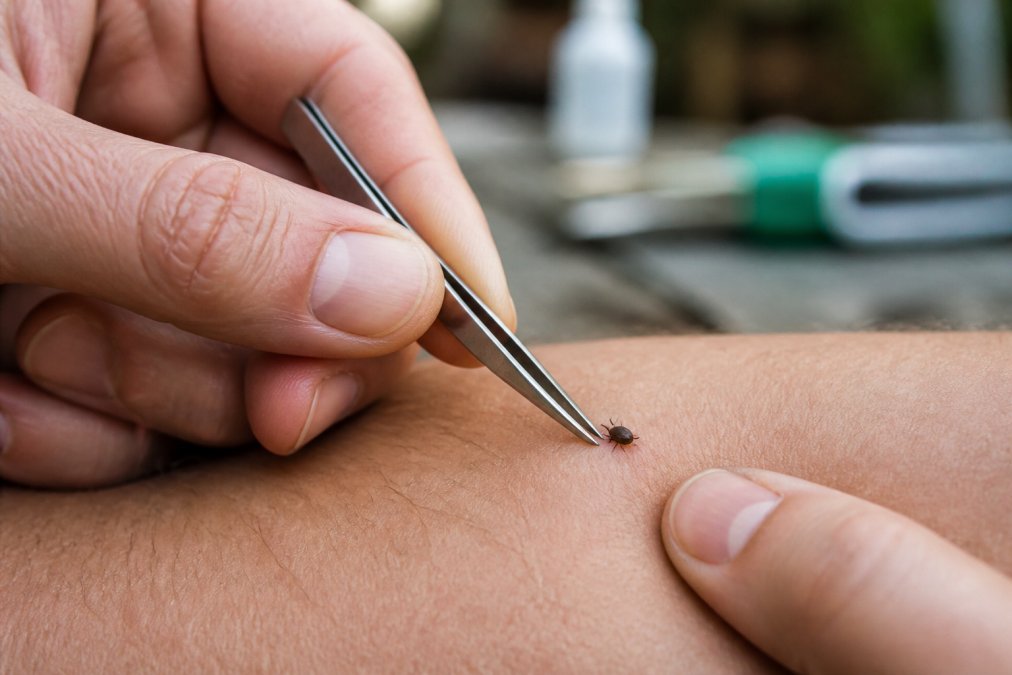
The correct method:
- Use fine-tipped tweezers or a tick removal tool. Grasp the tick as close to the skin as possible, targeting the head or mouthparts.
- Pull straight upward with steady, even pressure. Don't twist, jerk, or squeeze the tick's body. Rough handling can cause the tick to rupture and release pathogens into your skin.
- Remove the entire tick. Check that the mouthparts came out with the body. If part remains, use tweezers to remove it.
- Clean the bite area. Wash with soap and water or apply antiseptic.
- Dispose of the tick. Place it in a sealed container or bag. Do not crush it with your bare hands.
What NOT to do:
- Don't use petroleum jelly, nail polish, or heat to try to "suffocate" the tick
- Don't squeeze the tick's body
- Don't use your bare fingers to remove a tick
- Don't leave mouthparts embedded in your skin
Tools that work:
TickEase Dual-Tipped Tick Remover has a fine-tipped tweezers end for humans and a slotted scoop for pets. The CanLyme Tick Removal Kit from the Canadian Lyme Disease Foundation includes multiple removal tools plus identification cards and a magnifying glass.
Some people save the removed tick in a sealed container for testing if symptoms develop later.
6. Recognize Lyme Disease Symptoms in Canada
Lyme disease is caused by bacteria transmitted through the bite of an infected tick. In Canada, Lyme disease is a reportable illness, and cases have been increasing, particularly in Ontario, Quebec, and British Columbia.
Not every tick carries the bacteria, and not every infected tick bite results in disease. However, the risk is real enough that awareness matters.
Early symptoms of Lyme disease (3-30 days after infection):
- Expanding circular rash (erythema migrans) at the bite site, often described as a "bull's-eye" pattern
- Fever and chills
- Fatigue and body aches
- Headache and neck stiffness
- Joint pain
Later symptoms (weeks to months after infection):
- Arthritis, particularly in the knees
- Neurological problems (numbness, tingling, facial paralysis)
- Heart palpitations or irregular heartbeat
- Cognitive difficulties or memory problems
Important: Not everyone with Lyme disease develops the characteristic bull's-eye rash. If you've been bitten by a tick and develop fever, fatigue, or joint pain in the following weeks, mention the tick bite to your doctor.
According to Government of Canada's Lyme disease information, early treatment with antibiotics is highly effective. The longer Lyme disease goes untreated, the more likely it is to cause long-term complications.
7. Protect Your Pets and Decontaminate Gear
Pets are tick magnets. Dogs running through brush and grass pick up ticks constantly. Cats that roam outdoors face similar exposure.
For dogs:
Seresto Flea and Tick Collar provides continuous protection for up to eight months. The collar releases low doses of imidacloprid and flumethrin, killing and repelling ticks before they can bite. This is particularly useful for camping trips.
For pets that spend significant time outdoors, yard-based tick control also helps. Thermacell Tick Control Tubes target ticks on mice, the primary carriers of Lyme disease bacteria. Each 12-pack treats up to a quarter-acre and requires two applications per year (late April and late July).
For cats:
Permethrin-treated clothing and most synthetic repellents are toxic to cats. Consult your veterinarian about safe options. Some prescription flea and tick treatments for cats include tick protection, though options are more limited than for dogs.
Gear decontamination:
After returning from a camping trip:
- Wash all clothing in hot water (above 50°C) and dry on high heat. This kills ticks at any life stage.
- Inspect and treat your tent, sleeping bag, and backpack. Shake them thoroughly outdoors and inspect seams and fabric folds.
- If permethrin-treated, your gear should already be protected. If not, consider treating it now.
- Store gear in sealed containers when not in use. This prevents ticks from nesting in your equipment between trips.
Tick Protection for Camping Starts Before You Leave
Tick protection isn't something you do at the campsite, it's something you prepare for at home. Treat your clothing and gear with permethrin weeks before your trip. Stock your first-aid kit with fine-tipped tweezers or a tick removal tool. Choose your camping location with tick risk in mind, avoiding areas with heavy brush and leaf litter.
The seven strategies in this guide work together. Permethrin-treated clothing kills ticks on contact. Skin repellent deters those that land on exposed skin. Proper clothing choices reduce exposed skin. Thorough tick checks catch any that slip through. Safe removal prevents disease transmission. Knowledge of Lyme disease symptoms ensures early treatment if needed. Pet protection and gear decontamination close any remaining gaps.
TickFree Outdoors offers permethrin sprays, repellent patches, and yard treatments designed to work with these strategies. Pricing depends on quantity, dates, and delivery. Please visit the TickFree Outdoors website for current prices. With the right preparation, tick anxiety doesn't have to limit your outdoor time.
| Strategy | Best For | Duration | Reapplication |
|---|---|---|---|
| Permethrin clothing treatment | Long-lasting barrier on fabric | 6 weeks or 6 wash cycles | After washing |
| Picaridin skin repellent | Direct skin protection | 12 hours | After swimming/sweating |
| Botanical repellent | Natural alternative | 5 hours | Every 5 hours |
| Tick removal tools | Emergency tick removal | Indefinite | As needed |
| Yard tick control | Reducing tick population | 6 months per application | Twice yearly |
| Pet collar protection | Long-term pet safety | 8 months | Annual replacement |
Frequently Asked Questions
What is the best tick repellent for camping in Canada?
The best tick repellent depends on your preferences and exposure level. For skin application, repellents with 20% Icaridin (such as Ben's) provide 12-hour protection and are safe for sensitive skin. For clothing and gear, permethrin-based sprays kill ticks on contact and remain effective through multiple wash cycles. Natural alternatives like PureGard offer DEET-free protection for 5 hours. In high-risk Lyme disease areas like the Pacific Northwest, permethrin treatment on clothing combined with skin repellent provides the strongest defense.
How do I perform a thorough tick check after camping?
After returning from camping, inspect your entire body in good lighting, paying close attention to warm, moist areas: behind knees, in armpits, the groin, belly button, and hairline. Use a mirror for hard-to-see spots. Check pets thoroughly as well, especially around ears, neck, and between toes. Remove any ticks immediately using fine-tipped tweezers. Wash all camping clothes in hot water and dry on high heat for at least 10 minutes to kill any ticks that may have survived outdoors.
What are the early signs of Lyme disease in Canada?
Early Lyme disease symptoms typically appear 3-30 days after a tick bite. The most recognizable sign is a bull's-eye rash (erythema migrans) that expands outward from the bite site. Other early symptoms include fever, chills, fatigue, muscle and joint aches, and swollen lymph nodes. If left untreated, Lyme disease can progress to joint pain, neurological problems, and heart issues. Since Lyme disease is endemic in parts of Canada, especially the Pacific Northwest, seek medical attention promptly if you develop these symptoms after camping.
Can I use the same tick repellent on my dog as I use on myself?
No. Never apply human tick repellents containing DEET or Icaridin directly to your dog's skin or coat. Instead, use products specifically formulated for pets, such as Seresto collars, which provide up to 8 months of protection. Some natural repellents like PureGard are labeled safe for dogs, but always check the product label. For maximum protection during camping trips, combine a pet-specific tick treatment with thorough daily tick checks on your dog and immediate removal of any attached ticks.
Shop all tick protection solutions at TickFree Outdoors and camp with confidence. Our permethrin sprays, skin repellents, and yard treatments are designed to work together, giving you the layered protection that actually works. With fast shipping and great prices, you can order everything you need before your next outdoor adventure.
This article was written using GrandRanker