

Table of Contents
- Best Tick Protection for Hunters: Quick Comparison
- How Tick Repellents Work: Active Ingredients Explained
- Permethrin Clothing Treatment for Hunters
- Skin-Applied Sprays vs. Clothing Treatments: Which Works Best
- Tick-Borne Diseases in Canada: Why Protection Matters
- How to Perform a Tick Check After Hunting
- Scent Control and Layering for Tick Prevention
- Conclusion
Last Updated: August 11, 2026
Best Tick Protection for Hunters: Quick Comparison
Hunters face a serious problem most guides overlook: tick protection must work in the field without compromising scent control or gear performance. The best approach combines treated clothing, skin-applied repellents, and post-hunt protocols rather than relying on any single product.
Quick Picks:
- Best Overall: TickFree Outdoors, comprehensive protection across sprays, patches, and yard treatments with fast shipping and premium customer service
- Best Clothing Treatment: Sawyer Permethrin Clothing & Gear Spray, bonds to fabric for 6 weeks, odorless after drying, effective against multiple insects
- Best Skin Repellent: Sawyer 20% Picaridin Insect Repellent, 12-hour protection, DEET alternative, won't damage gear
- Best for Heavy Infestations: Ben's 30% Tick & Insect Repellent, long-lasting DEET formulation for extreme tick pressure
- Best Chemical-Free Option: The Original Bug Shirt Company Clothing, Canadian-made, physical barrier protection, no chemicals
How Tick Repellents Work: Active Ingredients Explained
Tick repellents operate through two mechanisms: some create a chemical barrier on skin or clothing that repels insects before they bite, while others kill ticks on contact.
DEET-Based Repellents
DEET (N,N-diethyl-meta-toluamide) remains one of the most effective tick repellents available. It works by interfering with the tick's ability to locate you through sensory receptors, masking your scent and heat signature. Products like Ben's 30% Tick & Insect Repellent deliver extended protection, typically 8 to 12 hours depending on concentration and sweat exposure.
Higher concentrations (30% and above) provide longer-lasting protection in heavily infested areas. The tradeoff is that DEET can damage certain synthetic materials, including some modern hunting gear fabrics and optics coatings. For hunters, this means applying DEET-based repellents directly to exposed skin rather than spraying gear. A common mistake is assuming higher DEET concentration equals proportionally longer protection; the difference between 20% and 30% DEET is roughly 2 to 3 additional hours, not double the duration.
Picaridin and Icaridin Alternatives
Picaridin (also called Icaridin) has gained traction as a DEET alternative, particularly among hunters concerned about synthetic material damage. Sawyer 20% Picaridin Insect Repellent delivers up to 12 hours of protection against ticks with a non-greasy, fragrance-free formula.
What makes picaridin valuable for hunters is its compatibility with gear. Unlike DEET, it won't degrade plastics, synthetic coatings, or optics. The Public Health Agency of Canada recommends picaridin for outdoor enthusiasts, signaling its safety and efficacy. Picaridin's protection duration matches DEET at equivalent concentrations, but it feels lighter on skin, a meaningful advantage during long hunting days. Like DEET, it requires reapplication after swimming or heavy sweating.
Permethrin for Fabric and Gear
Permethrin operates differently than skin-applied repellents. Rather than creating a barrier on your skin, it's an insecticide that kills ticks on contact. When applied to clothing and gear, it bonds to fabric fibers and remains effective through multiple washings.
Sawyer Permethrin Clothing & Gear Spray provides protection for up to 6 weeks or 6 washings. The spray is odorless after drying, critical for scent-control hunting, and effective against ticks, mosquitoes, blackflies, and chiggers. Permethrin requires 24 hours to dry completely before wearing treated items; this drying period is non-negotiable.
The advantage is that permethrin doesn't require reapplication during a hunt. Once your clothing is treated and dried, you have sustained protection throughout the season. A critical warning: permethrin is highly toxic to cats until completely dry. Ensure treated items are fully dried in a separate space away from pets.
Permethrin Clothing Treatment for Hunters
The best tick protection for hunters starts with treating your clothing before the season begins. Permethrin-treated gear creates a physical and chemical barrier that prevents ticks from establishing a foothold.
Treating Your Hunting Gear
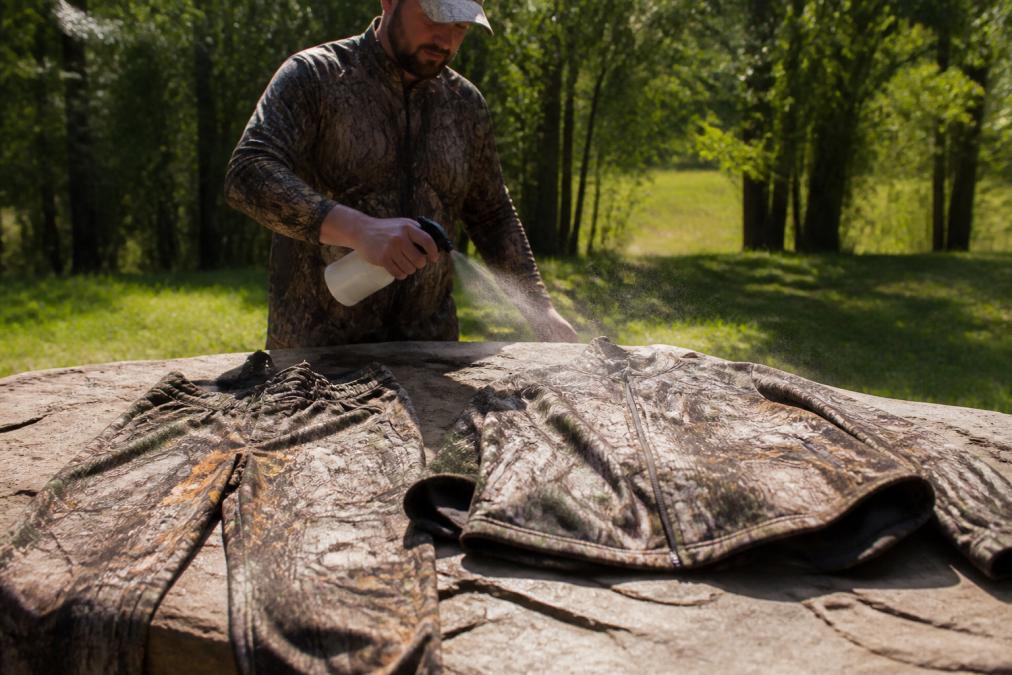
Applying permethrin correctly is straightforward. Lay out your hunting clothing on a flat surface in a well-ventilated area, preferably outdoors. Spray Sawyer Permethrin evenly across all fabric surfaces, including seams and cuffs where ticks commonly hide. Use enough product to thoroughly saturate the fabric without creating puddles.
The drying process takes a full 24 hours. Keep treated items away from pets, children, and high-traffic areas. Once dry, the permethrin bonds to fabric fibers and becomes safe to wear. Store treated clothing in a sealed bag or container to protect from dust.
Treat your entire hunting outfit as a system: jacket, pants, socks, gloves, and hat. Don't overlook the hat; ticks frequently crawl upward and can attach to your head and neck. One practical tip: reapply permethrin mid-season if you hunt frequently. While the treatment lasts through multiple washings, heavy use in tick-dense areas can reduce efficacy.
Pre-Treated Hunting Apparel Options
If mixing and applying sprays isn't practical, pre-treated hunting clothing offers convenience. WindRiver No Fly Zone Apparel features permethrin-based technology built directly into the fabric and remains effective through 70 washes. The Original Bug Shirt Company offers Canadian-made, chemical-free protective clothing that uses tightly woven fabric to physically block insects rather than relying on chemical repellents. This appeals to hunters with chemical sensitivities or those prioritizing a natural approach.
Skin-Applied Sprays vs. Clothing Treatments: Which Works Best
The most effective approach combines both methods. Permethrin-treated clothing provides a first line of defense, while skin-applied repellents protect exposed areas and offer backup protection.
For exposed skin, Sawyer 20% Picaridin suits hunters concerned about gear compatibility and comfortable with reapplication every 12 hours. Ben's 30% DEET formulation works for hunters facing extreme tick pressure who prioritize maximum duration.
Start with permethrin-treated clothing as your foundation. Add a skin-applied repellent to exposed areas: neck, wrists, ankles, and gaps between shirt and pants. This dual approach creates redundancy.
| Protection Method | Duration | Best For | Reapplication |
|---|---|---|---|
| Permethrin-treated clothing | 6 weeks / 6 washes | Extended hunts, high-tick areas | Mid-season refresh |
| Picaridin skin spray | 12 hours | Exposed skin, gear-sensitive hunters | Every 12 hours or after water exposure |
| DEET 30% skin spray | 8-12 hours | Heavy tick pressure, extreme conditions | Every 8-12 hours as needed |
| Pre-treated hunting apparel | 70 washes | Convenience-focused hunters | None (built-in) |
| Chemical-free barrier clothing | Season-long | Sensitive skin, natural preference | None (physical barrier) |
Tick-Borne Diseases in Canada: Why Protection Matters
Tick protection prevents serious illness. Lyme disease, the most significant tick-borne illness in Canada, is transmitted by blacklegged ticks carrying the Borrelia burgdorferi bacterium. Early-stage Lyme disease presents with a characteristic bull's-eye rash, fever, and fatigue, but if untreated, it can progress to joint pain, neurological complications, and chronic symptoms.
The geographic distribution of blacklegged ticks has expanded significantly across Canada, particularly in eastern provinces and British Columbia. Hunters in these regions face genuine risk that makes protective measures essential. Prevention through effective tick protection is far more practical than managing Lyme disease after infection.
How to Perform a Tick Check After Hunting
A proper tick check is your final defense against undetected ticks. Begin within 2 hours of returning from the field; the sooner you find and remove ticks, the lower the infection risk. Lyme disease transmission typically requires 36 to 48 hours of tick attachment, so early removal significantly reduces illness risk.
Step-by-Step Tick Inspection Process
Remove all clothing and place it in a sealed bag or directly into a washing machine. Inspect your clothing carefully under good lighting before washing.
Conduct a systematic skin inspection using a mirror or asking someone to help check areas you can't see. Pay special attention to hairline and scalp, behind ears and neck, armpits and groin area, behind knees, and between toes.
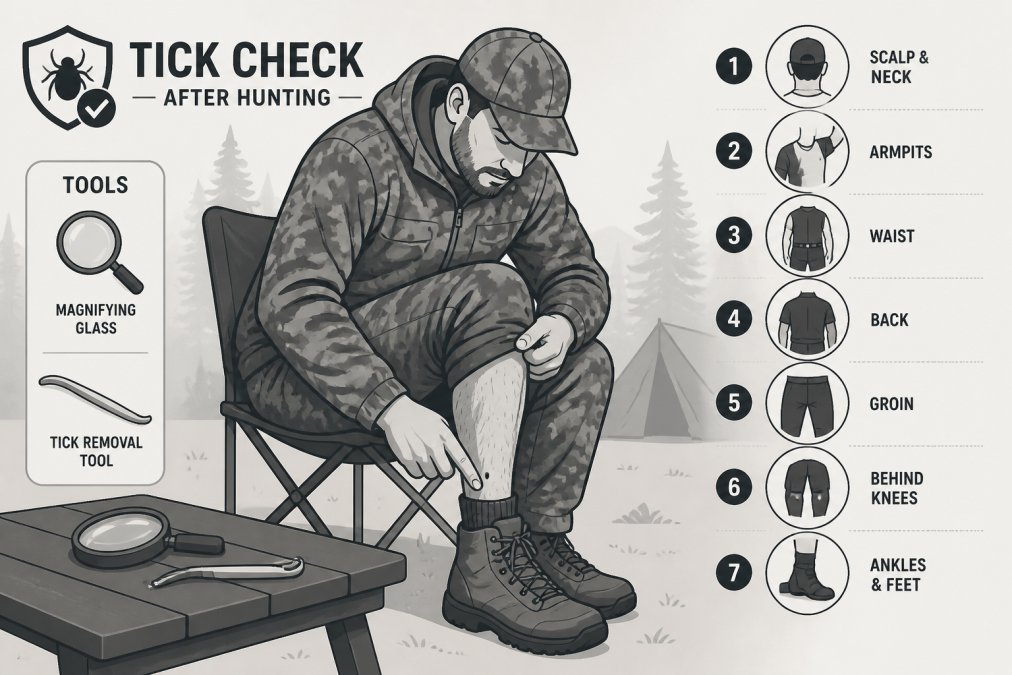
If you find a tick, use fine-tipped tweezers to grasp it as close to your skin as possible, then pull straight upward with steady, even pressure. Don't twist, jerk, or squeeze the tick's body. After removal, place the tick in a sealed container with a damp cotton ball and save it for identification if symptoms develop. Clean the bite area with soap and water or an antiseptic.
Post-Hunt Gear Decontamination
Place all clothing in a washing machine and run a full cycle with hot water if fabric care allows. Heat kills ticks effectively. If you prefer cold water washing, run a separate heat-drying cycle on high heat for at least 10 minutes.
Gear that can't be machine washed should be sealed in a plastic bag for at least 24 hours in a freezer or left in direct sunlight for several hours. For items you can't freeze or expose to intense heat, seal them in a bag for 2 to 3 weeks; ticks eventually die without a host.
Hard-sided gear like boots, optics, and firearms need visual inspection and wiping with a damp cloth.
Scent Control and Layering for Tick Prevention
Tick protection and scent control don't have to conflict; strategic layering achieves both simultaneously. Permethrin-treated clothing is odorless once fully dried and doesn't interfere with scent-control strategies.
For skin-applied repellents, Ben's 30% Tick & Insect Repellent has a noticeable odor that can interfere with scent control. Sawyer 20% Picaridin is fragrance-free and leaves no lingering scent after drying, making it superior for scent-conscious hunters. The Original Bug Shirt Company's chemical-free approach aligns perfectly with scent-control strategies.
A practical layering strategy for scent-conscious hunters:
- Treat all clothing with permethrin 24 hours before the hunt
- Apply picaridin to exposed skin areas only (neck, wrists, ankles)
- Wear scent-control base layers under treated outer clothing
- Perform a thorough tick check immediately after returning to base camp
Hunters face tick exposure that extends far beyond casual outdoor recreation. The combination of time spent in tick habitat, heavy gear that can harbor ticks, and genuine health risks of tick-borne illness demands a serious, layered approach. TickFree Outdoors delivers comprehensive tick protection with premium sprays, repellent patches, and yard treatments designed specifically for outdoor enthusiasts. With fast worldwide shipping, great prices, and exceptional customer service, TickFree Outdoors makes it simple to implement the multi-layered protection strategy that actually works. Shop all tick protection products and start your season with confidence.
Frequently Asked Questions
What is the most effective tick protection for hunters?
Effective tick protection combines multiple methods: permethrin-treated clothing for long-lasting fabric protection, skin-applied repellents with DEET or picaridin for exposed areas, and thorough tick checks after hunting. Permethrin on gear provides residual protection lasting weeks, while topical repellents offer 8-12 hours of defense against ticks seeking to attach. The best approach layers these strategies rather than relying on a single product.
Does permethrin clothing treatment for hunters really last through multiple hunts?
Yes, permethrin bonds to fabric fibers and maintains effectiveness through approximately 6 weeks or 6 washings, whichever comes first. This means treating your hunting jacket, pants, and socks before the season begins provides protection across multiple outings. Pre-treated apparel options like permethrin-embedded clothing last through 70 washes, offering season-long protection without reapplication.
What are the main tick-borne diseases in Canada hunters should know about?
Lyme disease, transmitted by infected blacklegged ticks, is the primary concern in Canada. Early symptoms include a circular rash and flu-like illness. Other tick-borne illnesses include anaplasmosis and babesiosis, though these are less common. The Public Health Agency of Canada recommends prevention through tick avoidance, repellent use, and prompt removal. Prompt tick checks after hunting significantly reduce infection risk.
How long do skin-applied tick repellents actually last during a hunt?
DEET-based repellents typically provide 8-12 hours of protection, while picaridin and icaridin alternatives offer up to 12 hours. Duration depends on sweat, water exposure, and reapplication. Hunters in heavy tick areas should reapply after 6-8 hours or after swimming. Combining skin repellent with permethrin-treated clothing extends overall protection without requiring frequent reapplication during the hunt.
Are ultrasonic tick repellents effective, or should I stick with chemical options?
Ultrasonic devices like the TICKLESS Hunter provide chemical-free protection and appeal to scent-conscious hunters, but their effectiveness is debated compared to EPA-registered repellents. They emit pulses intended to disturb ticks and may reduce encounters, but they do not provide the proven barrier protection of permethrin or DEET. Many hunters use ultrasonic devices as a supplementary layer alongside traditional repellents for maximum assurance.
This article was written using GrandRanker