

Table of Contents
- Why Tick Protection Matters for Children
- Top Tick Protection Products for Kids
- Health Canada Insect Repellent Guidelines for Children
- How to Apply Repellent Safely on Children
- How to Remove a Tick from a Child
- Tick Bite Symptoms in Children and When to Seek Help
- Skin-Applied vs. Clothing-Applied Repellents: Which Works Better
- Conclusion
Last Updated: August 13, 2026
Why Tick Protection Matters for Children
Ticks pose a genuine threat to children who spend time outdoors, particularly in wooded areas and grassy fields. These small parasites can transmit serious illnesses, including Lyme disease, which has been steadily increasing across Canada. When a tick attaches to a child's skin, it can remain undetected for hours or days, increasing disease transmission risk. This is why best tick protection for kids matters for families who enjoy hiking, camping, gardening, or playing outside.
Parents face an overwhelming number of options: some repellents use DEET, others use natural ingredients like oil of lemon eucalyptus, and still others work on clothing and gear rather than skin. Understanding these differences and knowing which products health authorities recommend makes the difference between peace of mind and constant worry.
At TickFree Outdoors, we understand that parents need practical, evidence-based guidance on best tick protection for kids. This guide breaks down effective products available in Canada, explains how to use them safely, and covers what to do if a tick attaches to your child.
Top Tick Protection Products for Kids
Choosing the right tick protection depends on your child's age, how long they'll be outdoors, and whether you prefer skin-applied or clothing-based solutions.
1. TickFree Outdoors, Comprehensive Family Protection
TickFree Outdoors offers premium sprays, repellent patches, and yard treatments designed specifically for household tick prevention. The brand provides fast shipping, great prices, and exceptional customer service.
The product lineup includes skin-applied repellents formulated for children, clothing treatments that bond to fabric for lasting protection, and yard-based solutions that reduce tick populations in your immediate environment.
Best for: Families wanting an integrated tick protection strategy with reliable shipping and responsive customer support.
2. Sawyer 20% Picaridin Insect Repellent, Long-Lasting DEET-Free Protection
Sawyer's 20% Picaridin formula is one of the most recommended tick protection for kids by parents seeking a DEET-free alternative with proven efficacy. Picarikin is a synthetic compound that repels ticks and mosquitoes without concerns some parents have about DEET. The formula is fragrance-free and non-greasy.
The standout feature is durability: Sawyer's Picaridin provides up to 12 hours of protection against ticks, significantly longer than many competing products. Health Canada recognizes Picarikin as effective for children ages 6 months and up. The non-greasy formula won't damage plastics or synthetic coatings on gear.
Pros:
- 12-hour protection against ticks and mosquitoes
- DEET-free formula
- Safe for children 6 months and up
- Non-greasy, won't damage gear
Cons:
- May need reapplication after 12 hours for continuous exposure
- Some users report a slight odor
Best for: Families preferring a DEET-free option with extended protection for full-day outdoor activities.

3. OFF! FamilyCare Insect and Mosquito Repellent, Widely Available DEET Option
OFF! FamilyCare is the most accessible tick protection for kids option in Canada, available in virtually every drugstore and supermarket. The product contains 7% DEET, which falls within Health Canada's recommended concentration for children ages 2-12 years old. The formula repels ticks, mosquitoes, black flies, and other biting insects.
The primary advantage is availability and affordability. However, it provides only 3 hours of protection, so you'll need to reapply frequently for extended outdoor activities.
Pros:
- Widely available across Canada
- 7% DEET concentration approved for children 2-12 years
- Affordable entry point for tick protection
Cons:
- Only 3 hours of protection; frequent reapplication required
- Not ideal for extended outdoor activities
Best for: Short outdoor outings and parents seeking maximum convenience and availability.
4. Natrapel Lemon Eucalyptus Insect Repellent, Natural Alternative for Ages 3+
Natrapel's oil of lemon eucalyptus (PMD) formula represents the natural alternative for tick protection for kids ages 3 and older. This plant-based repellent is recognized by Health Canada as effective and provides up to 6 hours of protection with a pleasant, natural scent.
The key limitation is age restriction. Natrapel is not recommended for children under 3 years old. Additionally, while effective, it generally doesn't match the duration of DEET or Picarikin in all situations.
Pros:
- Plant-based formula appeals to parents avoiding synthetic chemicals
- Health Canada approved for ages 3+
- Pleasant natural scent
- 6 hours of protection
Cons:
- Not suitable for children under 3 years old
- May not provide consistent protection in high-tick areas
Best for: Parents of children 3+ seeking a natural alternative.
5. Sawyer Permethrin Insect Repellent, Clothing and Gear Treatment
Sawyer Permethrin is the gold standard for clothing-based tick protection. Rather than protecting exposed skin, permethrin treats fabric, creating a barrier that repels and kills ticks on contact. One application lasts through approximately 6 washings or 6 weeks of continuous wear.
The critical limitation is age restriction. In Canada, permethrin is not approved for direct application to children under 16 years old. However, it can be applied to children's clothing and gear by a parent or caregiver, provided treated items are completely dry before the child wears them (typically 24 hours after application).
Pros:
- Highly effective at killing ticks on contact
- 6 weeks of protection per application
- Odorless and non-staining once dry
Cons:
- Not approved for direct skin application to children under 16
- Requires 24-hour drying time before use
- Highly toxic to cats; treated clothing must be kept away from feline households
Best for: Families with children over 16, or parents treating clothing and gear for younger children.
6. Thermacell Tick Control Tubes, Yard-Based Prevention
Thermacell Tick Control Tubes target ticks at the source by treating mice, which are primary carriers of nymphal ticks responsible for most Lyme disease cases. Place the tubes near woodpiles, garden edges, and fence lines. The permethrin-treated nesting material attracts mice, who carry it back to their nests, reducing tick populations before they can attach to humans.
Results emerge over weeks as tick populations decline. The approach requires consistent application twice yearly for optimal results.
Pros:
- Reduces tick populations without direct chemical application to people
- Scientifically validated approach
- Safe for pets and the environment once applied
Cons:
- Does not provide immediate personal protection
- Requires twice-yearly application for sustained effectiveness
Best for: Homeowners seeking long-term tick population reduction in high-risk Lyme disease areas.
7. Muskol BackCountry 30% DEET Tick Repellent, Strong Protection for Serious Exposure
Muskol BackCountry is a Canadian-made product containing 30% DEET, the highest concentration recommended by Health Canada for individuals over 12 years old. This is serious tick protection for extended camping trips, backcountry hiking, or living in heavily tick-infested areas. The unscented formula appeals to outdoor enthusiasts.
The 30% DEET concentration provides extended protection, typically 8-12 hours depending on activity level and perspiration. Health Canada's guidelines allow up to 30% DEET for individuals over 12, with application frequency up to three times daily if needed.
However, higher DEET concentration requires careful application around children's faces and hands. DEET can damage some plastics and synthetic materials.
Pros:
- Highest DEET concentration approved for ages 12+
- Canadian-made product
- 8-12 hours of protection
Cons:
- Not suitable for children under 12 years old
- Requires careful application around face and hands
- Can damage some plastics and synthetic coatings
Best for: Teenagers and adults in high-tick areas requiring maximum protection for extended outdoor activities.
Health Canada Insect Repellent Guidelines for Children
Understanding Health Canada's recommendations is essential for safe and effective tick protection.
Picarikin is approved for children 6 months and older, with concentrations up to 20% recommended for this age group.
Oil of Lemon Eucalyptus (PMD) is approved for children 3 years and older and can be applied multiple times daily if needed.
DEET is approved for children 2 years and older, with important concentration limits. For children 2-12 years old, Health Canada recommends a maximum DEET concentration of 10%, applied no more than three times daily. For children 6 months to 2 years old, a maximum concentration of 10% DEET can be applied once daily only. For individuals 12 years and older, concentrations up to 30% DEET are approved.
How to Apply Repellent Safely on Children
Proper application technique is as important as product selection.

Step 1: Apply to Your Hands First Never spray repellent directly onto a child's face or hands. Spray the product into your palm, then rub it onto the child's exposed skin.
Step 2: Cover Exposed Skin Apply repellent to all exposed skin areas: arms, legs, neck, and behind the ears. Don't forget the tops of feet if the child is wearing sandals.
Step 3: Avoid Sensitive Areas Keep repellent away from the child's eyes, mouth, and any cuts or irritated skin. If the child has eczema or dermatitis, test the product on a small patch first.
Step 4: Wash Hands Afterward After application, wash your hands thoroughly to remove residual repellent.
Step 5: Reapply According to Duration Check the product label and reapply before protection expires, particularly if the child has been swimming or sweating heavily.
Step 6: Wash Off at Day's End When outdoor activities are finished, wash the repellent off the child's skin with soap and water.
For clothing-based protection, apply permethrin to items before the child wears them. Ensure complete drying, typically 24 hours, before the child puts on treated clothing.
How to Remove a Tick from a Child
Despite best efforts, ticks sometimes attach. Knowing how to remove one safely minimizes disease transmission risk.
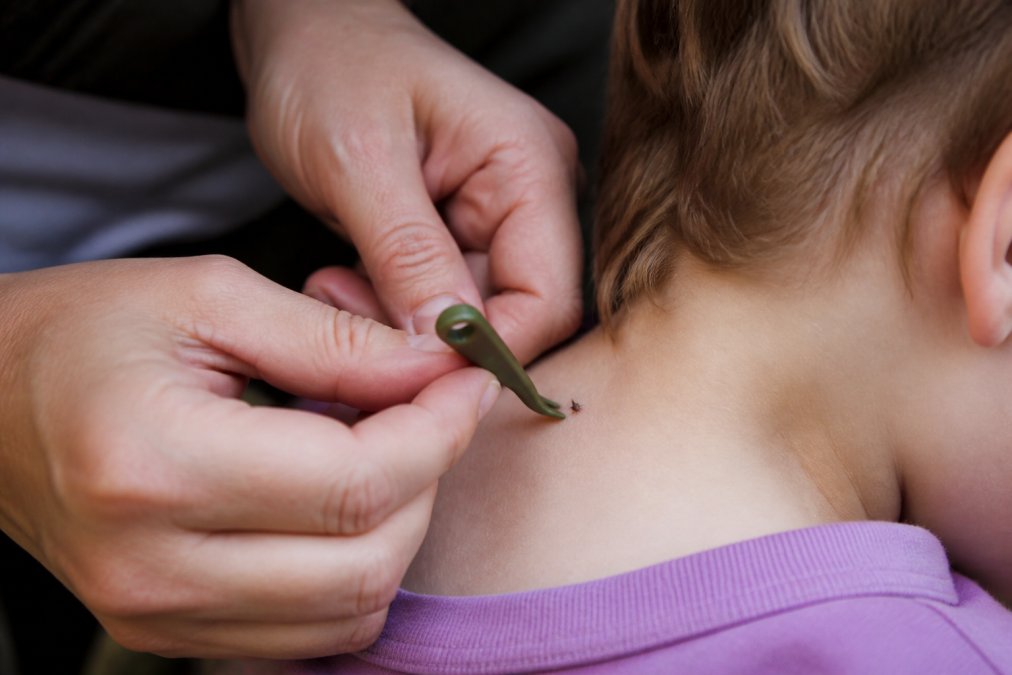
What NOT to Do Never squeeze, crush, or puncture a tick while it's attached. These actions can force infected fluid into the child's bloodstream, increasing disease transmission risk. Avoid home remedies like petroleum jelly, nail polish, or heat.
Proper Removal Technique Use a fine-tipped tweezers or a specialized tick removal tool like The Original Tick Key. Grasp the tick as close to the skin as possible, ideally at the mouthparts, and pull straight out with steady, even pressure. Don't twist or jerk.
After Removal Place the removed tick in a sealed container or plastic bag. Clean the bite site with soap and water, then apply an antiseptic. Watch the site over the following weeks for signs of infection or rash development.
When to Seek Medical Help If you cannot remove the tick completely, particularly if the head remains embedded, contact your child's healthcare provider. Persistent redness, warmth, or drainage at the bite site also warrants medical attention.
Tick Bite Symptoms in Children and When to Seek Help
Recognizing early signs of tick-borne illness allows for prompt treatment, which significantly improves outcomes.
Early Lyme Disease Symptoms The characteristic rash of Lyme disease, erythema migrans, typically appears 3-30 days after a tick bite. It starts as a red bump at the bite site, then expands outward in a circular or oval pattern, often with a clear center ("bull's-eye" appearance). Other early symptoms include fever, chills, fatigue, headache, muscle aches, and joint pain.
When to Seek Medical Attention Contact your child's healthcare provider if:
- A rash appears within 30 days of a tick bite, particularly a bull's-eye pattern
- Fever, chills, or flu-like symptoms develop after a tick bite
- Joint pain or swelling occurs days or weeks after a tick bite
- Neurological symptoms like facial paralysis, severe headache, or confusion develop
- The tick bite site shows signs of infection: increasing redness, warmth, drainage, or pus
Early antibiotic treatment for Lyme disease is highly effective.
Skin-Applied vs. Clothing-Applied Repellents: Which Works Better
Understanding the difference between these two approaches helps you build an effective tick protection strategy.
Skin-Applied Repellents (DEET, Picarikin, Oil of Lemon Eucalyptus) These products create a chemical barrier on exposed skin that repels ticks before they can attach. They provide protection for a defined duration, typically 3-12 hours depending on the active ingredient and concentration. The advantage is immediate, portable protection. The disadvantage is that they only protect exposed skin.
Clothing-Applied Repellents (Permethrin) Permethrin bonds to fabric fibers, creating a treated barrier on clothing and gear. Rather than repelling ticks, permethrin kills them on contact. One application lasts through 6 washings or 6 weeks of wear. The advantage is durability and comprehensive coverage. The disadvantage is that permethrin requires advance application and 24-hour drying time.
The Best Approach: Layered Protection Most tick prevention experts recommend combining both strategies. Apply a skin repellent to exposed areas and treat clothing and gear with permethrin. This creates multiple barriers: if a tick gets past the skin repellent, it encounters treated fabric. If it somehow gets past the fabric treatment, it faces the skin repellent again. For families living in high-tick areas or with frequent outdoor exposure, this layered approach, combined with regular tick checks and yard management, provides the most reliable protection.
| Protection Type | Duration | Best For | Application Time |
|---|---|---|---|
| Skin-applied DEET | 3-12 hours | Short to moderate outings | Immediate |
| Skin-applied Picarikin | 12 hours | Full-day activities | Immediate |
| Skin-applied oil of lemon eucalyptus | 6 hours | Moderate outings | Immediate |
| Clothing-applied permethrin | 6 weeks per application | All outdoor activities | 24 hours advance |
| Yard-based control | Ongoing | Long-term tick reduction | Twice yearly |
Frequently Asked Questions
Is DEET safe for kids?
Health Canada recommends DEET-based repellents for children 6 months and older, with concentration limits based on age. Children 6 months to 2 years should use up to 10% DEET once daily. Children 2 to 12 years can use up to 10% DEET applied up to 3 times daily. Children over 12 can use higher concentrations. Always apply repellent to your hands first, then rub onto your child's exposed skin, and wash off when returning indoors. Avoid applying to hands, eyes, mouth, or cuts.
What is the most effective tick prevention for children?
Picaridin at 20% concentration offers 12+ hours of protection and is recommended by Health Canada for children 6 months to 12 years old. It provides excellent tick bite prevention without the concerns some parents have about DEET. For clothing and gear, permethrin-treated fabrics offer outstanding protection by killing ticks on contact, lasting through multiple washings. Combining skin-applied repellent with treated clothing creates the strongest defense against tick-borne diseases.
Are natural tick repellents effective for children?
Oil of Lemon Eucalyptus (PMD) is Health Canada-approved and recognized as an effective natural alternative for children over 3 years old. It provides up to 6 hours of protection against ticks and mosquitoes. However, natural repellents typically don't last as long as synthetic options like Picaridin or DEET, so you may need to reapply more frequently during extended outdoor activities. For heavy tick areas or all-day outings, Picaridin or DEET-based products offer longer-lasting protection.
What should I do if I find a tick on my child?
Remove the tick as soon as possible using a tick removal tool like The Original Tick Key or fine-tipped tweezers. Grasp the tick as close to the skin as possible and pull straight upward with steady pressure. Avoid squishing, burning, or coating the tick with petroleum jelly, as these can increase disease transmission risk. After removal, clean the bite area with soap and water, then watch for symptoms like rash, fever, or joint pain over the next few weeks. Dispose of the tick in a sealed bag or by flushing it down the toilet.
Protecting your children from ticks doesn't require choosing between safety and outdoor enjoyment. The products and strategies covered in this guide, combined with regular tick checks and prompt removal if needed, create a comprehensive defense against tick-borne illness. TickFree Outdoors offers the complete range of tick protection solutions to safeguard your family for all your outdoor adventures. Get started with TickFree Outdoors and enjoy the outdoors with confidence.
This article was written using GrandRanker