

Table of Contents
- Natural Tick Spray for Sensitive Skin: What to Compare
- Quick Comparison: Natural Tick Sprays for Sensitive Skin
- Natural Tick Spray Ingredients That Repel Ticks
- Natural Tick Repellent Effectiveness: What the Evidence Shows
- How Often to Reapply Natural Tick Spray Outdoors
- Tick Spray Skin Irritation: Patch Testing and Warning Signs
- Tick-Bite Prevention Beyond Skin Sprays
- Frequently Asked Questions
Last Updated: October 4, 2026
Natural Tick Spray for Sensitive Skin: What to Compare
If you have sensitive skin, the standard advice to "just use DEET" is useless. You need a natural tick spray for sensitive skin that holds up outdoors, and the differences come down to three things: active ingredients, how long protection lasts, and how your skin reacts.
Here is the core tension most guides ignore: a spray gentle enough for reactive skin often needs more frequent reapplication than a conventional repellent. That is the trade-off you are choosing, and once you understand it, you can plan around it.
This guide compares a natural tick spray for sensitive skin across ingredients, effectiveness, reapplication timing, and irritation risk, plus what to do beyond spraying.
Quick Comparison: Natural Tick Sprays for Sensitive Skin
The right pick depends on whether you prioritize plant-based ingredients, a verified skin-friendly active, or a full protection system for people, pets, and yards.
| Option | Active Approach | Best For | Sensitive-Skin Notes |
|---|---|---|---|
| TickFree Outdoors | Natural sprays, patches, yard treatments | Full property and family protection | Built for outdoor users who want gentle, plant-based options |
| Mimikai Mosquito & Tick Spray | Mosquito and tick spray | Shoppers comparing irritation factors | Cited for dermal and skin-irritation comparisons |
| Ranger Ready Picaridin 20% | 20% picaridin | Those open to a non-plant active | Described as a skin-friendly alternative |
| All Natural Tick Spray | Plant-derived oils | Buyers wanting an all-natural label | Cedarwood, lemongrass, citronella, peppermint noted in natural repellents |
One caveat: none of these listings came with verified pricing, so confirm price on each brand's own site. What you can compare now is the active approach and sensitive-skin positioning.
Natural Tick Spray Ingredients That Repel Ticks
Natural tick spray ingredients fall into two camps: essential oils with documented repellent activity, and carrier or soothing agents that make the formula tolerable on reactive skin.
The plant-derived oils most often cited in natural repellents include cedarwood, lemongrass, citronella, and peppermint, according to Wear SPF's natural tick spray page.
Two practical points most ingredient lists gloss over:
- Concentration matters more than the label. A spray listing ten oils at trace amounts may protect for a shorter window than one built around two or three at meaningful levels.
- "Natural" is not the same as "gentle." Essential oils are concentrated plant compounds, and some people react to them as they would to a synthetic active. Peppermint and lemongrass can tingle or sting on broken or freshly shaved skin.
When you read a label, look for active oils near the top of the list.
Natural Tick Repellent Effectiveness: What the Evidence Shows
Natural tick repellent effectiveness varies widely by ingredient, concentration, and application. Plant-based formulas can repel ticks, but they generally do not match the duration of synthetic actives like DEET or picaridin, "natural" tells you the source of the ingredient, not how long it lasts.
This is where a lot of marketing gets slippery. The Government of Canada's guidance on insect repellents is a useful reality check here: it explains how repellents are meant to be used and why reapplication timing matters, rather than treating any single formula as a set-and-forget solution.
Realistic protection windows by ingredient
No natural ingredient comes with a guaranteed all-day window, but the range is not uniform. Based on how these oils are commonly formulated and discussed in repellent research and product directions, here is a practical starting point, always confirm against the specific product label, because concentration changes everything:
- Oil of lemon eucalyptus (OLE / PMD): Often the longest-lasting plant-derived option, with directions on some products pointing to roughly two hours of protection before reapplication. It is not recommended for children under three.
- Cedarwood, lemongrass, citronella, peppermint: Commonly formulated for shorter windows, often in the one-to-two-hour range, and frequently blended rather than used alone.
- Geranium, lavender, marjoram, lemon balm: Typically appear as supporting oils in blends; on their own they tend to have modest and shorter-lived activity.
How sweat, water, and friction change the clock
Protection time shifts with conditions:
- Heavy sweating: Perspiration dilutes and lifts the formula off skin, cutting an already-short window roughly in half. Reapply sooner on hot, humid days or strenuous hikes.
- Swimming or heavy rain: Immersion washes most plant-based sprays off skin and clothing. Treat any swim or downpour as a reset, reapply once dry.
- Friction: Backpack straps, waistbands, and rolled sleeves rub product away exactly where ticks travel. Refresh those contact zones, not just exposed skin.
How to judge effectiveness without a lab
- Named active ingredients with stated concentrations. A formula that tells you what is in it and how much beats one hiding behind "proprietary blend."
- Realistic claims. A natural spray promising all-day protection from one application is overpromising; one that says reapply every couple of hours is being straight with you.
- Application method. Sprays applied to clothing and gear last longer than those applied to skin, because fabric holds the formula instead of absorbing and sweating it off.
How Often to Reapply Natural Tick Spray Outdoors
Reapplication timing is the single most important habit for making a natural tick spray work, and most plant-based formulas need refreshing more often than synthetic ones. As a working rule, reapply every two hours during active outdoor exposure, and sooner if you are sweating heavily or in tall grass and brush.
A practical routine for a day outdoors looks like this:
- Apply before you leave, covering skin and clothing.
- Reapply at the two-hour mark, or after any heavy sweating.
- Refresh your clothing and pant cuffs, not just exposed skin.
- Do a full body tick check when you get home, in a mirror and with a helper for hard-to-see areas.
That last step matters because no repellent is perfect: reapplication reduces risk, it does not eliminate it.
Tick Spray Skin Irritation: Patch Testing and Warning Signs
Tick spray skin irritation is the number one concern for anyone with reactive skin, and the fix starts with a patch test before a full application.
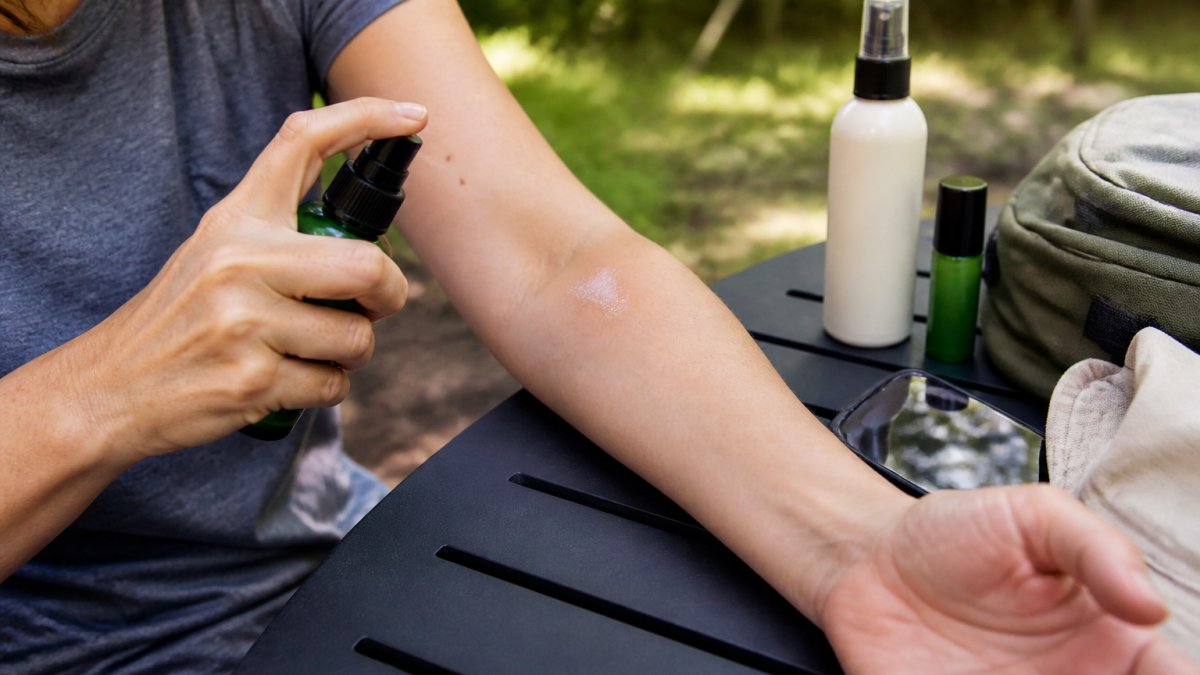
How to patch test a new natural tick spray
- Apply a small amount to the inside of your forearm or behind your ear.
- Wait a full 24 hours before applying anywhere else.
- Watch for redness, itching, swelling, or a rash at the test site.
Warning signs to take seriously include spreading redness, blistering, swelling beyond the test patch, or any difficulty breathing, the last is a medical emergency needing immediate attention.
A few ingredients deserve extra caution on sensitive skin. Peppermint and lemongrass can sting on broken skin, and citronella and cedarwood occasionally trigger contact reactions in people already prone to them. That does not make these oils unsafe for everyone, but it does mean a patch test is worth the 24 hours.
Children, pregnancy, and pets: why "natural" is not a universal pass
One of the biggest gaps in natural-repellent advice is assuming plant-based means family-safe. Suitability varies by ingredient, age, and how the product is meant to be used:
- Young children: Oil of lemon eucalyptus is not recommended for children under three, and many essential-oil sprays are advised against for infants entirely. Check the label's age guidance rather than assuming a gentle formula is fine for a toddler.
- Pregnancy: Some essential oils are best avoided or used only after checking with a healthcare provider. Treat any natural repellent the same way you would any other product during pregnancy, confirm before you apply.
- Pets: Cats in particular can react badly to certain essential oils, including some used in repellents. Do not spray a product designed for human skin onto a pet, and talk to your veterinarian about a tick-prevention plan instead.
Reading the label like a sensitive-skin shopper
Ingredient names alone do not tell you whether a product is right for you. What matters is how the label presents them:
- Active ingredients and concentrations: Look for named actives with stated percentages or oils listed near the top of the ingredient list, not buried at the end.
- Directions: A label specifying a reapplication interval gives you real information; "apply as needed" tells you less.
- Warnings: Age restrictions, "avoid broken skin," and "do not apply to face" notes matter most for reactive skin.
Tick-Bite Prevention Beyond Skin Sprays
Tick-bite prevention goes well beyond what you spray on your skin, and the people bitten least usually layer several habits together. Repellent is one layer; clothing, yard care, and pet protection are the others.
Clothing and gear. Light-colored, long-sleeved clothing makes ticks easier to spot. Tucking pant legs into socks and treating clothing with repellent closes the gaps ticks use to reach skin.
Yard and property. Ticks thrive in leaf litter, tall grass, and the shaded edges where your lawn meets woods.
Pets. Dogs pick up ticks in the same places you do, and they bring them indoors.
This is where a system beats a single product.
Frequently Asked Questions
What should I do if a tick spray causes a skin reaction?
Stop using the product immediately and wash the area with mild soap and cool water. Apply a cool compress to calm redness or itching, and avoid scratching. If the reaction spreads, blisters, or causes swelling beyond the application site, seek medical attention. Keep the bottle so you can note the exact ingredients; labels list the plant oils and any added fragrance or preservatives that may have triggered the response. Before trying another tick spray, patch test it on a small area of skin and wait 24 hours.
Are natural tick repellents as effective as conventional repellents?
They are not equal across the board. Products built around oil of lemon eucalyptus have been tested against ticks and offer a defined protection window, while many essential-oil blends have limited published tick data. Conventional actives such as DEET and picaridin generally last longer per application. For sensitive skin, the practical trade-off is protection duration against irritation risk. In heavy tick habitat, reapply natural formulas more often, target clothing and gear as well as skin, and treat natural repellent as one layer in a broader tick-bite prevention routine.
How do you test a tick repellent on sensitive skin?
Apply a small amount to the inside of your forearm or behind your ear, then wait 24 hours before using it more widely. Watch for redness, itching, burning, or small bumps. If your skin stays calm, test a slightly larger area on your leg the next day. Patch testing matters most with essential-oil sprays, because sensitivity varies by person and by concentration. Keep the patch test away from broken skin, and never test a new product on your face or neck first.
Which natural ingredients repel ticks?
Oil of lemon eucalyptus is the plant-based active with the most consistent tick-repellent evidence. Essential oils such as cedarwood, peppermint, lavender, geranium, lemongrass, and lemon balm appear in natural tick spray ingredients, often blended with witch hazel or a carrier oil. Concentration and formulation decide how well a blend performs, not the ingredient list alone. Two sprays can share the same oils and behave differently if one uses a higher percentage or a slower-release base. Check the label for the active ingredient percentage before comparing products.
Can you use natural tick spray on children?
Many natural tick sprays are marketed as family-friendly, but essential-oil products still need care with young children. Health Canada's pest control product framework treats repellents as regulated products, so follow the label directions for age and application. Spray onto your own hands first, then apply to a child's clothing and exposed skin, avoiding the face, hands, and any irritated areas. Do not let children apply the spray themselves, and wash treated skin once you are back indoors.