

Table of Contents
- Why Consider Natural Tick Repellents for Hikers
- Natural Tick Repellents vs. Synthetic Options: The Trade-Offs
- Top Botanical Repellents and Essential Oils for Tick Prevention
- Permethrin-Treated Clothing: The Set-and-Forget Defense
- DIY vs. Commercial Natural Products: What to Know
- Essential Tick Bite Prevention Tips for Hikers
- Health Canada Insect Repellent Regulations Explained
- Building Your Layered Defense Strategy
- Frequently Asked Questions
Last Updated: September 5, 2026
The search for natural alternatives to synthetic tick repellents for hikers usually stalls at the same question: do botanical products actually work? The honest answer is that some do, but none match the sheer duration of protection offered by synthetic chemicals. The most effective strategy treats natural repellents as one layer in a broader defense system rather than a complete replacement. Hikers who understand the trade-offs between essential oils, picaridin, and permethrin-treated clothing make smarter choices and dramatically reduce their risk of tick-borne diseases.
Why Consider Natural Tick Repellents for Hikers
Most hikers switch away from synthetic options for two reasons: skin sensitivity and environmental concern. DEET, the most common synthetic active ingredient, can damage synthetic fabrics, irritate sensitive skin, and carries a distinct odor that many find unpleasant (the CDC). Natural alternatives made from botanical repellents and essential oils offer a gentler profile that many users tolerate far better over a long season of trail use.
The practical appeal goes beyond comfort. Many plant-derived compounds break down quickly in the environment, which matters to hikers who spend their weekends in watersheds and wildlife corridors. However, the trade-off is real: shorter duration of protection means you reapply more often, and some natural products require hourly attention to maintain repellent efficacy against nymphal ticks, which are the primary vectors for Lyme disease.
Natural Tick Repellents vs. Synthetic Options: The Trade-Offs
The core tension comes down to duration versus chemistry. Synthetic repellents like those containing 20% picaridin provide up to 12 hours of protection against ticks in a single topical application, according to product specifications from Ranger Ready's technical documentation. Plant-based options such as oil of lemon eucalyptus typically offer around 6 hours, which is still respectable but demands more disciplined reapplication on long hikes.
| Option | Duration of Protection | Best Use Case | Key Limitation |
|---|---|---|---|
| Picaridin 20% spray | Up to 12 hours | Long day hikes, high-risk areas | Synthetic chemistry |
| Oil of lemon eucalyptus | Up to 6 hours | Moderate exposure, short trails | Shorter duration |
| Botanical essential oil blends | 2-4 hours typically | Light exposure, yard work | Frequent reapplication |
| Permethrin-treated clothing | Up to 70 washes | Set-and-forget base layer | Requires treated gear |
The most common mistake is treating this as an either-or decision. Synthetic options excel at skin protection, while permethrin-treated clothing handles the gear side of the equation. A thoughtful approach layers both rather than forcing a single product to do everything.
Top Botanical Repellents and Essential Oils for Tick Prevention
Several plant-based compounds have earned genuine respect in the hiking community, but their effectiveness is not uniform. Understanding how they work, and their limitations, is key to using them safely.
Oil of Lemon Eucalyptus (OLE) is the most rigorously studied natural repellent. Its active ingredient, PMD (para-menthane-3,8-diol), is a synthetic derivative of the natural compound found in the lemon eucalyptus tree. Health Canada registers OLE-based products as effective against ticks, typically offering up to 6 hours of protection. This makes it a viable option for shorter hikes, but it demands disciplined reapplication on longer outings.
Picaridin is often grouped with synthetics, but it is a synthetic analog of a natural compound found in the pepper plant. While not a botanical, it is a useful benchmark for comparing duration and efficacy.
Essential oil blends, such as those containing geraniol, cedarwood, or rosemary, work through a different mechanism. They create a volatile vapor barrier that confuses a tick's sensory receptors, making it harder for them to detect a host. However, this barrier is fragile. It degrades rapidly with sweat, evaporation, and even wind. Most commercial blends offer 2 to 4 hours of protection at best, and some laboratory studies show their efficacy drops significantly against nymphal black-legged ticks, the primary vectors for Lyme disease.
A common pattern is that a product's effectiveness depends heavily on its formulation. For example, a 2023 study published in the Journal of Medical Entomology found that a 10% geraniol solution repelled black-legged ticks for only 30 minutes, while a 20% solution provided over 2 hours of protection. This variability underscores why concentration matters more than the ingredient name alone.
When choosing a product, look for one that lists the percentage of active ingredients on the label. Products like Repel Oil of Lemon Eucalyptus clearly state their PMD content. Others, like EcoSMART Organic Insect Repellent, list their essential oil percentages but are classified as minimum-risk products, meaning their efficacy claims have not undergone the same level of regulatory scrutiny as registered products.
For hikers with sensitive skin, patch-test any new botanical product on a small area of your forearm 24 hours before your hike. Essential oils are potent compounds, and even "natural" products can cause contact dermatitis in some individuals.
Permethrin-Treated Clothing: The Set-and-Forget Defense
If there is one piece of gear that changes the calculus for hikers, it is permethrin-treated clothing. InsectShield Treated Apparel bonds permethrin directly to fabric fibers, providing protection that survives up to 70 washes.
The advantages are significant. You never need to remember to reapply during a hike, the treatment is odorless and invisible, and it kills ticks on contact rather than simply repelling them. This approach is particularly valuable for hunters and campers who spend multiple consecutive days in tick habitat and cannot rely on daily spray application.
The drawback is that treated apparel costs more than a bottle of spray, and you must purchase specific clothing items rather than treating what you already own. However, for long-distance hikers, the cost per day of protection often favors treated gear.
DIY vs. Commercial Natural Products: What to Know
The internet is full of recipes for homemade tick sprays using essential oils like cedar, lemongrass, and geranium. Some of these DIY blends do show promise in laboratory studies, but the concentration and consistency are difficult to control at home. A spray that works one week may fail the next if your oil quality varies or you mix it incorrectly.
Commercial natural products solve this problem through standardized formulations and quality control. They also carry regulatory status under Health Canada rules, which we will explore shortly, meaning their labels must accurately reflect what is inside. When you buy a commercial product, you know exactly how much active ingredient you are applying and how long you can expect it to last.
Essential Tick Bite Prevention Tips for Hikers
Beyond choosing the right repellent, how you move through tick habitat matters enormously, and the specifics depend on where you are hiking. The black-legged (deer) tick, the primary vector for Lyme disease, is most active in the spring and fall in the understory of deciduous forests. The American dog tick, which can transmit Rocky Mountain spotted fever, prefers grassy fields and trailsides in the summer. The lone star tick, found in the southeast, is an aggressive biter and can transmit ehrlichiosis.
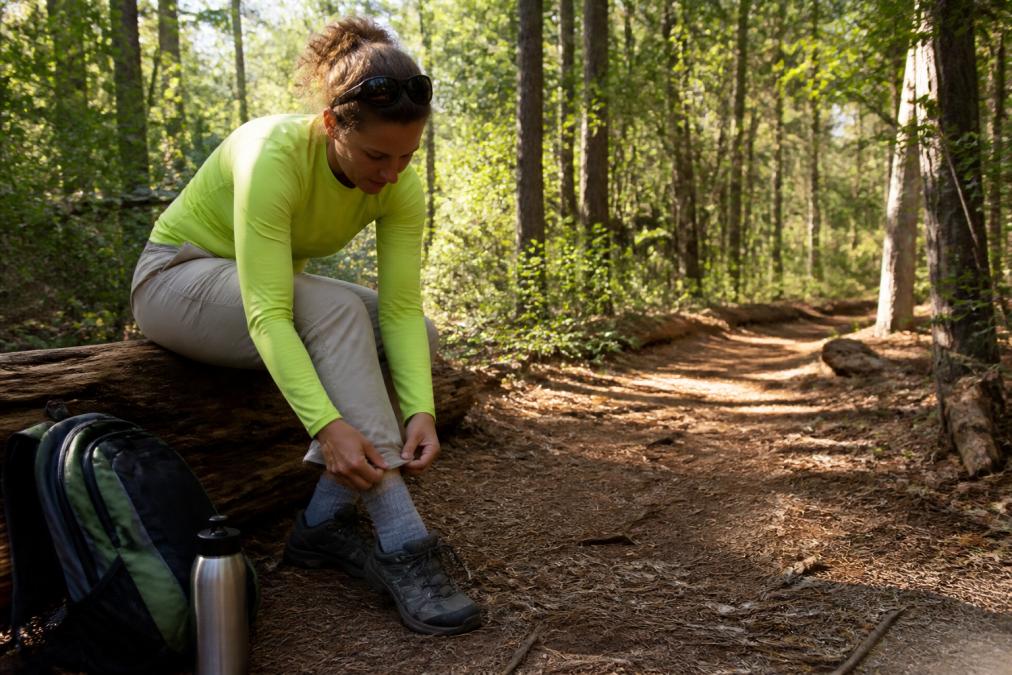
Knowing your local tick species changes your prevention strategy. In black-legged tick habitat, focus on nymph-stage ticks, which are the size of a poppy seed and most active in May through July. They are the primary vectors for Lyme disease because they are so small that hikers often miss them. In dog tick habitat, adult ticks are the primary concern, and they are easier to spot on light-colored clothing.
Staying to the center of trails, avoiding tall grass, and wearing light-colored clothing so you can spot ticks before they bite are foundational habits. But the post-hike protocol is where most people let their guard down.
Ticks often crawl for hours before attaching, so a thorough check within a few hours of leaving the trail can prevent transmission entirely. Focus on warm, moist areas: behind knees, in armpits, around the waistband, and along the hairline. Showering within two hours of returning and running your clothes through a hot dryer cycle for ten minutes kills any ticks that hitched a ride.
A unique angle most guides miss is the "tick drag" check. Before you leave a trailhead, drag a light-colored flannel cloth along the grass at the edge of the trail for 30 seconds. This can help you identify whether the area has active tick populations and adjust your post-hike vigilance accordingly. It is a simple, effective way to gauge your actual risk level for that specific outing.
Health Canada Insect Repellent Regulations Explained
Understanding how repellents are regulated helps you separate marketing claims from genuine efficacy. In Canada, pest control products are regulated under the Pest Control Products Act, administered by the Pest Management Regulatory Agency. Products that make claims about repelling ticks must be registered and carry a Pest Control Product number on the label, confirming they have been evaluated for both safety and effectiveness.
Natural products fall into a different category. Many botanical repellents are classified as minimum-risk products, which face less stringent registration requirements. This does not mean they are ineffective, but it does mean their efficacy claims have not undergone the same level of scientific scrutiny. When you see a product without a registration number, Health Canada's guidance on personal insect repellents recommends treating its claims with appropriate caution.
Building Your Layered Defense Strategy
The most effective approach to natural alternatives to synthetic tick repellents for hikers is not a single product but a system. Start with permethrin-treated clothing as your base layer, providing continuous protection on your gear. Add a skin repellent, whether synthetic or natural, for exposed areas. Finish with behavioral habits: trail choice, tick checks, and post-hike protocols.
For hikers who want comprehensive protection across people, pets, and yards, TickFree Outdoors offers sprays, repellent patches, and yard treatments designed to work as an integrated system. Our approach recognizes that ticks do not respect boundaries between your skin, your dog, and your backyard. Fast shipping and premium customer service mean you can build your defense before the season peaks.
The choice between natural and synthetic tick repellents does not have to be absolute. By understanding the strengths and limitations of each option, and layering them intelligently with smart trail habits, you can enjoy the outdoors with confidence. The best repellent is the one you actually use consistently, reapplied on schedule, and paired with thorough tick checks after every hike.
Frequently Asked Questions
Are there any natural tick repellents that actually work?
Yes, but with caveats. Oil of lemon eucalyptus (OLE) is the most effective plant-based option, offering up to 6 hours of protection. Products with 20% picaridin, though synthetic, are derived from pepper plants and last up to 12 hours. Many essential oil blends work for short periods, but require more frequent reapplication. For reliable protection on long hikes, combine a proven botanical spray with permethrin-treated clothing.
Do essential oils actually repel ticks effectively?
Some do, but duration is the challenge. Laboratory studies show oils like geraniol, citronella, and thyme can repel ticks, but they evaporate quickly. Most commercial natural sprays need reapplication every 1-2 hours, compared to 6 hours for OLE or 12 for picaridin. For shorter walks in low-risk areas, essential oil blends work fine. For all-day hikes in dense tick habitat, they are best used as part of a layered strategy.
What is the best tick repellent for hikers?
The best approach combines two defenses. First, treat your clothing with permethrin, which kills ticks on contact and lasts through 70 washes. Second, apply a skin repellent to exposed skin. For a natural option, choose oil of lemon eucalyptus for up to 6 hours of protection. For maximum duration, 20% picaridin offers 12 hours without the greasy feel of DEET. Both are safe for use on hiking gear.
Are there Health Canada-approved natural tick repellents?
Health Canada regulates all insect repellents under the Pest Control Products Act. Natural products containing oil of lemon eucalyptus, citronella, or other registered botanical actives are approved when they meet safety and efficacy standards. However, many 'minimum risk' essential oil blends are exempt from full registration, meaning their effectiveness claims are not rigorously verified. Always look for a Pest Control Product (PCP) number on the label to confirm Health Canada approval.
What should I wear while hiking to prevent tick bites?
Wear light-colored, long-sleeved shirts and long pants so ticks are easier to spot. Tuck your pants into your socks to create a barrier. Choose tightly woven fabrics, as ticks can bite through loose weaves. Treat your clothing with permethrin before heading out, or buy pre-treated apparel. After your hike, perform a full body check within 24 hours, since ticks often crawl for hours before attaching.
This article was written using GrandRanker