

Table of Contents
- Are Natural Tick Sprays Effective? What the Evidence Shows
- How Natural Tick Sprays Work: Active Ingredients and Mechanisms
- How Long Does Natural Tick Repellent Last on Skin and Clothing
- Natural vs. Chemical Tick Repellents: Field Efficacy Comparison
- Health Canada Tick Repellent Regulations and Approved Ingredients
- How to Prevent Tick Bites Naturally: Practical Strategies Beyond Sprays
- Safety Profiles: Natural Ingredients and Skin Sensitivity
- Making the Right Choice for Your Situation
Last Updated: August 23, 2026
Are Natural Tick Sprays Effective? What the Evidence Shows
Natural tick sprays divide outdoor enthusiasts, some swear by them, others have abandoned them after disappointing results. The truth is that efficacy depends on active ingredients, application frequency, environmental conditions, and what you're comparing against. Some natural formulations reduce tick encounters meaningfully; others offer minimal protection.
At TickFree Outdoors, we understand that customers often ask: if natural sprays work in tests, why don't they always work when I'm hiking? The short answer is that some natural products do provide meaningful protection, but understanding their limitations is critical for choosing the right approach.
Below, we'll walk through how natural tick sprays work, how long their protection actually lasts, how they compare to chemical alternatives, and practical strategies that go beyond sprays alone.
How Natural Tick Sprays Work: Active Ingredients and Mechanisms
Natural tick repellents function through volatile compounds that either repel ticks or disrupt their sensory systems. The most common active ingredients include oil of lemon eucalyptus (OLE), geranium oil, cedar oil, lavender, and rosemary extract.
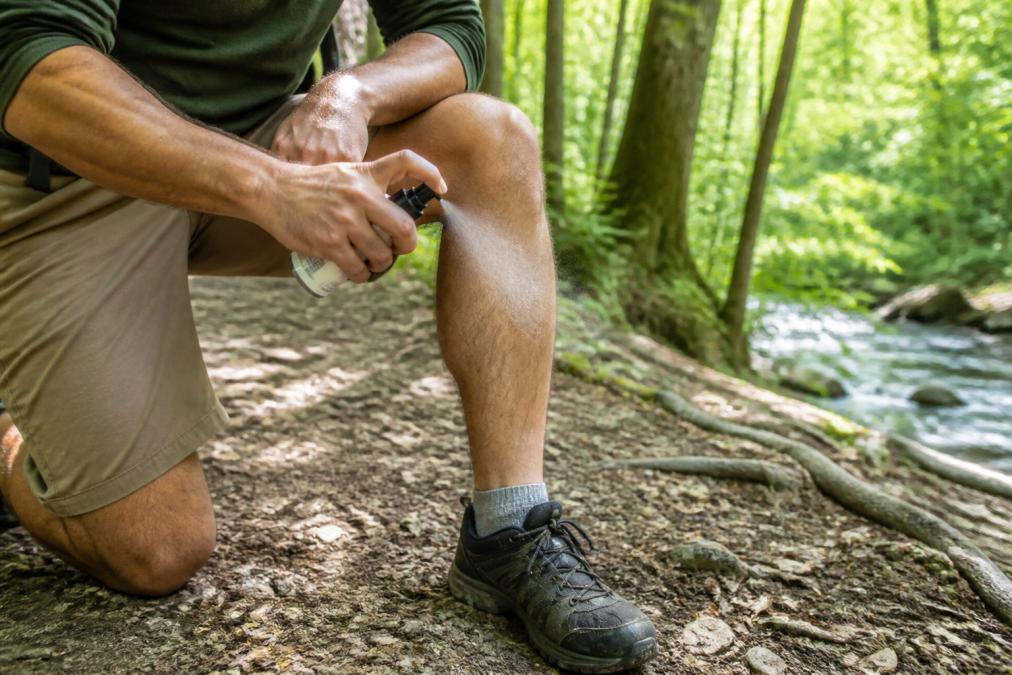
Oil of lemon eucalyptus is the most researched natural repellent and is recognized by Health Canada as a minimum-risk pesticide ingredient. OLE works by creating a volatile chemical barrier that ticks detect and avoid, though this barrier dissipates relatively quickly compared to synthetic alternatives. Cedar oil, lavender, and other botanical extracts operate similarly by producing aromatic compounds that interfere with tick chemoreception. However, concentration varies widely across commercial sprays, a spray containing 5% cedar oil will perform differently than one containing 15%.
Ticks locate hosts through carbon dioxide detection and heat sensing. When botanical repellents are applied, their volatile compounds create a sensory interference zone around skin or clothing. The problem is that this zone shrinks as volatiles evaporate, typically within 1-3 hours of application in outdoor conditions.
Natural repellents work best on clothing rather than directly on skin. Fabric holds volatile compounds longer because evaporation is slower. On exposed skin in humid, warm conditions, expect protection to decline within 30-60 minutes. On long sleeves or pants, protection may extend to 2-3 hours before reapplication becomes necessary.
How Long Does Natural Tick Repellent Last on Skin and Clothing
Duration is where natural tick spray claims often break down in practice. Most natural repellents last 1-3 hours on exposed skin under typical outdoor conditions. On clothing, duration extends to 3-5 hours, sometimes longer if treated before heading outside rather than applied in the field. Sweat, water exposure, and humidity accelerate evaporation.
Health Canada does not publish specific efficacy duration standards for natural repellents the way it does for registered chemical pesticides. This means manufacturers can claim duration without standardized testing. Some brands claim 8-hour protection, but independent testing consistently shows much shorter windows.
If you're relying on a natural spray for a full day of hiking, plan to reapply every 2-3 hours at minimum. This becomes impractical on extended backcountry trips where supplies are limited. The cumulative cost and weight of reapplying natural sprays multiple times per day often exceeds what you'd spend on a single application of a longer-lasting chemical alternative.
Most natural sprays wash off quickly after rain or stream crossings, requiring immediate reapplication. Chemical repellents, particularly those containing picaridin or DEET, maintain protection through water contact much more effectively.
Natural vs. Chemical Tick Repellents: Field Efficacy Comparison
Chemical repellents provide superior field efficacy and duration, while natural products offer a lower-toxicity option with acceptable protection for light to moderate tick exposure.
DEET-based products (typically 20-30% concentration) provide 4-8 hours of protection on skin ([EXTERNAL_LINK: CDC guidance on insect repellents | cdc.gov]). Picaridin (20% concentration) offers 8-12 hours ([EXTERNAL_LINK: CDC guidance on insect repellents | cdc.gov]). Both maintain effectiveness through sweat and water exposure far better than natural alternatives. These advantages are documented in field studies where researchers expose treated and untreated volunteers to tick-infested environments.
Natural products typically provide 1-3 hours of reliable protection, with performance declining noticeably after 2 hours in most conditions. This doesn't mean they're ineffective, it means they're effective for shorter periods and require different usage patterns.
The trade-off is toxicological. DEET and picaridin are synthetic chemicals with established safety profiles when used as directed, but they carry higher dermal absorption rates than natural oils. Some users prefer to avoid them due to sensitivity concerns or philosophical preferences. Natural repellents present lower systemic absorption risk, though concentrated botanical extracts can cause skin irritation in sensitive individuals and trigger allergic reactions.
For hikers in low-risk areas with brief outdoor exposure, a natural spray applied frequently may provide adequate protection. For hunters spending 8-12 hours in tick-dense environments, or for anyone with a history of tick-borne illness in their region, chemical repellents deliver more reliable field protection.
Health Canada Tick Repellent Regulations and Approved Ingredients
Health Canada's Pest Management Regulatory Agency (PMRA) classifies tick repellents into registered pesticides and minimum-risk products. Understanding this distinction clarifies which products have undergone rigorous testing.
Registered pesticide repellents containing DEET, picaridin, or permethrin must demonstrate efficacy and safety through laboratory and field testing before approval. Health Canada reviews data on dermal absorption, toxicity profiles, and real-world performance.
Minimum-risk pesticides include certain essential oils and botanical extracts, including oil of lemon eucalyptus. These products are exempt from full registration requirements because they have long histories of use with established low-toxicity profiles. However, the exemption does not mean Health Canada has tested their efficacy, it means the safety bar is lower.
A product labeled as a "natural tick repellent" may contain ingredients that Health Canada considers safe but has not formally evaluated for tick repellency. This is why you'll see vague language on natural product labels ("helps repel ticks") compared to specific duration claims on registered chemical products ("provides up to 8 hours of protection").
If selecting a natural spray, look for products that include oil of lemon eucalyptus as the primary active ingredient, as this is the most researched natural repellent in Health Canada's system. Products listing only "proprietary essential oil blend" without specific ingredient disclosure offer no assurance of consistent concentration or efficacy.
How to Prevent Tick Bites Naturally: Practical Strategies Beyond Sprays
Relying solely on sprays is a mistake. The most effective tick prevention combines multiple strategies. Clothing, behavior, and environmental awareness often prevent more bites than any spray alone.

Clothing as a barrier is your first line of defense. Wear long sleeves and long pants tucked into socks when moving through tall grass or brush. Light-colored clothing makes ticks visible before they attach. This single strategy prevents the majority of tick encounters, particularly for nymphal ticks that are too small to notice without contrast.
Permethrin-treated clothing deserves specific attention. Unlike skin-applied repellents, permethrin is an insecticide that kills ticks on contact. You can treat your own clothing with permethrin spray before trips, or purchase pre-treated garments. Permethrin remains effective through multiple wash cycles, making it cost-effective long-term. Health Canada permits permethrin use on clothing (not skin), and it's one of the most reliable tick-prevention tools available.
Behavior modification prevents exposure in the first place. Stay on marked trails rather than pushing through brush. Ticks don't jump or fly; they climb onto hosts from vegetation at ground level. Avoiding tall grass and dense brush eliminates the primary encounter point.
Post-hike inspection catches ticks before they attach. Ticks require several hours to burrow into skin, so a thorough check within 2-3 hours of returning indoors prevents most infections. Pay attention to warm, moist areas: behind ears, in the hairline, under armpits, in the groin, and behind knees.
Yard management reduces tick populations around your home. Mowing regularly, removing dead leaves, and creating a buffer zone of mulch or gravel between wooded areas and your yard significantly reduces tick encounters on your property.
Synergistic combinations work better than any single method. Apply a natural spray to clothing for 2-3 hour outings. Wear permethrin-treated long pants and sleeves. Stay on trails. Check yourself afterward. This layered approach catches ticks at multiple points.
Safety Profiles: Natural Ingredients and Skin Sensitivity
Natural doesn't automatically mean safer. Essential oils and botanical extracts carry their own safety considerations.
Oil of lemon eucalyptus is generally well-tolerated, with minimal reported adverse effects at typical repellent concentrations. However, it can cause skin irritation in sensitive individuals, particularly on broken skin or with repeated application.
Lavender oil, cedar oil, and other botanical extracts present higher irritation risk. These are more concentrated and volatile than OLE, and repeated application increases the likelihood of dermal sensitivity reactions. People with eczema, psoriasis, or other skin conditions should patch-test natural repellents on a small area before full-body application.
Chemical repellents like DEET and picaridin have been used for decades with extensive safety data. DEET at 20-30% concentration is approved for use on skin, including on children over 2 months old (refer to Health Canada guidelines for specific age recommendations). Picaridin at 20% shows similar safety profiles with lower dermal absorption than DEET. Both have established guidelines for application frequency and duration, and adverse effects are rare when used as directed.
For most users, either is safe. For those with sensitive skin or frequent outdoor exposure requiring multiple daily applications, chemical repellents may actually be the safer choice because they require fewer applications.
Making the Right Choice for Your Situation
Choosing between natural and chemical tick repellents requires honest assessment of your actual exposure level and what "effective" means in your context.
Natural tick sprays effective for:
- Day hikes (4-6 hours) in low to moderate tick areas
- People with strong preferences against synthetic chemicals
- Users willing to reapply every 2-3 hours
- Light exposure in residential yards or gardens
Natural tick sprays less effective for:
- Extended backcountry trips (8+ hours)
- High-risk tick areas with known Lyme disease prevalence
- Situations where reapplication isn't practical
- Water-heavy activities
Chemical repellents effective for:
- Full-day outdoor activities
- High-risk tick environments
- Situations where reapplication isn't practical
- Water-resistant protection needs
TickFree Outdoors offers premium sprays, repellent patches, and yard treatments because the right choice depends on your specific situation. If you're in an area with documented tick-borne disease risk, or if you're spending more than 6 hours outdoors in tick season, a natural spray alone probably won't provide the protection you need. Combine it with clothing strategies, permethrin-treated garments, and behavior modification. If you're doing light yard work or brief outdoor activities in low-risk areas, a natural spray applied to clothing offers reasonable protection with minimal toxicological concern.
The evidence doesn't support natural sprays as a complete replacement for chemical alternatives in high-risk situations. But it does support them as part of a layered prevention strategy, particularly when combined with other methods that most people neglect anyway.
=== FAQ ANSWERS (audit these too, same rules) ===
[1] Q: Is there a natural tick repellent that actually works? A: Natural tick sprays containing essential oils like lemon eucalyptus, lavender, or cedarwood can provide short-term repellency in laboratory conditions. However, field efficacy is limited, most natural formulations last 2-4 hours on skin before evaporating, especially with perspiration or water exposure. They work best as part of a layered approach combining treated clothing, frequent body checks, and environmental controls rather than as standalone solutions for heavy tick areas.
[2] Q: How long does natural tick repellent last compared to DEET-based products? A: Natural tick repellents typically last 2-4 hours on exposed skin, while DEET formulations (20-30% concentration) provide 4-8 hours of protection. Picaridin offers 6-8 hours of protection. Natural products lose efficacy faster due to evaporation rates of volatile compounds like essential oils. For extended outdoor exposure in tick-prone areas, reapplication every 2-3 hours is necessary with natural sprays, making them less practical for all-day activities.
[3] Q: What does Health Canada say about natural tick repellent safety? A: Health Canada regulates tick repellents under the Pest Control Products Act. Registered active ingredients like DEET and Picaridin meet rigorous safety standards, while many natural essential oil products are classified as minimum risk pesticides with less stringent testing. Health Canada recommends using approved repellents for tick-borne disease prevention. Always check product labels for Health Canada approval and follow application instructions, especially for children and those with sensitive skin.
[4] Q: Can I prevent tick bites naturally without sprays? A: Yes. Permethrin-treated clothing is highly effective, it kills ticks on contact and lasts through multiple washes. Other natural prevention methods include wearing long sleeves and pants tucked into socks, staying on cleared trails, avoiding tall grass and brush, and performing thorough body checks within 2 hours of returning indoors. Yard management (removing leaf litter, maintaining grass height) reduces tick habitat. Combining these strategies with any repellent, natural or chemical, provides the strongest protection.
Frequently Asked Questions
Is there a natural tick repellent that actually works?
Natural tick sprays containing essential oils like lemon eucalyptus, lavender, or cedarwood can provide short-term repellency in laboratory conditions. However, field efficacy is limited, most natural formulations last 2-4 hours on skin before evaporating, especially with perspiration or water exposure. They work best as part of a layered approach combining treated clothing, frequent body checks, and environmental controls rather than as standalone solutions for heavy tick areas.
How long does natural tick repellent last compared to DEET-based products?
Natural tick repellents typically last 2-4 hours on exposed skin, while DEET formulations (20-30% concentration) provide 4-8 hours of protection. Picaridin offers 6-8 hours of protection. Natural products lose efficacy faster due to evaporation rates of volatile compounds like essential oils. For extended outdoor exposure in tick-prone areas, reapplication every 2-3 hours is necessary with natural sprays, making them less practical for all-day activities.
What does Health Canada say about natural tick repellent safety?
Health Canada regulates tick repellents under the Pest Control Products Act. Registered active ingredients like DEET and Picaridin meet rigorous safety standards, while many natural essential oil products are classified as minimum risk pesticides with less stringent testing. Health Canada recommends using approved repellents for tick-borne disease prevention. Always check product labels for Health Canada approval and follow application instructions, especially for children and those with sensitive skin.
Can I prevent tick bites naturally without sprays?
Yes. Permethrin-treated clothing is highly effective, it kills ticks on contact and lasts through multiple washes. Other natural prevention methods include wearing long sleeves and pants tucked into socks, staying on cleared trails, avoiding tall grass and brush, and performing thorough body checks within 2 hours of returning indoors. Yard management (removing leaf litter, maintaining grass height) reduces tick habitat. Combining these strategies with any repellent, natural or chemical, provides the strongest protection.
Tick prevention requires more than a single product. TickFree Outdoors provides the complete toolkit, sprays, patches, yard treatments, and expert guidance, so you can choose the right combination for your exposure level and preferences. Whether you prefer natural ingredients or maximum efficacy, we have solutions designed for serious outdoor protection with fast shipping and support when you need it.
This article was written using GrandRanker