

Table of Contents
- Natural Tick Repellent for Hiking: What Works and What Doesn't
- Quick Comparison Table: Natural Tick Repellents for Hiking
- How We Evaluated These Natural Tick Repellents
- Essential Oils for Tick Prevention: Efficacy and Limitations
- Health Canada Tick Repellent Guidelines and Approved Ingredients
- How to Perform a Tick Check After Hiking
- Proper Application Techniques for Natural Tick Repellents
- Combining Natural Repellents with Clothing and Gear Treatment
Last Updated: August 4, 2026
Natural Tick Repellent for Hiking: What Works and What Doesn't
When you're planning a hiking trip through wooded areas or grasslands in Canada, protecting yourself from ticks should be a top priority. A natural tick repellent for hiking can make the difference between an enjoyable outdoor experience and days spent checking your skin for embedded parasites. At TickFree Outdoors, we understand that hikers want effective protection without harsh chemicals, which is why we've compiled this comprehensive guide to the most reliable natural options available today.
Ticks in Canada can carry serious pathogens. The blacklegged tick, commonly found across much of eastern and central Canada, transmits Lyme disease and other tick-borne illnesses. According to Public Health Agency of Canada tick surveillance data, reported cases of Lyme disease have been increasing, particularly in regions where tick populations are expanding. This makes preventative measures essential before you hit the trail.
The challenge, however, is that not all natural repellents perform equally. Some essential oil blends fade within an hour, leaving you vulnerable during a full day of hiking. Others work reasonably well but require frequent reapplication. Below, we'll show you exactly how to evaluate natural tick repellents, which ingredients actually deliver results, and how to combine them with other prevention strategies for maximum protection.
Quick Comparison Table: Natural Tick Repellents for Hiking
| Product | Active Ingredient | Duration | Best For | Health Canada Status |
|---|---|---|---|---|
| PureGard Botanical | Oil of Lemon Eucalyptus (Citriodiol®) | 5 hours (ticks) | Families seeking Canadian-made solutions | Registered (PCP 35851) |
| Murphy's Naturals | Oil of Lemon Eucalyptus (30%) | 4 hours (ticks) | Budget-conscious hikers | Not Health Canada registered |
| Natrapel | Oil of Lemon Eucalyptus (30%) | 6 hours | Travelers needing portable protection | Not Health Canada registered |
| OFF! Botanicals | Plant-based formula (synthesized eucalyptus) | 5 hours (ticks) | Convenience and retail availability | Approved for Canada |
| doTERRA TerraShield | Essential oil blend (Citronella, Lemongrass, Thyme) | Variable | Essential oil enthusiasts | Not registered as repellent |
| Tick Me Off Blend | Organic essential oils (Cedarwood, Eucalyptus, Geranium) | Variable | DIY application with carrier oil | Not registered as repellent |
How We Evaluated These Natural Tick Repellents
Our evaluation focused on three critical factors that matter for hiking: actual tick repellent efficacy, duration of protection, and practical application in the field.
First, we prioritized products with Health Canada registration or those containing established active ingredients like Oil of Lemon Eucalyptus (OLE). Health Canada's registration process verifies both safety and efficacy, which gives you confidence that a product actually works as claimed. Products like PureGard Botanical carry PCP (Pest Control Product) registration numbers, meaning they've met rigorous testing standards.
Second, we examined duration of protection. A repellent that lasts only 90 minutes isn't practical for a half-day hike. We focused on options providing at least 4-5 hours of documented tick protection. Many essential oil blends lack published efficacy data, which is why we flagged them separately from established repellents.
Third, we considered real-world application. Can you carry it easily? Does it stain clothing? Will it damage your gear? These practical questions matter as much as raw efficacy when you're on the trail.
Essential Oils for Tick Prevention: Efficacy and Limitations
Essential oils have become popular in natural tick prevention, but here's what most guides miss: the difference between "smells like it might repel ticks" and "actually repels ticks" is enormous.
Oils like citronella, lemongrass, cedarwood, and rose geranium do have tick-repelling properties. However, their effectiveness varies dramatically depending on concentration, formulation, and how they're applied. A diluted essential oil blend in a carrier oil might provide 1-2 hours of protection, while a concentrated product with 30% Oil of Lemon Eucalyptus can protect for 4-6 hours.
The core issue with pure essential oils is stability and concentration. When you mix essential oils with a carrier oil (like sesame seed oil used in doTERRA TerraShield), the active compounds can evaporate quickly, especially in warm weather or on active skin. This is why products like Tick Me Off Essential Oil Blend require reapplication every 1-2 hours during extended outdoor time, a significant inconvenience on a full-day hike.
Oil of Lemon Eucalyptus (OLE), also known by its chemical name Citriodiol®, stands apart. It's not just an essential oil, it's a standardized, concentrated extract that delivers consistent tick repellent performance. Products containing 30% OLE have been tested against multiple tick species and consistently show 4-6 hour protection windows. This is why Health Canada approves it as an active ingredient in registered repellent products.
Health Canada Tick Repellent Guidelines and Approved Ingredients
Understanding what Health Canada approves tells you which products have undergone rigorous testing. The regulatory body maintains a list of acceptable active ingredients for insect repellents, and this list is considerably shorter than what the U.S. allows.
Health Canada recognizes several active ingredients for tick repellent purposes. Oil of Lemon Eucalyptus (Citriodiol®) is the primary botanical option approved for tick protection. Products containing 30% OLE can claim protection against ticks when properly registered as a Pest Control Product.
Other approved ingredients include DEET and picaridin, which are synthetic but highly effective. However, since you're seeking natural options, DEET falls outside your scope for this article.
PureGard Botanical Tick & Mosquito Repellent carries registration number PCP 35851 and is manufactured in Canada by an Indigenous Women-owned company. It uses OLE as its active ingredient and provides documented protection against ticks for up to 5 hours. The product is safe for use on children over 6 months, dogs, and horses (though not cats, due to certain compounds in the formulation).
Bite Insect Repellent holds registration number REG. NO. 35004 P.C.P. ACT and is biodegradable and plant-based. It protects against mosquitoes for up to 6 hours and ticks for up to 5 hours, making it another solid Health Canada-approved option.
When evaluating products, check the label for a PCP registration number. If it's missing, the product hasn't undergone Health Canada's efficacy testing, which means claims about tick protection are unverified.
How to Perform a Tick Check After Hiking
Repellents reduce your risk, but they don't eliminate it entirely. A thorough tick check after hiking is your second line of defense and often catches ticks before they attach.
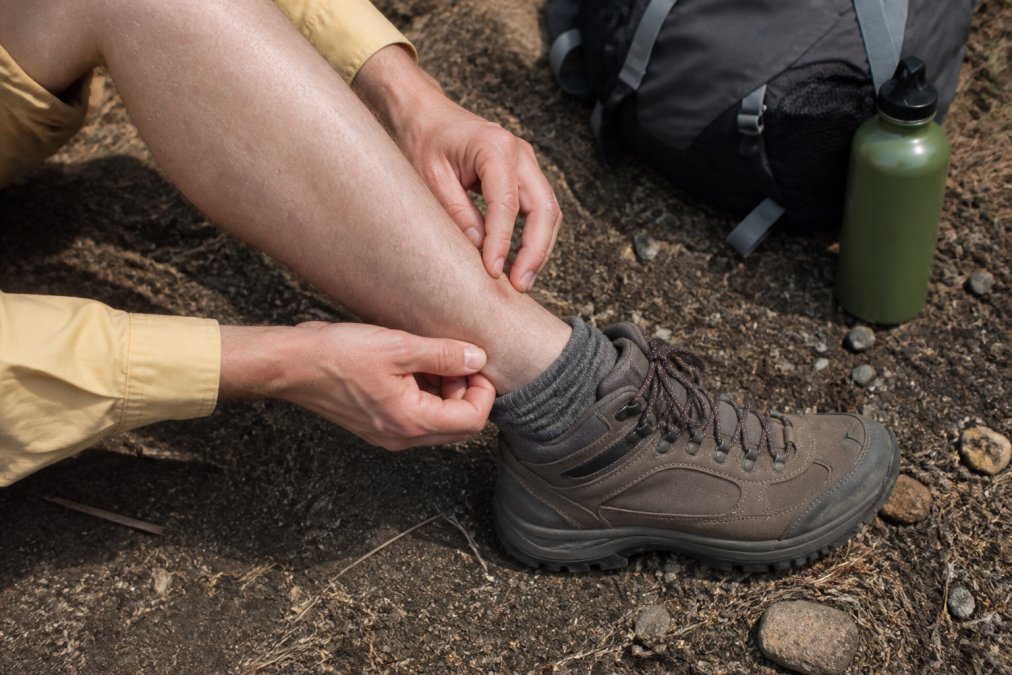
Start your tick check as soon as you return from the trail, ideally within a few hours. Remove your hiking clothes and inspect your entire body. Pay special attention to areas where ticks commonly attach: behind your ears, along your hairline, in your armpits, behind your knees, between your toes, and in your groin area. Ticks are small, so use a mirror or ask a hiking partner to check areas you can't see easily.
Run your hands over your skin slowly, feeling for small bumps. Unattached ticks feel like sesame seeds or poppy seeds on your skin. If you find one, remove it promptly using fine-tipped tweezers. Grasp the tick as close to the skin as possible and pull straight upward with steady pressure. Don't twist or jerk, as this can leave mouthparts embedded in your skin.
After removal, clean the bite area with rubbing alcohol or soap and water. Place the tick in a sealed bag or container, some public health units ask you to submit ticks for testing to check for pathogens like Lyme disease bacteria.
A common mistake is checking only obvious exposed areas. Ticks hide in less obvious places. Check under your waistband, inside your belly button, and along any seams where clothing contacted your skin. Nymphal ticks (immature ticks) are particularly small and easy to miss.
Proper Application Techniques for Natural Tick Repellents
How you apply a natural tick repellent matters almost as much as which product you choose. Poor application leaves gaps in protection.
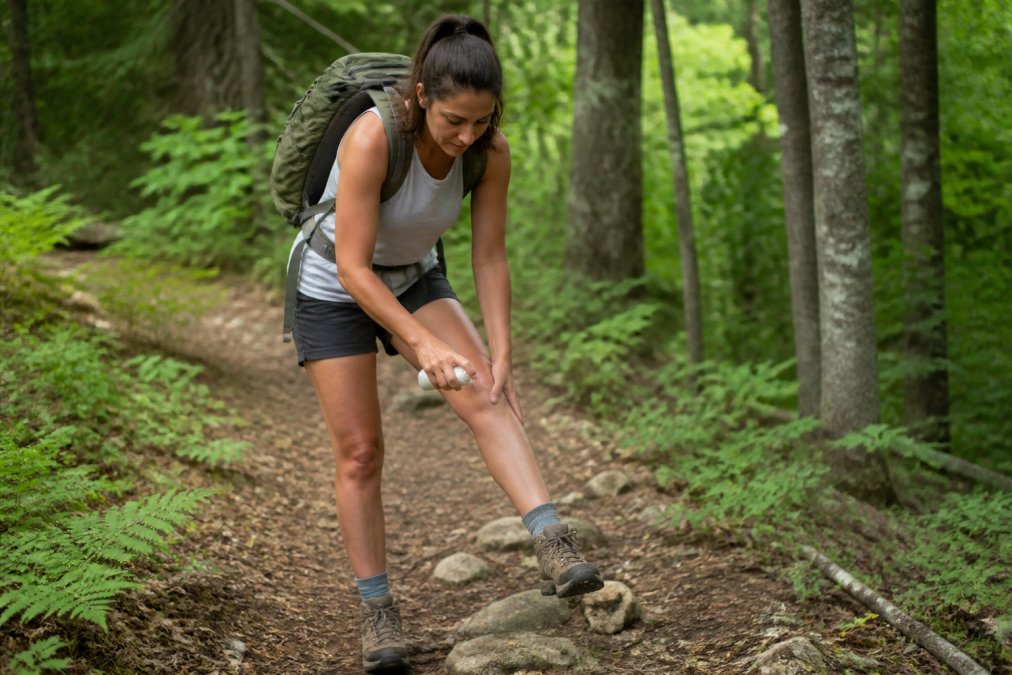
For spray repellents like PureGard Botanical, Murphy's Naturals, or Natrapel, apply the product evenly to all exposed skin. Don't just spray your arms and legs, cover your neck, behind your ears, along your hairline, and any exposed areas on your torso. A common mistake is applying too little. Use enough that your skin feels slightly damp, but not dripping.
If you're using a lotion-based repellent like OFF! Botanicals, rub it in thoroughly until fully absorbed. Reapplication timing depends on the product. Health Canada-registered products typically maintain efficacy for 4-6 hours, but this varies based on sweating, water exposure, and sun exposure. If you're hiking in hot weather or crossing streams, reapply more frequently.
For essential oil blends that require a carrier oil, apply the mixture to exposed skin and allow it to dry. These products typically need reapplication every 60-90 minutes. The tradeoff: they're less convenient than registered repellents, but they appeal to those seeking 100% natural formulations.
Timing matters too. Apply repellent before you enter the hiking area, not once you're already on the trail. Give spray repellents 10-15 minutes to dry before putting on long sleeves or jackets. This ensures the active ingredients aren't rubbed off immediately.
Combining Natural Repellents with Clothing and Gear Treatment
The most effective tick prevention strategy isn't relying solely on skin repellents. Instead, combine multiple approaches for layered protection.
Start with clothing choices. Wear light-colored, long-sleeved shirts and long pants when hiking in tick-prone areas. Light colors make ticks visible, so you can spot and remove them before they attach. Tuck your pants into your socks or boot tops, this creates a barrier that forces ticks to crawl over fabric rather than directly onto skin.
Next, treat your clothing and gear with permethrin, a synthetic insecticide that kills ticks on contact. Unlike skin repellents, permethrin-treated clothing actually kills ticks rather than just repelling them. You can purchase permethrin spray (like Sawyer Permethrin) and apply it to hiking clothes, hats, and backpacks before your trip. Let treated items dry completely before wearing.
Permethrin and natural skin repellents work together effectively. Your skin repellent keeps ticks from landing on exposed skin, while permethrin-treated clothing kills any ticks that do land on your gear or clothing. This combination is particularly valuable in high-tick areas like the Pacific Northwest or parts of eastern Canada where Lyme disease is common.
Environmental modifications also help. When you return home, place your hiking clothes directly into a hot dryer for 10 minutes, this kills any ticks that made it onto your gear. Leave your backpack outside or in a garage for a day or two rather than bringing it directly into your living space.
Natural Tick Repellent for Hiking: Making Your Choice
Selecting the right natural tick repellent depends on your priorities. If you want Health Canada-registered efficacy with minimal reapplication, PureGard Botanical or Bite Insect Repellent are your strongest choices. Both use Oil of Lemon Eucalyptus and provide 5-6 hours of protection with a single application.
If budget is your primary concern and you're willing to reapply more frequently, Murphy's Naturals or Natrapel offer solid OLE-based protection at lower price points. Both are available at many Canadian retailers and online.
If you're committed to essential oil blends and don't mind frequent reapplication, products like Tick Me Off Essential Oil Blend or doTERRA TerraShield appeal to those seeking 100% natural formulations. Understand, however, that these require more frequent reapplication and lack Health Canada registration, which means their efficacy claims haven't undergone the same regulatory testing.
TickFree Outdoors offers comprehensive tick protection solutions that combine skin repellents, yard treatments, and pet protection products. With fast shipping across Canada and premium customer service, TickFree Outdoors helps you layer your defenses against ticks across all areas of your outdoor life, not just hiking.
The most important decision is to start using protection before you need it. Tick prevention works best when implemented before exposure, not after a bite. Combine your chosen natural repellent with permethrin-treated clothing, proper tick checks, and environmental management for the most comprehensive protection available.
Protecting yourself from ticks while hiking doesn't require harsh chemicals or complicated routines. A Health Canada-approved natural repellent, light-colored clothing, permethrin-treated gear, and a thorough post-hike tick check create a reliable defense system. TickFree Outdoors provides the premium sprays, patches, and treatments you need to enjoy the outdoors with confidence. Start with Health Canada's official tick prevention guidance to understand your local tick risk, then choose your repellent strategy based on your hiking frequency and regional exposure levels.
Frequently Asked Questions
How long does natural tick repellent actually last on skin or clothing?
Most natural tick repellents containing oil of lemon eucalyptus (OLE) provide 4-6 hours of protection against ticks, though some products claim up to 5-6 hours. Duration depends on formulation, sweat, water exposure, and reapplication frequency. Synthetic alternatives like DEET last longer, but natural options require reapplication during extended hikes. Check product labels for specific protection windows and reapply after swimming or heavy sweating.
Are essential oils for tick prevention as effective as EPA-registered repellents?
Essential oil blends like cedarwood, rose geranium, and clove bud oil show some repellent properties but lack the rigorous clinical testing of registered products. Health Canada-approved natural repellents with OLE (Citriodiol) have demonstrated efficacy. Pure essential oil blends require dilution and frequent reapplication, making them less practical for hiking than pre-formulated, registered sprays. For reliable tick protection on the trail, Health Canada-registered products offer better evidence of effectiveness.
What should I do if I find a tick after hiking?
Remove the tick promptly using fine-tipped tweezers. Grasp it as close to the skin as possible and pull straight out without twisting. Place the tick in a sealed container or bag. Clean the bite area with soap and water or rubbing alcohol. Do not crush the tick with your bare fingers. Watch for symptoms of tick-borne diseases like Lyme disease over the following weeks. If you develop a rash or flu-like symptoms, contact your healthcare provider and mention the tick exposure.
Can I use natural tick repellent on my dog while hiking?
Some natural repellents are safe for dogs, but not all. Products containing OLE (like PureGard) are safe for dogs and horses but not cats. Essential oil blends may be toxic to cats and require careful dilution for dogs. Always check product labels for pet safety. For dogs, consult your veterinarian about tick prevention options, as prescription flea and tick treatments often provide longer-lasting protection than natural sprays for extended outdoor activities.
How do I know which natural tick repellent will work best for heavy tick areas?
In regions with high tick density or Lyme disease risk (common in parts of Canada), choose Health Canada-registered products with proven efficacy like those containing OLE at 30% concentration. Combine repellent use with clothing treatment (permethrin on pants and socks), proper tick checks, and environmental awareness. Natural repellents alone may not provide sufficient protection in heavily infested areas; layering multiple prevention methods increases your defense against nymphal ticks and adult ticks.
This article was written using GrandRanker