

Table of Contents
- Why Correct Application Matters for Natural Bug Spray
- How to Apply Natural Bug Spray to Skin: Step-by-Step
- How to Apply Repellent to Clothing for Extended Protection
- How Often to Reapply Natural Bug Spray for Lasting Defense
- Natural Bug Spray and Sunscreen: Compatibility Tips
- Best Practices for Tick Repellent Application in High-Risk Areas
- Common Application Mistakes and How to Avoid Them
- Conclusion: Build a Routine That Works
- Frequently Asked Questions
Last Updated: September 7, 2026
Why Correct Application Matters for Natural Bug Spray
Natural bug spray fails more often from poor application than from weak ingredients. Unlike synthetic repellents that bind aggressively to skin, botanical formulas rely on essential oils with faster evaporation rates, so coverage and technique directly determine how long protection lasts.
This guide walks through the exact steps for skin, clothing, and high-risk tick zones so you get the full protection window from every bottle.
Most guides treat natural bug spray like chemical aerosol sprays, which is a mistake. Essential oil-based products need different handling because of their volatility and skin absorption patterns.
Government of Canada guidance on personal insect repellents confirms that application technique matters as much as product choice for preventing bites and vector-borne diseases.
How to Apply Natural Bug Spray to Skin: Step-by-Step
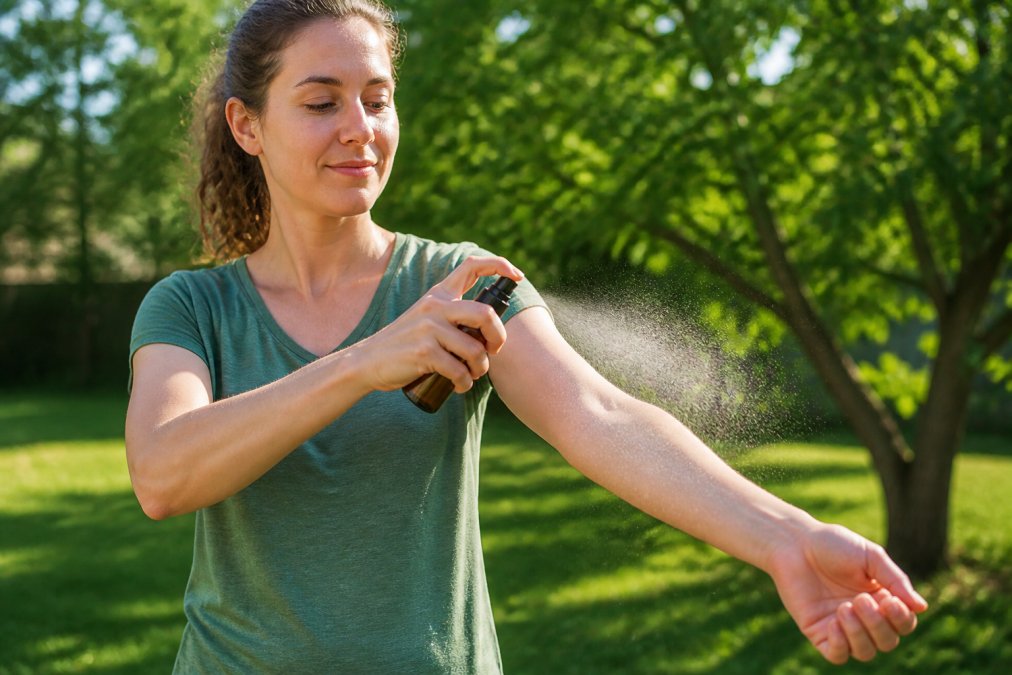
Natural bug spray works best when applied in a controlled, deliberate sequence. The goal is an even micro-layer of active ingredients across all exposed skin, not a heavy soak that evaporates quickly.
Follow these steps for proper application:
- Shake the bottle vigorously for 10 to 15 seconds before spraying. Essential oils separate from carrier liquids when sitting, and an unmixed bottle delivers inconsistent concentration levels.
- Hold the nozzle 15 to 20 cm from your skin. Closer application pools the liquid; farther application wastes most of it to the air. This distance creates the fine mist needed for even distribution.
- Spray in one continuous sweeping motion across each limb rather than pumping multiple times in one spot. One full pass per surface area is enough.
- Rub gently to spread only if the product label instructs it. Many botanical sprays are designed to dry on their own, and rubbing can push oils into pores, increasing dermal absorption and reducing surface protection.
- Allow the spray to dry completely before dressing or touching the area. Wet repellent transfers to fabric or hands, leaving gaps in coverage.
Facial Application and Sensitive Areas
Never spray natural bug spray directly onto your face, as the mist can reach your eyes, nose, or mouth and cause irritation. Spray a small amount into your palms first, then pat the product lightly over your forehead, cheeks, and neck, avoiding the eye area entirely.
Skip mucous membranes completely. The skin around your eyes and lips absorbs essential oils faster, which increases the risk of an allergic reaction or burning sensation. For the neck, apply to the sides and back rather than the front, where it may rub off on collars or get ingested accidentally.
How to Apply Repellent to Clothing for Extended Protection
Applying natural bug spray to clothing extends protection well beyond what skin application alone achieves, since fabric holds botanical oils longer than skin does. This matters most for socks, pant cuffs, and collar areas where ticks climb aboard.
Lay clothing flat or wear it loose, then spray each garment section with a light, even pass from 15 to 20 cm away. Pay special attention to fabric compatibility: some essential oils, particularly citrus-based ones, can stain or degrade synthetic materials over time. Test an inconspicuous area first, and focus sprays on natural fibers like cotton and wool, which absorb oils without damage.
Spray clothing about 10 minutes before putting it on so the alcohol or carrier base can evaporate, keeping active botanical ingredients locked into the fabric weave. Reapply to clothing less frequently than to skin, since fabric does not sweat or absorb the repellent the same way.
Fabric Compatibility: What's Safe to Spray
Natural repellents interact differently with various fabrics, and knowing which materials tolerate botanical oils is essential to avoid damage. Here is a practical guide based on common outdoor gear:
| Fabric Type | Compatibility | Why |
|---|---|---|
| Cotton | Excellent | Absorbs oils without staining; holds repellent well |
| Wool | Excellent | Natural fiber that resists oil damage; good for socks and base layers |
| Nylon | Good | Generally safe, but test first; some citrus oils may cause discoloration over time |
| Polyester | Fair | Can degrade with repeated exposure to certain essential oils; use sparingly |
| Spandex/Elastane | Poor | Oils can break down elastic fibers, reducing stretch and fit |
| Waterproof shells (Gore-Tex) | Avoid | Oils can compromise the water-repellent finish; use only on outer surfaces if necessary |
A note on staining: Dark-colored synthetic fabrics are more prone to visible oil marks. If you are wearing technical gear you cannot afford to damage, spray a light layer on a test patch first and let it dry completely before committing to full coverage.
The Unique Angle: Treating Gear, Not Just Garments
Natural repellent application extends to your gear. Backpacks, hats, and even camping chairs can harbor ticks that transfer to you later. Spraying the outside of a backpack or the brim of a hat with a light mist creates an additional barrier without contacting your skin directly, especially useful for children's gear.
For footwear, spray the outside of boots and the laces, but avoid the inside where oils can cause irritation or degrade the lining. Let footwear dry completely before wearing to prevent moisture buildup that can lead to blisters.
Environmental Consideration: Minimizing Runoff
When treating garments, do so away from water sources, gardens, or areas where runoff could carry oils into sensitive ecosystems. Essential oils like citronella and lemongrass can be toxic to aquatic life in concentrated amounts. Spray over a tarp or on a hard surface where overspray can be wiped up, and allow treated clothing to dry indoors or in a shaded area away from direct rainfall.
This approach not only protects your gear but also reduces the chemical footprint of your outdoor activities, keeping your favorite trails and campsites healthy for years to come.
How Often to Reapply Natural Bug Spray for Lasting Defense
Natural bug spray requires more frequent reapplication than DEET-based products because essential oils evaporate faster from the skin surface (the CDC). Plan to reapply every 60 to 90 minutes during active outdoor exposure, and sooner if you are sweating heavily or spending time near standing water.
Several factors shorten efficacy duration in practice:
- Sweat and humidity accelerate evaporation and wash oils away
- High temperatures increase the evaporation rate of volatile compounds
- Minor skin oils dilute the repellent over time
- Wind blows off fine mist particles before they settle
The natural-specific reapplication interval is the single biggest difference from chemical repellents, and most user disappointment traces back to missing this window. Set a phone timer or tie reapplication to a natural break, like finishing a trail segment or stopping for water.
Natural Bug Spray and Sunscreen: Compatibility Tips
Applying natural bug spray and sunscreen together requires a specific order: sunscreen first, then repellent. Sunscreen needs to absorb into the skin to work, while natural bug spray works by sitting on the surface, so layering preserves both functions.
Wait 10 to 15 minutes after applying sunscreen before spraying natural bug spray. This allows the sunscreen to set without the botanical oils interfering with its absorption, which can reduce UV protection. Many experts note that mixing the two products can dilute active ingredients from both, so avoid combination products unless they are explicitly formulated for dual use.
Sunscreen compatibility is a known weak point for natural repellents, since the oils in botanical sprays can break down chemical UV filters. If you are using a mineral sunscreen, the interaction is less of a concern. When in doubt, apply sunscreen to your face and body, let it dry, then apply natural bug spray only to exposed skin areas that need insect protection.
Best Practices for Tick Repellent Application in High-Risk Areas
Tick repellent application demands extra rigor in wooded, grassy, or brush-heavy zones. Unlike mosquitoes, ticks crawl upward from ground level, so your lower body needs the most thorough coverage.
Spray socks, pant legs, and boots before dressing, and pay special attention to waistbands and shirt cuffs. For the lower body, apply natural bug spray in an upward sweeping motion from ankles to knees, then reapply after brushing against tall grass or sitting on logs. Ticks often wait at knee to waist height, so do not neglect the upper legs and hips.
In high-risk areas, combine skin application with clothing treatment rather than choosing one. This dual-layer approach addresses both the tick's crawling path and exposed skin. Ticks can survive short contact with weak repellent concentrations, so uniform coverage matters more than total product volume.
Public Health Agency of Canada tick bite prevention guidance recommends treating both skin and clothing when entering known tick habitats, and checking for ticks after outdoor activity.
Common Application Mistakes and How to Avoid Them
Most natural bug spray failures trace back to a handful of repeatable errors that are easy to correct once you know what to look for.
| Mistake | What Happens | The Fix |
|---|---|---|
| Spraying too close to skin | Product pools and evaporates unevenly | Hold nozzle 15 to 20 cm away |
| Skipping the shake | Uneven concentration of active oils | Shake 10 to 15 seconds before each use |
| Rubbing after spraying | Pushes oils into skin, reducing surface protection | Let spray dry naturally |
| Forgetting clothing | Ticks crawl under untreated fabric | Spray pant cuffs, socks, and collars |
| Waiting for sensation to reapply | Protection window already passed | Reapply every 60 to 90 minutes |
One mistake stands out as most damaging: applying natural bug spray only to exposed skin and ignoring the environmental context. If you are moving through tall grass or sitting at a campsite edge, the repellent on your arms matters less than the barrier at your ankles and waist. Reassess coverage whenever your surroundings change.
Another frequent error is over-spraying in response to a perceived failure. Adding more product does not extend protection once the evaporation threshold is reached; it only increases skin irritation risk. The answer is reapplication at the correct interval, not a heavier initial dose.
The Sunscreen Sequence Mistake
Applying natural bug spray before sunscreen, or mixing them together, compromises both products. Sunscreen requires absorption into the skin to form a UV-protective layer, while natural repellents work by sitting on the surface. If you apply repellent first, the sunscreen cannot penetrate effectively, and mixing can reduce sun protection.
The correct sequence is sunscreen first, then repellent. Wait 10 to 15 minutes for the sunscreen to set before spraying your natural bug spray. This layering preserves both functions and is especially important for mineral sunscreens.
The Environmental Overspray Mistake
Spraying natural bug spray carelessly in your yard or at a campsite can have unintended consequences. Many essential oils, including citronella, eucalyptus, and lemongrass, are effective insect repellents but can be harmful to beneficial insects and toxic to aquatic life if they reach water sources.
To minimize this impact, apply your spray in a contained area away from gardens, ponds, or streams. Hold the nozzle closer to your skin (15 cm rather than 20 cm) to reduce airborne drift, and avoid spraying on windy days when the mist can travel. If you are treating clothing, do it on a tarp or hard surface where any overspray can be wiped up rather than soaking into the ground.
The Patch Test Oversight
Skipping a patch test is a mistake that can ruin an outdoor trip. Essential oils are potent allergens for some people, and a full-body application without testing can trigger contact dermatitis, redness, or itching. Always test a small area of skin, the inside of your forearm is ideal, at least 24 hours before your planned activity.
This is particularly important for children, whose skin is more sensitive and reactive. A patch test for each new product is a small investment of time that prevents a miserable experience in the backcountry.
Conclusion: Build a Routine That Works
Correct natural bug spray application is a habit, not a one-time skill. The routine that works combines proper distance and sweeping motion on skin, deliberate clothing treatment for tick zones, and a disciplined reapplication schedule.
Our premium repellent sprays are formulated for realistic outdoor conditions, and our patches provide a steady backup layer for long excursions where reapplication is inconvenient. For yards adjacent to wooded areas, our treatment options reduce tick pressure at the source so your personal protection has less work to do.
Get started with TickFree Outdoors and build a protection routine that holds up through the full season. TickFree Outdoors product collection for people, pets, and yards
Frequently Asked Questions
Are you supposed to rub in natural bug spray after spraying it on your skin?
No, you should not rub it in. Rubbing can push the active ingredients into your skin pores, which reduces its efficacy duration on the surface. Instead, spray a light, even layer onto exposed skin and let it air dry. For the face, spray a small amount into your hands first, then gently pat it onto your cheeks and forehead, avoiding the eye area entirely.
How often should you reapply natural bug repellent?
Natural repellents have a shorter efficacy window than synthetic options because essential oils evaporate faster. Most botanical formulas need reapplication every 60 to 90 minutes, but this depends on sweat, humidity, and activity level. If you are swimming or perspiring heavily, reapply after toweling off. Always carry a small bottle in your pack for extended hikes.
Is it safe to use natural bug spray on children?
Many natural sprays are safe for children, but always check the label for age recommendations. For young children, avoid spraying directly on their hands since they often touch their eyes or mouth. Spray your own hands first and then apply it to the child's exposed skin. Always do a patch test on a small area first to check for skin sensitivity or an allergic reaction.
Does natural bug spray need to be washed off at the end of the day?
Yes, wash off any repellent when you come indoors. While natural ingredients are gentler than synthetic chemicals, the essential oils and carrier oils can still sit on your skin and trap sweat, which may irritate sensitive skin over time. A simple wash with soap and water removes the residue. Also wash any clothing that was sprayed before wearing it again.
The right technique turns a good natural bug spray into reliable protection. Master the application, respect the reapplication window, and you can enjoy the outdoors without the constant worry of ticks and bites.