

Table of Contents
- Quick Comparison: Best Tick Repellents for 2026
- 1. TickFree Outdoors: Best Overall Tick Repellent for Outdoor Safety
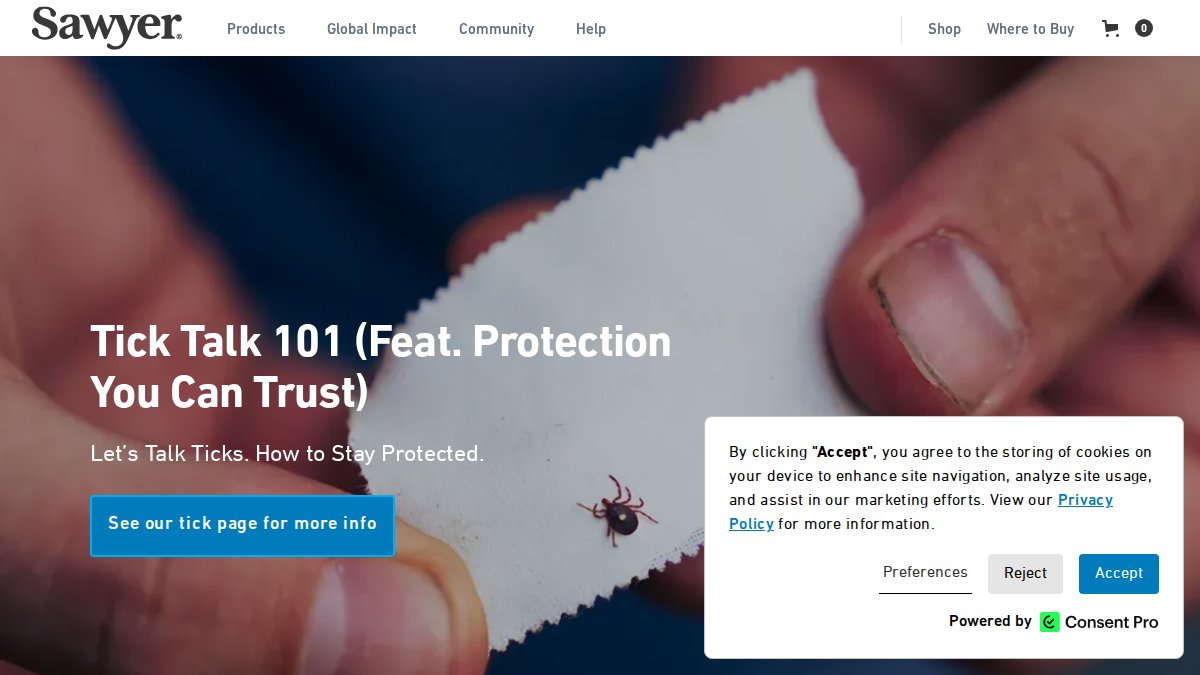
- 2. Sawyer Products 20% Picaridin: Best for Long-Lasting Protection
- 3. OFF! Deep Woods: Best DEET-Based Formula for Heavy Tick Areas
- 4. Ranger Ready Scent Zero: Best Scent-Free Option for Hunters
- 5. Permethrin Clothing Treatment: Why Permethrin Is Effective Against Ticks
- 6. Repel Lemon Eucalyptus: Best Plant-Based Repellent
- 7. Health Canada Approved Insect Repellents: What to Look For
- How to Apply Tick Repellent Correctly
- Frequently Asked Questions
Last Updated: September 16, 2026
Quick Comparison: Best Tick Repellents for 2026
Choosing the best tick repellent means matching an active ingredient to your exposure level, gear, and time outside. This guide from TickFree Outdoors covers seven proven options, from heavy-duty DEET to plant-based sprays and permethrin clothing treatments.
- Best overall: TickFree Outdoors, for sprays, patches, and yard treatments that cover people, pets, and property in one place
- Best long-lasting: Sawyer Products 20% Picaridin, up to 12 hours per application
- Best for heavy tick areas: OFF! Deep Woods, the DEET standard
- Best scent-free: Ranger Ready Scent Zero, built for hunters
- Best plant-based: Repel Lemon Eucalyptus, registered and effective
- Best for gear: Permethrin clothing treatment, which kills ticks on contact
| Product | Active Ingredient | Protection Window | Best For |
|---|---|---|---|
| TickFree Outdoors | Multiple formats | Varies by product | Full-property protection |
| Sawyer 20% Picaridin | Picaridin 20% | Up to 12 hours | Long hikes |
| OFF! Deep Woods | DEET | Long-lasting | Dense brush |
| Ranger Ready Scent Zero | Picaridin 20% | Several hours | Hunters |
| Permethrin treatment | Permethrin 0.5% | Up to 6 washes | Clothing and gear |
| Repel Lemon Eucalyptus | Oil of Lemon Eucalyptus | Up to 6 hours | Plant-based users |
1. TickFree Outdoors: Best Overall Tick Repellent for Outdoor Safety
TickFree Outdoors offers comprehensive protection for people, pets, and yards. The range covers repellent sprays and patches for skin and clothing, plus yard treatments that reduce tick populations where your family spends time. Tick bite prevention is a system, not a single product.
2. Sawyer Products 20% Picaridin: Best for Long-Lasting Protection
For one application that carries you through a full day on the trail, Sawyer's 20% Picaridin spray delivers up to 12 hours of tick protection. Unlike DEET, it won't degrade plastics, synthetic fabrics, or gear coatings, and it goes on odorless and non-greasy, worth the price difference for hikers carrying expensive equipment. The tradeoff: Picaridin needs thorough, even coverage. Miss your ankles or the back of your neck and ticks will find the gap.
3. OFF! Deep Woods: Best DEET-Based Formula for Heavy Tick Areas
DEET remains the benchmark against which every other active ingredient is measured, and OFF! Deep Woods is the most widely available DEET formula. It resists perspiration and moisture, exactly what you want when sweating through dense brush.
4. Ranger Ready Scent Zero: Best Scent-Free Option for Hunters
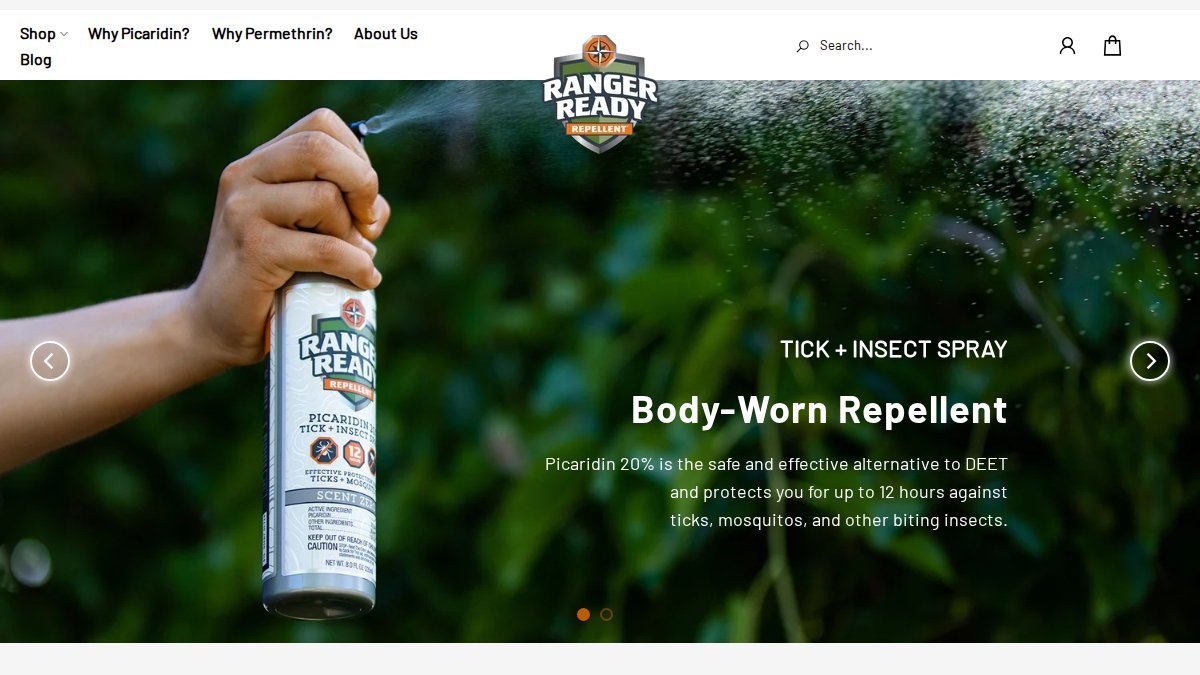
Hunters face a specific problem: most effective repellents smell like a chemistry lab, and game notices. Ranger Ready Scent Zero solves that with a scent-free 20% Picaridin formula that dries quickly without stickiness. It's safe on clothing and gear, so you can treat a base layer and a pack without worrying about damage. The catch is price: it costs more than generic Picaridin sprays.
5. Permethrin Clothing Treatment: Why Permethrin Is Effective Against Ticks
Permethrin is effective against ticks because it doesn't repel them, it kills them. Ticks that crawl onto treated fabric absorb the insecticide through their exoskeleton and die on contact, stopping the bite before it happens.
6. Repel Lemon Eucalyptus: Best Plant-Based Repellent
Oil of Lemon Eucalyptus is the plant-based active ingredient with real regulatory standing, and Repel's formula provides up to six hours of protection, shorter than DEET or Picaridin, but a genuine, registered repellent rather than an unregulated botanical oil.

7. Health Canada Approved Insect Repellents: What to Look For
Health Canada approved insect repellents carry a Pest Control Products (PCP) Act registration number on the label, confirming the product was assessed for safety and efficacy before sale. That number is your fastest filter on the shelf.
Age-Specific Safety: The Guidance Most Guides Bury
Health Canada's thresholds differ by active ingredient, and your product's label is always the final authority:
- Under 6 months: No insect repellent is approved for use on infants. The only protection options are physical: a fine-mesh bug net over a carrier or stroller, long sleeves and pants, and keeping the child out of tall grass and leaf litter.
- 6 months to 2 years: DEET is generally permitted at low concentrations (commonly up to 10%), and Icaridin/Picaridin at low concentrations (commonly up to 10%). Oil of Lemon Eucalyptus is not recommended for this age group. Apply sparingly, once per day, and never to the hands, face, or any area a child can lick or rub into their eyes.
- 2 to 12 years: DEET up to 10% is commonly used, and Icaridin/Picaridin up to 10% is widely used. Oil of Lemon Eucalyptus is generally permitted from age 3 in many product labels. Apply to your own hands first, then wipe it onto the child's skin rather than spraying directly.
- 12 years and older: Adult concentrations apply, including DEET up to 30% and Icaridin/Picaridin up to 20%.
Never apply repellent to a child's hands or face, and follow the label's age restrictions exactly. Health Canada sets different age thresholds for different active ingredients, and ignoring them is the most common mistake parents make.
Concentration vs. Duration: What the Number Actually Means
A common misconception is that higher concentration equals stronger protection. It doesn't, concentration controls how long protection lasts, not how well it works. A 10% and a 30% DEET product both repel ticks effectively while active; the 30% simply lasts longer before reapplication. A lower concentration suits a short backyard afternoon; a higher one earns its place on a full-day backcountry hike.
Reading the Label in 30 Seconds
In the aisle, run this sequence:
- Find the PCP registration number. No number, no purchase.
- Read the active ingredient and its percentage.
- Check the age guidance against who will be wearing it.
- Check the reapplication interval and the maximum applications per day.
- Confirm whether the product is labeled for skin, clothing, or both. Permethrin, for example, is clothing-only.
That five-step check takes less time than reading one review and filters out every product not approved for the job.
How to Apply Tick Repellent Correctly
Getting the application right matters as much as the product. A perfectly chosen repellent applied badly leaves gaps, and ticks are experts at finding them:
- Read the label directions first. Concentration and reapplication intervals differ by product and ingredient.
- Apply to exposed skin and clothing, avoiding cuts, wounds, and irritated areas.
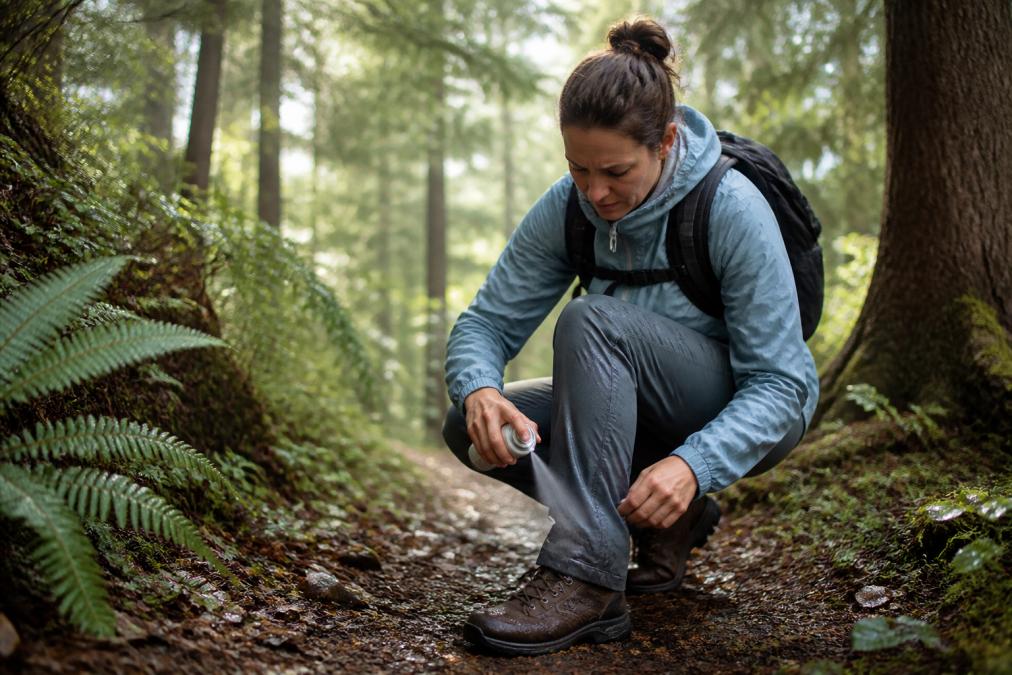
- Spray clothing rather than skin where possible, especially socks, pant cuffs, and boots.
- Apply sunscreen first, then repellent. Sunscreen needs to absorb; repellent sits on top.
- Reapply according to the label, not according to how long you've been outside.
- Wash treated skin with soap and water once you're back indoors.
- Perform a full-body tick check after every hike, paying attention to scalp, armpits, waistband, and behind the knees.
Sunscreen and Repellent: The Order That Actually Matters
Most people apply both products on the same outing, and almost no guide explains how they interact.
Two more points that matter in practice:
- Reapplication timing diverges. Sunscreen needs topping up roughly every two hours, and more often if you're sweating or swimming. Repellent intervals are longer and product-specific. When you reapply sunscreen over an area that already has repellent, you're diluting the repellent layer, so plan to reapply repellent at the same time if you're in tick habitat.
- Combination products exist, but they trade control for convenience. A single bottle that does both sounds efficient, but it locks you into one reapplication schedule for two products with different needs. Separate products let you top up sunscreen without over-applying repellent, which matters for children especially.
Where Ticks Actually Attach
Application technique only works if you cover the right real estate. Ticks don't drop from trees; they quest from grass and leaf litter, latching onto your lower legs and shoes, then crawling upward to find warm, thin skin. That crawl takes time, which is why the highest-value application zones are:
- Shoes, socks, and pant cuffs. This is the entry point. Permethrin-treated socks and pants stop ticks here before they ever reach skin.
- Behind the knees and the back of the thighs. Easy to miss when spraying, and a common attachment site.
- Waistband and belt line. Where a shirt rides up and a tick finds skin.
- Armpits, groin, and behind the ears. Warm, thin-skinned, and frequently skipped.
- Scalp and hairline. The final destination for ticks that crawl undetected for hours.
The Two-Hour Check
A full-body tick check at the end of the day is standard advice, but timing matters more than most guides admit. Transmission risk for many tick-borne diseases rises the longer a tick stays attached, so removing one within the first few hours is meaningfully better than finding it the next morning (pubmed.ncbi.nlm.nih.gov). A quick check of legs, waistband, and armpits at the two-hour mark on a long hike, followed by a thorough check at home, catches most crawlers before they settle in.
Application is a system, not a spray. Sunscreen first, repellent second, permethrin on your footwear and lower legs, and a check at the two-hour mark. That sequence covers the entry points ticks actually use.
Frequently Asked Questions
What is the most effective tick repellent available in Canada?
Health Canada approves several active ingredients for tick repellent, including DEET, picaridin (also called icaridin), and oil of lemon eucalyptus. DEET at concentrations of 20% or higher provides the longest protection, often 6 to 12 hours. Picaridin at 20% offers similar efficacy with no chemical odor and won't damage synthetic fabrics. Permethrin is approved for clothing treatment only, not skin. The best choice depends on your activity duration, tick density in your area, and whether you prefer synthetic or plant-based ingredients.
How does permethrin work to prevent tick bites?
Permethrin is an insecticide that kills ticks on contact rather than just repelling them. When a tick lands on permethrin-treated fabric, the chemical attacks its nervous system, causing paralysis and death within minutes. This matters because ticks often crawl for hours before biting, and permethrin eliminates them before they reach your skin. Treated clothing remains effective through multiple washings, making it a durable layer of protection for hiking gear, boots, and tents. Never apply permethrin directly to skin.
Are natural tick repellents as effective as DEET?
Natural repellents vary widely in efficacy. Oil of lemon eucalyptus is the only plant-based ingredient registered for tick repellent with proven protection, lasting up to 6 hours. Cedarwood oil and other botanical formulas may require reapplication every 1 to 2 hours. DEET and picaridin consistently outperform natural options in duration and tick species coverage. If you have sensitive skin or prefer plant-based products, oil of lemon eucalyptus offers a middle ground, but plan to reapply more often during extended outdoor exposure.
How should I apply tick repellent for maximum protection?
Apply repellent to exposed skin and clothing before heading outdoors. For skin, spray evenly on arms, legs, neck, and ears, avoiding eyes and mouth. For clothing, focus on pant cuffs, socks, boots, and shirt collars where ticks crawl upward. Use permethrin on clothing only and let it dry completely. Reapply skin repellent according to label directions, especially after sweating or swimming. Combine repellent with a post-hike tick check to remove any ticks that slipped past your defenses.
What is the best way to protect pets from ticks during outdoor activities?
Use veterinarian-approved tick prevention products formulated specifically for your pet's species and weight. Never apply human repellents containing DEET or picaridin to animals, as these can be toxic. For yard protection, treat outdoor areas where pets roam with pet-safe tick treatments. After hikes or time in tall grass, perform a thorough tick check on your dog, focusing on ears, armpits, groin, and between toes. Remove any attached ticks promptly with fine-tipped tweezers.
Tick pressure is rising across many regions, and the products that work are the ones you actually apply correctly and consistently. TickFree Outdoors offers repellent sprays, patches, and yard treatments that cover people, pets, and property in a single system, backed by fast shipping and responsive customer service. Get started with TickFree Outdoors and build a layered defense that holds up from the trailhead to your own backyard.