

Table of Contents
- Understanding Tick Behavior and Risk
- Best Tick Repellent Options for Effective Protection
- Clothing and Gear Choices to Stop Ticks Biting
- How to Perform a Tick Check After Outdoor Activities
- Tick Bite Symptoms to Watch For
- Creating a Tick-Safe Yard Environment
- Conclusion
Last Updated: August 12, 2026
Understanding Tick Behavior and Risk
Ticks are small arachnids that feed on blood and serve as vectors for serious illnesses. These parasites don't jump or fly; they wait on vegetation and attach themselves to passing hosts. Once attached, they burrow their mouthparts into skin and begin feeding, which can take minutes to hours before you notice them.
The risk varies significantly depending on where you spend time outdoors. Wooded areas, tall grass, and brush create ideal tick habitats. Ticks are most active during warmer months, though they can remain a threat in cooler seasons. Different species carry different pathogens, making prevention essential for health protection, not just comfort.
At TickFree Outdoors, we understand that effective tick prevention starts with knowledge. Knowing when and where ticks are most active helps you make smarter choices about outdoor gear, protective treatments, and yard management. The goal is to enjoy nature safely by using the right combination of repellents, clothing choices, and post-activity checks.
Best Tick Repellent Options for Effective Protection
Your first line of defense is a quality insect repellent applied to skin or clothing. The market offers several proven options, each with different strengths. Choosing the right repellent depends on how long you'll be outdoors, your sensitivity to chemicals, and the tick density in your area.
DEET-Based Repellents
DEET is the gold standard for tick repellents and has been extensively tested for safety and effectiveness. Products containing 20-30% DEET provide strong protection against ticks, typically lasting 4-6 hours before reapplication is necessary. Higher concentrations offer longer-lasting protection.
Apply DEET-based repellents directly to exposed skin and clothing edges, covering ankles, wrists, and neck thoroughly. DEET works by creating a scent barrier that repels ticks rather than killing them. Avoid spraying it directly onto synthetic fabrics or gear like backpack straps, as it can damage plastics. When used as directed, DEET is safe for regular use. Wash it off with soap and water when you come indoors.
Permethrin for Clothing and Gear
Permethrin is an insecticide that kills ticks on contact, unlike DEET which repels them. You apply permethrin to clothing, gear, and fabric surfaces, not to your skin. This makes it ideal for hunters, campers, and anyone spending extended time outdoors.
Treat your pants, shirt cuffs, socks, hat, and backpack with permethrin before heading outside. The treatment remains effective through multiple washes, typically 6 or more. Application is straightforward: spray permethrin evenly over fabric surfaces in a well-ventilated area, then allow it to dry completely before wearing. Never apply permethrin to skin, it's designed for fabric only.
Natural Repellent Alternatives
Essential oils like eucalyptus, lavender, and cedarwood have some tick-repelling properties, but their effectiveness is generally shorter-lasting than DEET or permethrin. Natural repellents typically require reapplication every 1-2 hours, making them less practical for full-day outdoor activities.
Natural alternatives work best in low-risk situations or as a supplement to other protection methods. For high-risk environments or extended outdoor stays, DEET or permethrin-treated clothing provides more reliable protection.
Clothing and Gear Choices to Stop Ticks Biting
What you wear makes a significant difference in tick exposure. Wear light-colored clothing, which makes ticks easier to spot. Tuck your pants into your socks or boots when walking through tall grass or brush, creating a physical barrier that forces ticks to climb over fabric rather than directly onto skin.
Long sleeves, long pants, closed-toe boots, and hats are essential in tick-prone areas. After returning indoors, put your clothes directly into a dryer on high heat for 10 minutes. This kills any ticks that may have attached to fabric but not yet penetrated to your skin.
How to Perform a Tick Check After Outdoor Activities
The most important step in preventing tick-borne illness is performing a thorough tick check within 2-3 hours of coming indoors. Early removal prevents the tick from embedding fully and significantly reduces disease transmission risk.
Step-by-Step Tick Check Process
Remove all clothing and place it directly into the dryer. Examine your entire body systematically, beginning with areas where ticks commonly hide: behind your ears, your neck, armpits, groin, behind your knees, and between your toes. Use a hand mirror or ask someone to help check the back of your scalp, neck, and back. Run your fingers through your hair, feeling your scalp carefully.
If you find a tick that hasn't yet embedded, simply brush it off with a tissue and dispose of it. Take your time during this check; rushing defeats the purpose.

Removing an Attached Tick Safely
If you find an attached tick, proper removal technique is critical. Never squeeze, crush, or apply heat to the tick, as these methods can cause it to regurgitate pathogens directly into your wound. Use fine-point tweezers to grasp the tick as close to the skin as possible, right at the mouthparts where it's attached.
Pull straight upward with steady, even pressure. Don't twist, jerk, or yank; a slow, straight pull removes the tick intact and minimizes the chance of leaving mouthparts embedded. Once removed, place the tick in a sealed container. Disinfect the bite area with an alcohol wipe or antiseptic and wash your hands thoroughly.
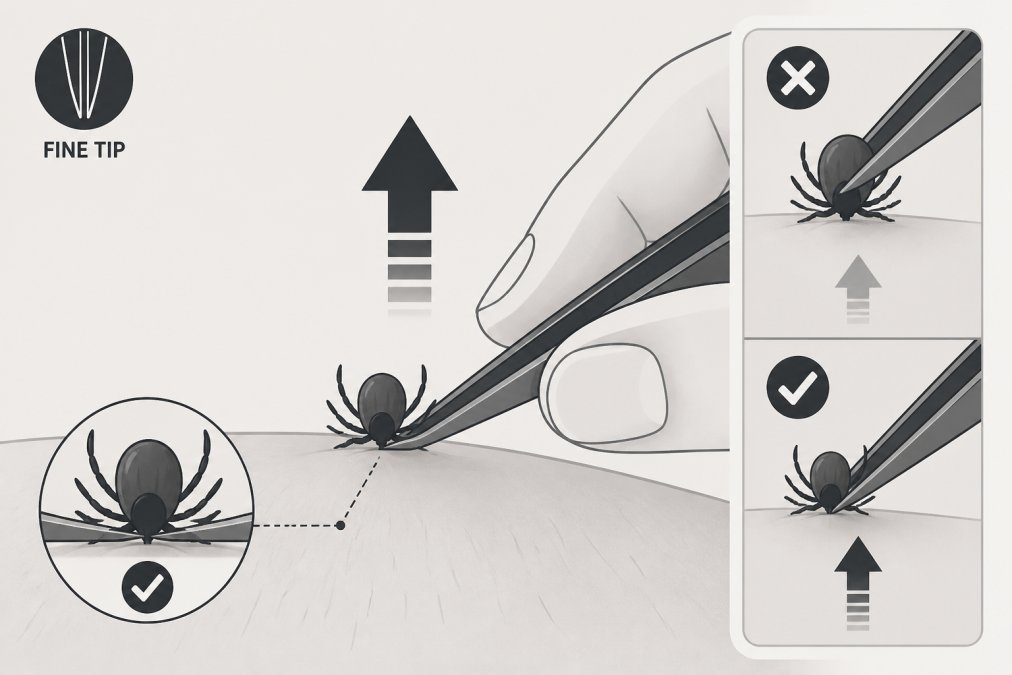
Never apply nail polish, petroleum jelly, or other substances to try to suffocate the tick. These methods don't work and delay proper removal.
Tick Bite Symptoms to Watch For
Even with prevention efforts, tick bites occasionally happen. The most common tick-borne disease in many regions is Lyme disease, transmitted by blacklegged ticks infected with the Borrelia burgdorferi pathogen.
The characteristic symptom of Lyme disease is erythema migrans, a circular rash that typically appears 3-30 days after the tick bite, often resembling a target or bullseye. Other early symptoms include fever, chills, fatigue, muscle aches, and headache. If you develop any of these symptoms after a tick bite or potential tick exposure, contact your healthcare provider. Early treatment with antibiotics is highly effective for Lyme disease.
Document the date and location of your outdoor activity and mention it to your healthcare provider even if you don't recall being bitten, as some people don't notice tick attachment.
Creating a Tick-Safe Yard Environment
Your yard can either attract ticks or discourage them, depending on how you manage vegetation. Ticks thrive in damp, shaded areas with dense vegetation. Maintain a well-manicured lawn by mowing regularly and keeping grass short. Remove leaf litter, fallen branches, and dense brush piles where ticks shelter.
Create cleared trails through wooded areas on your property, maintaining a 1-meter buffer on each side by removing low vegetation. Separate your lawn from wooded areas with a gravel or mulch barrier. Keep your yard dry by improving drainage if you have persistently wet areas. Wildlife management indirectly controls ticks; reducing attractants like unsecured garbage or brush piles that shelter rodents will reduce tick populations.
Regular yard maintenance is more effective than occasional treatments. A well-maintained property with short grass, cleared trails, and minimal brush creates an environment where ticks are less likely to establish themselves.
Tick prevention requires a multi-layered approach. By combining effective repellents like DEET and permethrin, wearing appropriate clothing, performing thorough tick checks, and maintaining your yard, you've covered all the major prevention strategies. TickFree Outdoors offers premium sprays, repellent patches, and yard treatments specifically designed to protect you, your family, and your pets throughout outdoor season. With fast shipping and great prices, protecting your outdoor adventures has never been more accessible. Shop all tick prevention solutions and enjoy the outdoors with confidence.
Frequently Asked Questions
What is the best tick repellent for outdoor activities in wooded areas?
The most effective tick repellents combine DEET-based sprays for skin and permethrin-treated clothing for barrier protection. DEET concentrations of 20-30% provide long-lasting protection on exposed skin, while permethrin applied to clothing, boots, and gear creates a tick barrier that remains effective through multiple washes. For those seeking natural alternatives, essential oil-based repellents offer some protection but typically require more frequent reapplication. The best approach combines multiple layers: treated clothing, skin repellent, and regular tick checks after outdoor time.
How long does a tick repellent last, and how often should I reapply?
DEET-based repellents typically last 4-6 hours on skin, depending on concentration and activity level (sweating reduces duration). Permethrin applied to clothing lasts through multiple washes and outdoor exposures, making it highly efficient for extended trips. Natural repellents generally last 1-3 hours and require more frequent reapplication. For day hikes, a single application of DEET in the morning usually suffices. For all-day or multi-day outdoor activities, carry your repellent for touch-ups, especially after swimming or heavy sweating. Always reapply after washing clothes treated with permethrin.
What are the early signs of a tick bite, and when should I be concerned?
Most tick bites cause minimal symptoms initially: slight redness, mild itching, or a small bump at the bite site. Watch for erythema migrans, a distinctive expanding rash that can appear 3-30 days after a tick bite and may indicate Lyme disease. Other symptoms of tick-borne illness include fever, fatigue, joint pain, and headache. Monitor the bite site for 30 days; if a rash develops or you experience flu-like symptoms, seek medical attention and inform your doctor of the tick exposure. Not all ticks carry pathogens, but prompt attention to symptoms improves outcomes for vector-borne diseases.
Can I use the same tick prevention methods for my pets and myself?
No, pet-specific tick prevention differs significantly from human protection. Never apply human DEET repellents to pets, as they can be toxic. Instead, use veterinary-approved flea and tick treatments specifically formulated for dogs or cats. Your vet can recommend oral medications, topical treatments, or collars designed for your pet's species and weight. You can treat your pet's bedding and living areas with pet-safe permethrin products, but always verify the label is pet-appropriate. For your own protection, use human-formulated repellents and treated clothing while your pet uses veterinary products, this dual approach protects both you and your companion.
This article was written using GrandRanker