

Table of Contents
- What Wearable Natural Tick Repellent Options Actually Exist
- Tick Repellent Patches: What the Evidence Actually Shows
- Natural Tick Repellent Spray and the Ingredients That Do the Work
- How Long Does Tick Repellent Last on Skin, Gear, and Pets
- Tick Bite Prevention Clothing and Layering Wearables With It
- Health Canada Registration, Safety, and What Labels Must Say
- Wearables vs Sprays and Lotions: Which Belongs in Your Kit
- Frequently Asked Questions
Last Updated: October 6, 2026
What Wearable Natural Tick Repellent Options Actually Exist
Wearable natural tick repellent Canada shoppers can buy today falls into four main formats: adhesive patches and stickers, clip-on devices, wristbands and tags, and treated collars for pets.
This guide from TickFree Outdoors breaks down what each option actually does, how long protection tends to last, and where Health Canada registration fits in.
The 2026 tick season has been active across much of the country, and interest in chemical-free options keeps climbing.
Tick Repellent Patches: What the Evidence Actually Shows
Tick repellent patches are adhesive squares, usually infused with essential oils, that you stick to clothing or skin. They are convenient and popular with families, but the gap between what they are marketed to do and what they can realistically do is wider than most product listings admit.
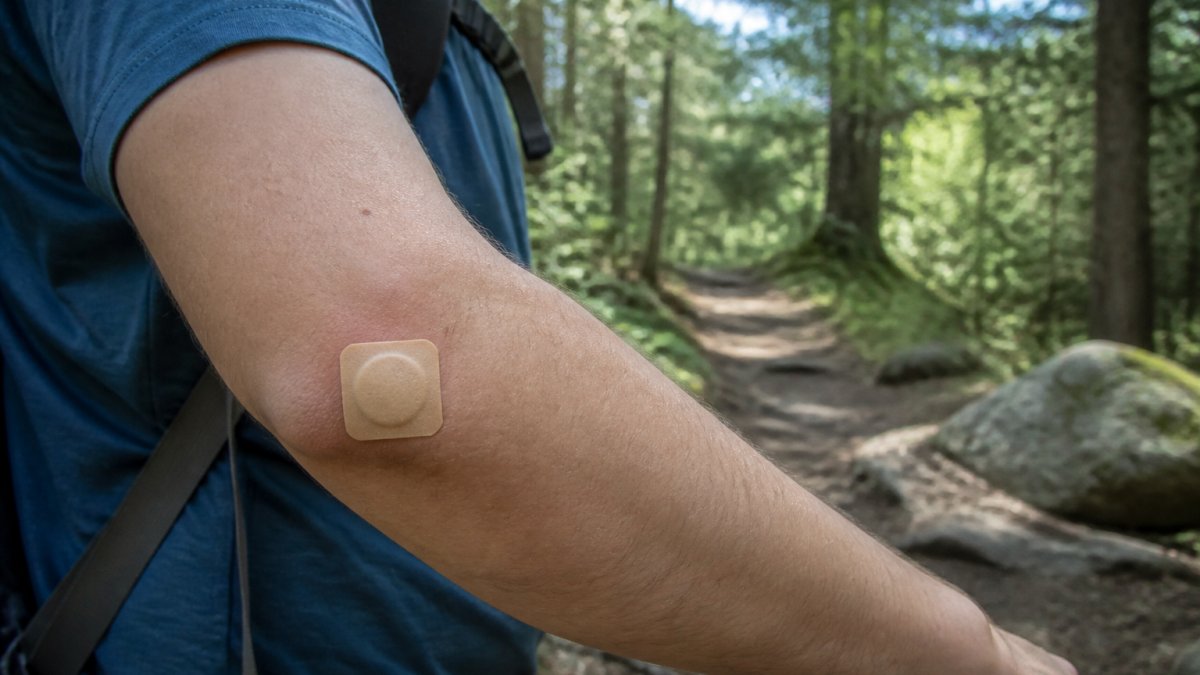
The mechanism problem
Most patch products rely on volatile plant oils that evaporate into the air immediately around the patch. That creates a small zone of scent, not a protective barrier across your whole body.
This is the core limitation: ticks do not bite wherever you happen to place a patch. They crawl upward from grass and leaf litter and attach at the waist, armpits, groin, and hairline, well away from where most people place a patch. A scent zone a few centimeters wide cannot cover those attachment sites.
"Repels some ticks nearby" is not "prevents tick bites"
What most guides miss is the difference between two very different claims:
- Repels some ticks near the patch, a localized effect that may reduce the number of ticks entering a small area.
- Prevents tick bites, a whole-body outcome that requires coverage of every likely attachment site.
Patch packaging rarely distinguishes between them, and the second claim is the one that actually matters for disease risk. No patch on the market is positioned as a standalone replacement for a proven topical repellent, and the evidence does not support treating one that way.
How patches compare to proven topical repellents
Registered topical repellents, whether plant-derived or synthetic, are applied across exposed skin and clothing, which is why they cover the attachment sites a patch cannot reach. The trade-off is reapplication: sprays and lotions on skin generally need to be reapplied every few hours, while a patch is a one-and-done application.
That convenience is real, but it buys a much smaller protective footprint. A patch is best understood as a secondary layer, not a primary defense.
Where patches fit in a layered system
A common mistake is treating a patch as a full replacement for topical repellent. In practice, patches work best as one layer in a system:
- Apply a registered repellent to exposed skin and clothing.
- Add a patch or clip-on as a secondary layer on clothing, not as your primary defense.
- Wear light-colored, long-sleeved clothing and tuck pants into socks.
- Do a full tick check within a few hours of coming inside, paying attention to warm, hidden areas.
What to look for if you still want a patch
If you decide a patch belongs in your kit, treat it as a scent-based accessory rather than a protective device. Look for a clear ingredient list, avoid products that imply whole-body protection, and never rely on a patch alone in an area where ticks are known to be present. For anyone spending real time in wooded or grassy habitat, a registered topical repellent plus clothing precautions and a post-outdoor tick check will do more than any patch can.
Natural Tick Repellent Spray and the Ingredients That Do the Work
Natural tick repellent spray delivers plant-derived ingredients directly to skin or fabric, which is why it tends to outperform wearables on coverage. The trade-off is reapplication.
Plant-Derived Ingredients: Geranium, Peppermint, Thyme, Cedarwood
The oils that show up most often in natural repellent formulas are geranium oil, peppermint oil, thyme oil, and cedarwood oil. Each has a different role, and concentration matters more than the ingredient list.
- Geranium oil is the most studied of the group for tick repellency and appears in many botanical formulas.
- Peppermint oil adds a strong scent barrier and is common in sprays aimed at multiple biting insects.
- Thyme oil is often included for its long-standing use against pests.
- Cedarwood oil is frequently used in pet and yard products.
Many businesses find that botanical sprays work well for light to moderate exposure, while heavy wooded areas call for a layered approach.
How Long Does Tick Repellent Last on Skin, Gear, and Pets
How long does tick repellent last depends entirely on the format and where you apply it.
| Format | Typical Wear Location | Reapplication | Notes |
|---|---|---|---|
| Patch or sticker | Clothing, sometimes skin | Replace daily | Small coverage zone |
| Clip-on device | Belt, waistband, collar | Replace per instructions | Air-borne scent only |
| Wristband or tag | Wrist, ankle, gear loop | Replace per instructions | Limited body coverage |
| Spray or lotion | Skin and clothing | Every few hours on skin | Best overall coverage |
| Pet collar | Around the neck | Replace per label | Check label for pet use |
Sweat, rain, and friction all shorten how long protection holds. If you are hiking hard or it is humid, assume the low end of any duration claim.
For pets, read the label carefully. Products made for people are not automatically safe for dogs, and cats are especially sensitive to many essential oils. Our pet range is formulated separately for that reason.
Tick Bite Prevention Clothing and Layering Wearables With It
Tick bite prevention clothing is the most underrated part of the kit. Light-colored clothing makes ticks easier to spot, and long sleeves and pants give you a physical barrier that no patch can match.
Tuck your pants into your socks. It looks odd and it works. Ticks start low and crawl up, so closing that gap removes their easiest route to skin.
Layer your wearables with clothing rather than instead of it:
- Treat or spray your clothing before you head out.
- Add a patch or clip-on as a secondary layer, not your primary defense.
- Wear light colors so you can spot crawlers.
- Do a full tick check within a few hours of coming inside, paying attention to warm, hidden areas.
Health Canada Registration, Safety, and What Labels Must Say
Health Canada registration is the dividing line between a wearable that has been reviewed for safety and efficacy and one that has only been reviewed for how it is marketed. Understanding where each format falls is the most useful thing you can do before spending money.
The regulatory split: pest control products vs. devices
Under the Pest Control Products Act, a product that makes a pesticidal claim, killing, repelling, or mitigating ticks, is regulated as a pest control product and needs a registration number on the label. That number is the clearest signal a claim has been reviewed.
Wearable formats do not all sit in the same bucket:
| Format | Typical regulatory treatment | What to look for on the label |
|---|---|---|
| Adhesive patch or sticker | Often marketed as a device or scent product if it makes no pesticidal claim | Absence of a PCP registration number; vague "repels" language |
| Clip-on device | Frequently treated as a device when it makes no pesticidal claim | No registration number; instructions to replace on a schedule |
| Wristband or tag | Same murky space as clip-ons | No registration number; scent-based claims |
| Treated pet collar | Regulated as a pest control product when it claims tick control | PCP registration number, active ingredient, species on label |
| Spray or lotion for skin | Regulated as a pest control product | PCP registration number, active ingredient with concentration |
The practical takeaway: a patch or clip-on that makes no pesticidal claim may not require registration, which is exactly why its effectiveness claims are harder to verify. A spray or lotion applied to skin almost always does require it.
What a compliant label tells you
For a registered repellent, expect the registration number, the active ingredient with its concentration, and clear directions for use. If a bottle or patch omits the registration number while still claiming to repel ticks, treat the claim with caution.
Check the Health Canada pest control product label requirements before you trust a claim, and remember that a registration number is not a guarantee of strong performance, it confirms the product was reviewed against the claims on the label.
Safety considerations that apply across formats
Essential oils are not risk-free just because they are plant-derived. Concentrated oils can irritate skin, and some are more problematic for children, pets, and people with sensitive skin or respiratory conditions.
A common pattern is for shoppers to assume "natural" means "safe for everyone." In practice, the safety question depends on the ingredient, the concentration, and who is wearing it, not on whether the source is a plant.
Wearables vs Sprays and Lotions: Which Belongs in Your Kit
Wearables and sprays are not competitors. They solve different problems, and the best kit uses both.
Here is how we would decide, based on what you are actually doing:
- Light exposure, backyard or short walk: a natural tick repellent spray on skin and a patch on clothing is plenty.
- Heavy wooded areas, all-day hike: spray on skin and gear, plus a clip-on or tag as backup, plus treated clothing.
- Pets: a dedicated pet collar or pet-safe spray, never a human product.
- Yard: a perimeter treatment, because wearables do nothing for the grass your family walks through.
If you are coming from DEET-based products, expect to reapply natural options more often. That is the trade-off for avoiding harsher chemicals, and it is worth planning for rather than being surprised by.
Ticks do not announce themselves, and a single bite can carry real risk. Building a layered defense takes about ten minutes and covers you for the whole season.
Frequently Asked Questions
Do wearable natural tick repellents actually work?
Effectiveness varies by format. Wearable options like patches, tags, and clip-on devices have limited independent evidence compared with topically applied repellents. Plant-derived sprays using ingredients such as geranium or cedarwood oil can deter ticks for a shorter window than DEET or picaridin. Treat wearables as one layer in a routine that also includes light-colored clothing, tucking pants into socks, and a full-body tick check after every outing.
Are tick repellent patches effective against ticks?
Patches are convenient and easy for kids, but published evidence on their tick-deterrent performance is thin, and their effective radius is small. Some products rely on essential oils that evaporate quickly, so protection may fade within a couple of hours. If you spend long days in wooded areas, pair a patch with a natural tick repellent spray on exposed skin and permethrin-treated clothing for more reliable coverage.
How long does natural tick repellent last on skin or clothing?
Most botanical sprays need reapplication every two to four hours, and sooner if you are sweating or swimming. Products marketed with 12-hour continuous wear typically refer to controlled-release formulations, not standard essential oil blends. Always follow the label's replacement frequency. For clothing, permethrin-treated garments hold protection through several washes, which is far longer than any spray applied at the trailhead.
Is essential oil tick repellent safe to use on skin?
Health Canada regulates insect repellents, and any product sold for use on skin must carry a Pest Control Product number. Essential oils like geranium, peppermint, and thyme can irritate sensitive skin, and some are not recommended for young children or pets. Patch-test on a small area first, avoid the face and hands, and never apply a repellent intended for humans to your dog or cat without veterinary guidance.
Should I use a wearable repellent along with other tick precautions?
Yes. No single product stops every tick. A layered approach works best: a natural tick repellent spray on skin, a patch or tag as backup, light-colored long sleeves and pants treated with permethrin, and a thorough tick check within two hours of coming indoors. This combination reduces bite risk far more than relying on any one wearable device alone.