

Table of Contents
- Why Playgrounds Are Tick Hotspots
- Best Tick Repellent for Kids: What Actually Works
- How to Dress Children for Tick Protection
- Why Permethrin Is Effective Against Ticks
- How to Perform a Tick Check on Children
- What to Do If You Find a Tick on Your Child
- Post-Playground Laundry and Gear Care
- Conclusion
- Frequently Asked Questions
Last Updated: September 22, 2026
Why Playgrounds Are Tick Hotspots
Playgrounds sit between mown grass and climbing frames on one side, and the brush, leaf litter, and tall grass where ticks in playgrounds wait on the other.
That boundary is the problem. A tick doesn't chase your child across an open field. It climbs a blade of grass, holds its front legs out, and grabs whatever brushes past.
Where Ticks Hide in Urban Parks
Nymphal ticks are the size of a poppy seed, nearly impossible to spot on skin, and most active in spring and early summer.
Ticks gather in specific spots. Look for:
- Yard edges where lawn meets taller grass or brush
- Leaf litter under trees, especially oak and maple
- Wooded areas and the shaded trails through them
- Tall grass along fence lines and pathways
- Moist, shaded ground near streams or drainage ditches
Best Tick Repellent for Kids: What Actually Works
The best tick repellent for kids is one approved for their age group and applied to the right places. Two ingredients have the strongest track record: DEET and icaridin.
- DEET has decades of testing behind it. Higher concentration means longer protection, not stronger protection; a lower-concentration product reapplied on schedule protects just as well as a high-concentration one applied once.
- Icaridin (also called picaridin) is gentler on skin and gear, and doesn't damage plastics or synthetic fabrics the way DEET can. It's a good pick for kids who wear watches, sunglasses, or synthetic rain gear.
Age-Specific Repellent Guidelines
Age matters more than most parents realise, and it decides what actually goes in your bag.
| Age Group | What to Use | Key Rule |
|---|---|---|
| Under 6 months | No repellent on skin | Use physical barriers: netting, covered stroller, shade |
| 6 months to 2 years | Repellent on skin, once daily | Apply sparingly, avoid hands and face |
| 2 to 12 years | Repellent plus treated clothing | Reapply per label directions |
| 12+ years | Same as adults | Follow product label exactly |
How Concentration Changes Reapplication Timing
Concentration is the number parents misread most often. It doesn't make a product "stronger" against ticks; it stretches how long a single application lasts before you need to reapply.
A practical way to think about it:
- Lower-concentration products need more frequent reapplication. Good for short playground visits where you'll be home within an hour or two.
- Higher-concentration products last longer between applications. Better for a full afternoon at a park with wooded edges.
Skin vs. Clothing: Two Different Jobs
Repellent and permethrin-treated clothing do different jobs, and using both holds up best:
- Repellent on exposed skin keeps ticks from settling on the skin you can't cover.
- Treated clothing kills ticks that crawl onto fabric before they reach skin.
How to Dress Children for Tick Protection
Clothing is your first line of defence and works even when repellent wears off. The goal is simple: leave as little skin exposed as possible and make it hard for a tick to reach skin.
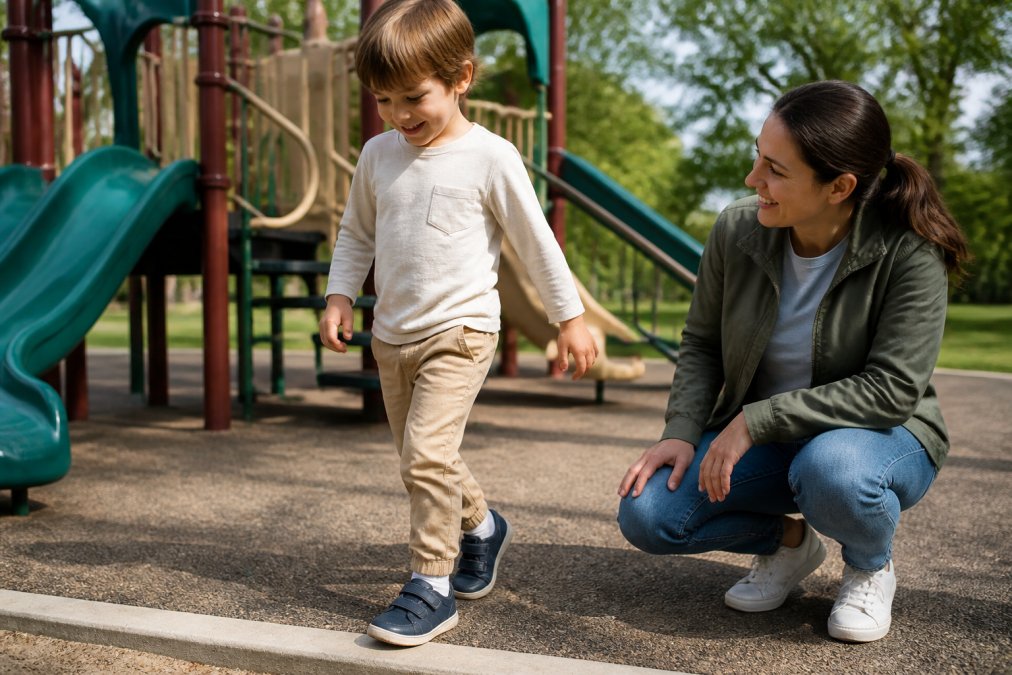
Dress your child in:
- A long-sleeved shirt and long pants
- Light-coloured clothing so you can spot a dark tick easily
- Tucked-in pants, with pant legs pushed into socks
- Closed footwear rather than sandals
- Elasticated cuffs on sleeves and pant legs where you have them
Why Permethrin Is Effective Against Ticks
Permethrin is an insecticide that treats fabric, not skin. It's the strongest tool in the tick-protection kit and works differently from repellent.
A few practical points:
- Never apply permethrin to skin. It's for clothing, tents, and gear only.
- Treat clothing outdoors or in a well-ventilated space, and let it dry fully.
- Keep treated items away from cats while wet, since permethrin is toxic to them.
- Follow the label for how often to retreat.
How to Perform a Tick Check on Children
A tick check is a full-body search for attached ticks, done as soon as you're back indoors. It takes about two minutes and is the single most important step in this routine.
Check these spots, in this order:
- Scalp and hairline, using your fingers and a comb
- Behind the ears and around the neck
- Armpits and the inside of the elbows
- Belly button and the waistband line
- Behind the knees
- Between the legs and around the groin
- Between toes and around the ankles
Making Tick Checks Stress-Free for Kids
Most kids hate being inspected: they squirm, they complain, and parents give up after ten seconds. The fix is behavioral, not medical.
A few patterns that work for families:
- Give them the mirror. Kids who hold the mirror and "direct" the check stay engaged longer than kids who lie still.
- Count out loud. "One, two, three..." turns a search into a game and gives you a natural pace.
- Let them check you first. Reversing roles makes the routine feel mutual instead of one-sided.
- Keep it under two minutes. A fast, calm routine you repeat daily beats a thorough one you avoid.
The Post-Playground Laundry Protocol Most Guides Skip
Checking skin is only half the job. Ticks ride home on clothing, bags, and car seats, and a tick that falls off in the hallway is a tick that finds a child later.
Build a simple routine:
- Change clothes at the door. Don't walk through the house in outdoor gear.
- Tumble dry on high heat for at least ten minutes. Dry heat kills ticks that survive the wash. This is the step that matters most, and it works even before you wash.
- Wash in hot water if the fabric allows it.
- Check the car seat, stroller, and backpack, especially seams and folds.
- Check pets that came along, since dogs carry ticks indoors.
- Shower within two hours of coming inside, and do a second tick check after.
What to Do If You Find a Tick on Your Child
Found a tick? Don't panic, and don't reach for petroleum jelly or a lit match. Those old tricks don't work and can irritate the tick.
Here's the correct method:
- Use fine-tipped tweezers. Grasp the tick as close to the skin as you can.
- Pull straight up with steady, even pressure. Don't twist or jerk.
- Don't squeeze the body. That can push fluids into the bite.
- Clean the bite with soap and water, then apply antiseptic.
- Save the tick in a sealed container or a piece of tape, and note the date.
- Watch the bite site for the next few weeks.
Post-Playground Laundry and Gear Care
Most guides stop at the tick check. That's a mistake, because ticks ride home on clothing, bags, and car seats.
Build a simple routine:
- Shower within two hours of coming inside, and do a second tick check after.
- Change clothes at the door. Don't walk through the house in outdoor gear.
- Tumble dry on high heat for at least ten minutes. Dry heat kills ticks that survive the wash.
- Wash in hot water if the fabric allows it.
- Check the car seat, stroller, and backpack, especially seams and folds.
- Check pets that came along, since dogs carry ticks indoors.
Conclusion
Ticks are a real risk in green spaces, and playgrounds sit right on the edge of tick habitat. But the routine that protects your child is short: dress for coverage, use the right repellent for their age, check them over when you get home, and handle clothing and gear with care. Two minutes of checking beats weeks of worry.
SHOP ALL
Frequently Asked Questions
Are ticks common in urban playgrounds?
Yes. Ticks are increasingly found in urban parks and playgrounds, especially those near wooded areas, leaf litter, or tall grass. Nymphal ticks are tiny and easily missed, so children playing near park edges face real exposure risk. Stick to sunny, mowed areas and pathways, and always check children after outdoor play to reduce tick-borne disease risk.
What should I do if I find a tick on my child?
Use fine-tipped tweezers to grasp the tick as close to the skin as possible. Pull upward with steady pressure without twisting. Clean the bite area with rubbing alcohol or soap and water. Save the tick in a sealed container for identification. Monitor your child for symptoms like fever, rash, or fatigue over the next few weeks and contact a healthcare provider if anything concerns you.
How do I perform a proper tick check on my child after playing outside?
Check warm, hidden areas first: behind the knees, in the armpits, around the waist, inside the belly button, behind the ears, and along the hairline. Use a mirror or a second person to check the scalp and back thoroughly. Do this check every time your child plays in or near tick habitat.
What is the best tick repellent for kids?
Health Canada-approved repellents containing DEET or icaridin are effective for children when used according to age guidelines. DEET should not be used on infants under six months, and icaridin is generally considered suitable for children over six months. For clothing and gear, permethrin-treated items offer long-lasting protection. Always apply repellent to exposed skin and clothing, never under clothing, and wash it off after outdoor play.