

Table of Contents
- Why Daily Tick Checks Matter for Your Dog
- How to Check for Ticks on Dogs: Step-by-Step
- High-Risk Zones: Where Ticks Hide on a Dog's Body
- Tick vs. Skin Bump: How to Tell the Difference
- How to Remove a Tick from a Dog Safely
- Signs of Lyme Disease in Dogs: What to Watch For
- The Best Tick Repellent for Dogs as a Second Line of Defense
- Conclusion: Build a Routine That Protects Your Dog
- Frequently Asked Questions
Last Updated: September 8, 2026
Why Daily Tick Checks Matter for Your Dog
A tick check is the single most effective way to prevent tick-borne illness in your dog, and it takes less than five minutes once you know the routine. These parasites can transmit pathogens like Lyme disease, and the Canadian Veterinary Medical Association guidance on tick-borne disease emphasizes that early detection and removal dramatically reduce transmission risk. The consistent message from veterinarians is clear: daily inspection beats any preventative alone.
The challenge is that most owners don't know what they're feeling for. An engorged tick can feel like a small grape, but a nymph or larva might feel like nothing more than a grain of sand against the skin. Learning to check for ticks on dogs properly means understanding where they hide and what they feel like before they've fed. This guide walks through the complete process, from the search pattern to safe removal and what to watch for afterward. We'll cover how to check for ticks on dogs thoroughly, how to tell a tick from a harmless skin bump, and when a vet visit is non-negotiable.
How to Check for Ticks on Dogs: Step-by-Step
The most reliable way to check for ticks on dogs is a slow, systematic fingertip search that follows the direction of the coat, followed by a second pass against the grain. Ticks don't move quickly once attached, so speed is your enemy here. Rushing through this process is how ticks get missed for days.
Gathering Your Tools and Setting the Scene
Before you start, set up for success. You'll need bright lighting, ideally natural daylight or a strong headlamp, and a calm dog. A handful of high-value treats keeps most dogs still for the duration. Have a fine-tipped tick removal tool or pointed tweezers, gloves, and a small container with rubbing alcohol ready before you find anything. Fumbling for tools mid-search with a squirming dog is a common mistake.
Choose a quiet spot where your dog can lie down or stand comfortably. For anxious dogs, doing the check in short sessions while they're tired works better than forcing a full inspection. The entire process should feel like grooming, not a medical procedure, which builds your dog's tolerance over time.
The Search Pattern: From Nose to Tail
Start at the head and work backward in a grid pattern, never skipping sections. Ticks crawl upward on grass and brush, which means the head, neck, and ears are frequent attachment sites. Part the fur down to the skin with your fingertips, feeling for any small bump or scab-like irregularity.
Work through each area methodically:
- Head, muzzle, and around the eyes
- Inside and behind each ear, including the ear canal
- Neck and throat, especially under any collar
- Chest and armpits
- Underbelly and groin area
- Tail base and under the tail
- Between each toe and the interdigital spaces
The second pass against the coat grain catches ticks that were flattened against the skin and missed the first time. This is where most people skip ahead, but it's the pass that finds the embedded ticks.
High-Risk Zones: Where Ticks Hide on a Dog's Body
Ticks favor warm, protected areas where the skin is thin and the coat is dense, which is why the groin area, armpits, and ear canals are prime real estate. The head and neck region is another high-risk zone because dogs sniff through tall grass and leaf litter, picking up questing ticks directly on the face. A tick can take up to 24 hours to fully embed, so a daily check catches most before they attach firmly (the CDC).
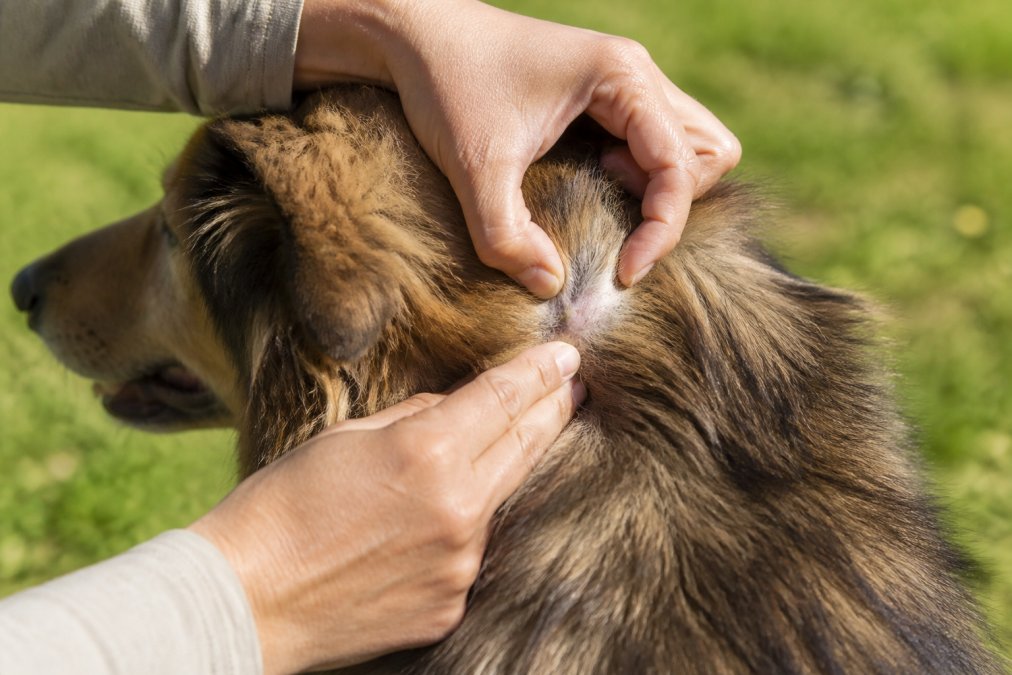
Coat density changes the game. A thick-coated breed like a Golden Retriever or a Husky can hide an engorged tick completely from view, which is why fingertip pressure matters more than visual scanning. Short-coated dogs are easier to inspect visually, but ticks still find the same protected crevices. For long-haired breeds, consider using a fine-toothed flea comb in addition to your fingers, especially around the tail base and the backs of the thighs.
The leaf litter and wooded areas around your home are where exposure starts. If your dog runs through tall grass or brush, pay extra attention to the feet and lower legs, since ticks often attach there first before migrating. The axillary region, or armpit, is a spot owners routinely miss because it requires lifting the front leg fully to see it.
Tick vs. Skin Bump: How to Tell the Difference
The most common source of anxiety during a tick check is finding a bump and not knowing if it's a tick or a benign skin growth. An embedded tick has a distinct shape: the body is oval and firm, and if you look closely, you can usually see the legs pressed against the skin near the head. A skin bump like a wart, cyst, or nipple is smooth and symmetrical, with no visible legs or distinct head.
Here's the practical test: run your fingertip over the bump. A tick feels like a small seed or bean that is attached at one point, and it does not move freely under the skin. A skin bump is typically part of the skin itself and feels continuous with it. If you're still unsure, examine the attachment site with a magnifying glass. Tick mouthparts create a small, dark point of entry, whereas a skin growth has no such puncture.
The exception is a tick that has recently attached and is still flat. An unfed adult tick is about the size of a sesame seed and can be nearly invisible against dark fur. If you find a small, flat, oval object that wasn't there during yesterday's check, treat it as a tick and remove it. Also be aware that a partially removed tick can leave behind the head and mouthparts, which may appear as a small dark splinter or a subcutaneous bump as the skin reacts.
How to Remove a Tick from a Dog Safely
Safe removal of a tick from a dog requires grasping the tick as close to the skin as possible and pulling straight out with steady, even pressure. The goal is to remove the entire tick, including the mouthparts, without crushing the body. Twisting or jerking can break the tick apart, leaving the head embedded.
Using a tick removal tool, slide the notch under the tick's body until it rests against the skin. Pull upward gently and steadily until the tick releases. With fine-tipped tweezers, grasp the tick at the skin line, not the body, and pull straight out without twisting. The entire process typically takes 10 to 15 seconds of steady pressure.
After removal, place the tick in rubbing alcohol to kill it, then clean the bite area with an antiseptic or disinfectant wipe. Wash your hands thoroughly. Do not flush a live tick down the drain, as it can survive. Keep the tick in a sealed bag if you want to have it tested for pathogens later.
Signs of Lyme Disease in Dogs: What to Watch For
The most common early sign of Lyme disease in dogs is lameness that shifts from one leg to another, often accompanied by fever, lethargy, and reduced appetite. These symptoms typically appear two to five months after a tick bite, which makes connecting them to a specific exposure difficult. Not every tick carries disease, but the consequences of missing the signs are serious.
Other signs to monitor include swollen joints that feel warm to the touch, swollen lymph nodes, and in some cases, kidney issues that manifest as increased thirst and urination. If your dog shows any combination of these symptoms after a tick bite, a veterinary consultation is warranted. Your vet may recommend a SNAP test, which screens for common tick-borne diseases, including Lyme.
The Best Tick Repellent for Dogs as a Second Line of Defense
Daily checks are your first defense, but the best tick repellent for dogs adds a layer of protection that reduces how many ticks attach in the first place. Preventative medication prescribed by your vet, whether oral or topical, remains the standard of care in high-risk areas. These products kill ticks on contact or after they bite, which interrupts the disease transmission cycle.
For additional protection during hikes or outdoor excursions, a repellent spray designed for pets can be applied before heading into wooded areas. TickFree Outdoors offers a pet-safe tick repellent spray formulated to be applied directly to your dog's coat, providing an extra barrier against crawling ticks. The spray works alongside your vet-prescribed preventative, not as a replacement. Many owners find that combining a daily check with a vet preventative and a repellent spray for high-exposure days gives them the most complete coverage.
Conclusion: Build a Routine That Protects Your Dog
A daily tick check takes minutes and can save your dog from months of avoidable illness. The routine is simple: systematic fingertip search, careful inspection of high-risk zones, and confident removal when you find one. Pair that with a vet-recommended preventative and a repellent for high-exposure days, and you've built a layered defense that works.
At TickFree Outdoors, we know that outdoor adventures with your dog are better when you're not worried about what's hiding in the grass. Our tick protection sprays and repellents are designed for dogs and the people who love them, with fast shipping, great prices, and exceptional customer service if you have questions. Get started with TickFree Outdoors and make tick protection a simple part of your outdoor routine.
Frequently Asked Questions
How often should I check my dog for ticks?
Check your dog for ticks daily during tick season, which in most of Canada runs from early spring through late fall. If your dog has been in wooded areas, tall grass, or leaf litter, do a check immediately when you get home. Ticks can attach within minutes, but daily inspections catch them before they become engorged, which greatly reduces the risk of pathogen transmission.
Do I need to take my dog to the vet after finding a tick?
Not every tick bite requires a vet visit, but you should call your veterinarian if you had difficulty removing the tick, if mouthparts remain embedded, or if you see signs of Lyme disease in dogs within the following weeks. These signs include fever, lameness, swollen joints, and loss of appetite. Your vet may recommend a SNAP test to screen for tick-borne diseases.
What is the fastest way to get rid of ticks on dogs?
The fastest safe method is manual removal with a tick removal tool or fine-tipped tweezers. Grasp the tick as close to the dog's skin as possible and pull straight upward with steady, even pressure. Do not twist or jerk, as this can leave the mouthparts behind. After removal, clean the area with antiseptic and disinfect the tool.
Where do ticks usually hide on dogs?
Ticks prefer warm, protected areas with thin fur. The most common attachment sites are the head and neck, ears (including inside the ear canal), groin area, underbelly, armpits, and between the toes. On long-haired or dense-coated breeds, ticks also hide along the tail base and collar line, so part the fur systematically during every check.