

Table of Contents
- How Permethrin Works on Ticks: Paralysis and Knockdown
- Permethrin vs DEET for Tick Protection: Clothing vs Skin
- How to Apply Permethrin to Clothing and Gear Safely
- Permethrin Clothing Treatment Duration and Wash Durability
- Safety for Humans and Pets: What You Need to Know
- Maximizing Protection: Combining Permethrin with Other Measures
- Conclusion: Why Permethrin Remains a Top Tick Defense
- Frequently Asked Questions
Last Updated: September 27, 2026
How Permethrin Works on Ticks: Paralysis and Knockdown
Permethrin is a synthetic pyrethroid that attacks a tick's nervous system on contact, causing paralysis and death before a bite can be completed, which is why permethrin is effective against ticks. This is the core of why permethrin is effective against ticks: it does not wait for the tick to feed, and it does not rely on the tick biting at all.
Ticks are not built to survive contact with a treated surface. Their nervous systems run on voltage-gated sodium channels, and permethrin holds those channels open. Signals fire without stopping. Muscles lock.
This guide breaks down the mechanism, the application process, and the safety rules that matter most.
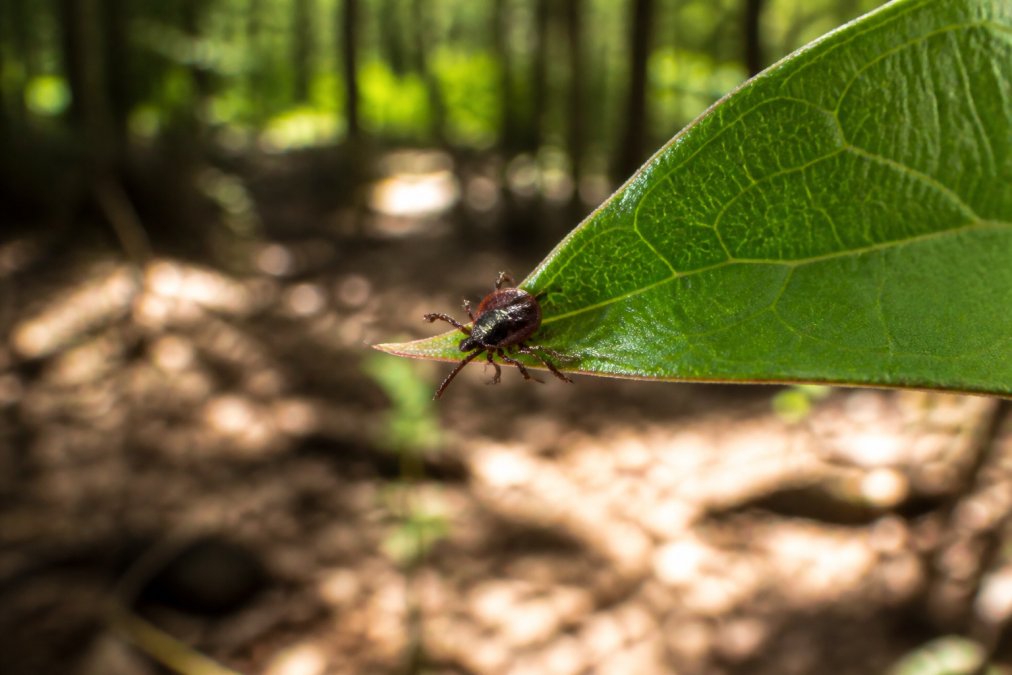
Contact Toxicity and the Nervous System
Permethrin is a contact acaricide, meaning it kills ticks through direct physical exposure rather than ingestion. A tick crawling across impregnated fabric absorbs the compound through its exoskeleton within minutes.
The compound works as a neurotoxic agent. It binds to sodium channels in nerve cells and prevents them from closing, which floods the nervous system with continuous electrical signals. This is why permethrin is classified as a knockdown insecticide rather than a slow-acting poison.
Unlike systemic treatments, permethrin does not need to enter the bloodstream to work. It sits on the fabric surface as a residual barrier, which is the property that makes clothing treatment so effective in the first place.
Why Ticks Can't Recover: The Knockdown Effect
The knockdown effect is permanent. Once a tick absorbs a sufficient dose, it loses coordination, stops crawling, and falls off the fabric. It cannot recover because the sodium channels stay open until the nervous system fails completely.
Nymphal ticks, the stage responsible for most tick-borne disease transmission, are especially vulnerable. Their small body size means a lower dose is required to reach a lethal threshold.
A common mistake is assuming a tick must bite to be affected.
Permethrin vs DEET for Tick Protection: Clothing vs Skin
For clothing, permethrin is the more effective option. DEET and picaridin are skin repellents: they discourage ticks from settling, but they do not kill, and they fade quickly with sweat and abrasion. Permethrin binds to fabric and stays there.
| Feature | Permethrin (clothing) | DEET / Picaridin (skin) |
|---|---|---|
| Primary action | Kills on contact | Repels |
| Applied to | Fabric and gear | Exposed skin |
| Duration on surface | Multiple washes | Hours |
| Odor | None once dry | Noticeable |
| Best for | Clothing, tents, boots | Exposed skin, short outings |
Why DEET Falls Short on Fabric
DEET damages synthetic fabrics, dissolves some plastics, and evaporates within hours. It is not designed to sit on a jacket for weeks.
How to Apply Permethrin to Clothing and Gear Safely
Applying permethrin correctly means treating clean, dry clothing in a well-ventilated space and allowing full drying time before wearing. Rushing the process reduces the bond between the compound and the fabric.
Steps for a safe, effective treatment:
- Wash and dry the garments first, without fabric softener.
- Work outdoors or in a ventilated garage, never in an enclosed room.
- Lay items flat and apply an even, light mist, holding the can or sprayer at the recommended distance.
- Turn garments inside out and treat the reverse side.
- Hang to dry completely, away from pets and children.
- Store treated clothing in a sealed bag between uses.
DIY vs Factory-Treated Clothing
Factory-treated garments use a controlled bonding process that locks permethrin into the fibers, which is why they hold up longer than a home spray. DIY treatment is cheaper and works on gear you already own, but it needs more frequent reapplication.
Permethrin Clothing Treatment Duration and Wash Durability
Permethrin clothing treatment duration depends on the fabric, the number of washes, and how the garment is stored, not on the calendar. A DIY-treated garment typically holds protection through several washes, while factory-treated clothing is engineered to last considerably longer. The gap between those two outcomes comes down to how the compound is bound to the fiber and how fast it degrades.
Chemical Degradation Factors
Permethrin is a synthetic pyrethroid, and like other pyrethroids it breaks down through hydrolysis, oxidation, and photodegradation. In practice, that means four forces shorten residual protection:
- UV exposure: Sunlight, particularly the UV band, drives photodegradation of permethrin on exposed fabric surfaces. A jacket worn in open sun loses its surface residue faster than one worn under a pack or in shade.
- Heat and detergent: Hot water and alkaline or harsh detergents accelerate hydrolysis of the ester bond that holds the molecule together. Cold water and a mild, pH-neutral detergent strip less compound per cycle.
- Abrasion: Friction from backpack straps, repeated wear, and gear rubbing against gear wears down treated areas mechanically, independent of washing.
- Storage: Leaving treated gear exposed to air, light, and heat degrades it faster than sealed storage in a cool, dark place.
Factory-Treated vs DIY: Why Longevity Differs
Factory-treated garments use a controlled bonding process that locks permethrin into the fibers rather than leaving it on the surface. That is why they hold up longer than a home spray and why the label can promise a defined number of washes. DIY treatment is cheaper and works on gear you already own, but because the compound sits closer to the surface, it is more exposed to UV, detergent, and abrasion, and it needs more frequent reapplication.
Safety for Humans and Pets: What You Need to Know
Permethrin is safe for humans when applied to clothing and allowed to dry completely. Dermal absorption through intact skin is low once the fabric is dry, and the compound is metabolized quickly by the body. The picture changes for cats, and it changes most sharply during the drying phase, the window most general guides skip.
Safe Handling for Households with Cats
Cats lack the liver enzymes needed to metabolize permethrin efficiently, which makes exposure far more dangerous for them than for dogs or people. The risk is not limited to direct spraying. A cat that brushes against a freshly treated jacket, walks across a treated drop cloth, or lies on a damp garment can absorb enough compound through its skin or by grooming to cause tremors, twitching, and other neurological signs.
- Never apply permethrin spray in a room a cat can enter while wet.
- Dry treated items in a space the cat cannot reach, a closed garage, a shed, or an outdoor line, until fully cured.
- Do not let cats sleep on or rub against freshly treated items.
- Keep treated items away from cat bedding, scratching posts, and grooming areas.
- Store treated clothing and gear sealed and out of reach between uses.
- Consult a veterinarian before using any permethrin product in a home with cats, and call one immediately if you suspect exposure.
Maximizing Protection: Combining Permethrin with Other Measures
No single product covers every exposure route, which is why layering matters. Permethrin handles the clothing barrier. Skin repellent covers exposed skin. Yard treatment reduces the tick population where you actually walk.
A practical combination for wooded areas:
- Treat socks, pants, and boots with permethrin before the season starts.
- Apply a skin repellent to exposed skin, reapplying per label directions.
- Tuck pant cuffs into socks to close the gap ticks exploit.
- Perform a full-body tick check within a few hours of returning indoors.
- Shower soon after coming inside to dislodge unattached ticks.
Conclusion: Why Permethrin Remains a Top Tick Defense
The reason permethrin holds its place at the top of tick defense comes down to one thing: it kills on contact instead of waiting for a bite. That single mechanism breaks the transmission chain that DEET and picaridin cannot interrupt on fabric.
Frequently Asked Questions
Does permethrin really keep ticks away?
Yes, permethrin is highly effective at repelling and killing ticks. It works as a contact insecticide, meaning ticks are affected as soon as they touch treated fabric. Unlike repellents that simply deter ticks, permethrin causes paralysis and death, providing a reliable barrier against tick bites and reducing the risk of tick-borne diseases.
How long does permethrin clothing treatment last?
The duration depends on the product and use. Factory-treated clothing can remain effective for a defined number of washes, while DIY treatments typically last through several washes. Always follow the manufacturer's instructions and reapply as needed to maintain protection.
Is permethrin safe for use on outdoor gear and footwear?
Permethrin is safe for treating outdoor gear and footwear when applied according to label directions. It bonds to fabrics and provides long-lasting protection. Allow treated items to dry completely before use, and avoid treating items that will be worn next to the skin. This makes it ideal for boots, backpacks, and tents.
How does permethrin differ from DEET-based repellents?
Permethrin is a contact insecticide applied to clothing and gear, while DEET is a repellent applied to skin. Permethrin kills ticks on contact and lasts through multiple washes, whereas DEET needs frequent reapplication and is less effective on fabric. For tick protection, permethrin-treated clothing is often preferred for its durability and efficacy.