

Table of Contents
- Grandpa's vs Yaya Organics Repellent: Quick Comparison Table
- What Are Grandpa's and Yaya Organics Repellents?
- Natural Insect Repellent Canada: Active Ingredients Breakdown
- DEET-Free Bug Spray Canada: Efficacy Against Ticks and Mosquitoes
- Safe Bug Spray for Kids Canada: Safety Profile and Skin Sensitivity
- Health Canada Approved Insect Repellent: Regulatory Status
- Environmental Impact and Sustainability Comparison
- Scent Profile, Application Method, and User Experience
Grandpa's vs Yaya Organics Repellent: Which Works Better?
Last Updated: July 27, 2026
Grandpa's vs Yaya Organics Repellent: Quick Comparison Table
When choosing between natural tick repellents, the comparison between Grandpa's vs Yaya Organics repellent comes down to active ingredients, efficacy, and your specific outdoor needs. Both products claim to offer DEET-free protection, but they take fundamentally different approaches to insect defense. At TickFree Outdoors, we've analyzed the key differences to help you make an informed choice for your family's outdoor adventures.
| Product | Primary Active Ingredient | Best For | Protection Duration | Key Limitation |
|---|---|---|---|---|
| Grandpa's Pine Tar Soap | Pine tar oil (100%) | Skin cleansing with mild repellent properties | Variable (depends on bathing frequency) | Not a dedicated tick repellent spray |
| Yaya Organics Repellent | Geraniol and plant-based actives | Direct application as topical spray | 4-6 hours | Shorter duration than DEET alternatives |
Grandpa's Pine Tar Soap is primarily a cleansing product with historical use as a flea and tick deterrent, while Yaya Organics positions itself as a dedicated natural tick repellent spray. Understanding which product serves your actual use case prevents wasted money and inadequate protection in high-risk areas.
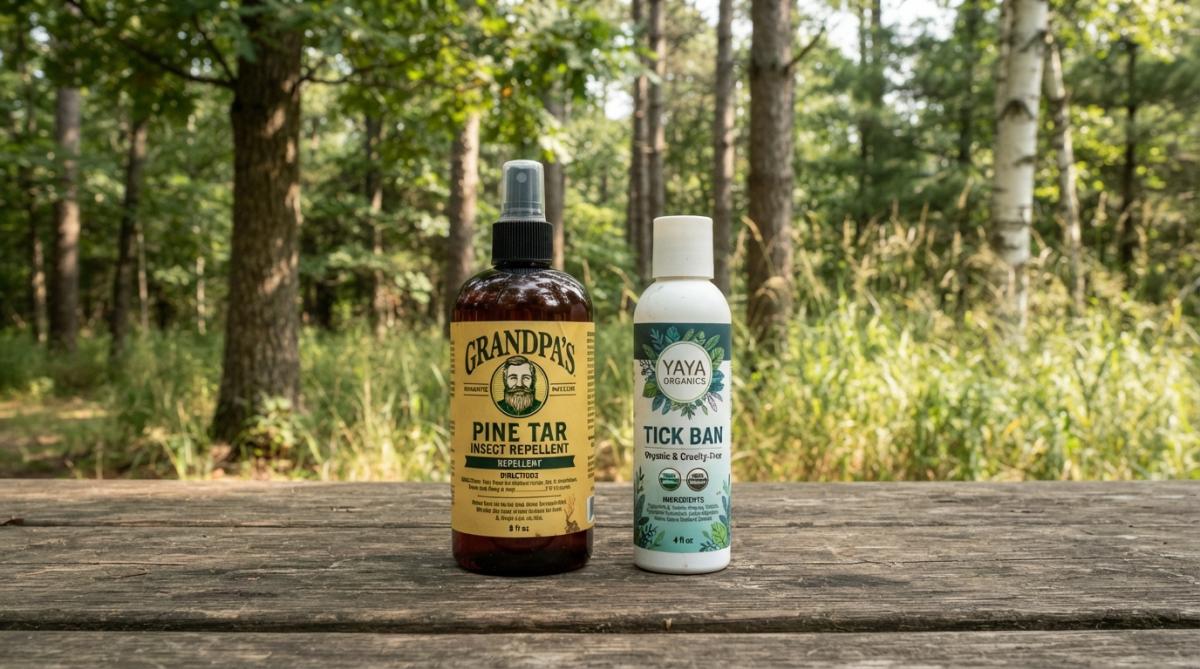
What Are Grandpa's and Yaya Organics Repellents?
These two products represent different categories within the natural insect repellent Canada market. Knowing what each product actually does prevents the frustration of applying the wrong product for your situation.
Grandpa's Pine Tar Soap: Origins and Active Ingredients
Grandpa's Pine Tar Bar Soap has been manufactured since 1878, making it one of North America's longest-standing natural cleansing products. The Grandpa Soap Company formulates this bar with 100% pine tar oil, a compound historically recognized for its deodorizing and skin-soothing properties. The product is dermatologist-tested, free from phthalates, sulfates, and parabens, and carries recognition from the National Psoriasis Foundation for symptom relief.
The soap functions as a 3-in-1 product for face, body, and hair. Many users report that the distinctive woodsy scent and natural antimicrobial properties of pine tar oil provide some insect-repelling benefits, though this is secondary to the product's primary purpose. The strong pine aroma does seem to discourage some insects, but protection is inconsistent and depends on bathing frequency rather than sustained topical application.
Yaya Organics: Plant-Based Formulation and Core Actives
Yaya Organics positions its repellent as a dedicated natural tick and mosquito spray, not a soap or general cleansing product. The formulation centers on plant-based active ingredients, with geraniol as a key component. Geraniol is a naturally occurring compound found in rose oil, geranium oil, and other botanical sources, and it has demonstrated efficacy against certain insect species in controlled settings.
The product is marketed as DEET-free and suitable for those preferring botanical alternatives. The spray format allows for direct application to skin and clothing, providing more immediate and targeted protection compared to using a soap product. Protection duration typically ranges from 4 to 6 hours, depending on perspiration, water exposure, and the specific tick species encountered.
Natural Insect Repellent Canada: Active Ingredients Breakdown
Understanding the active ingredients in each product reveals why they perform differently. Pine tar oil works primarily through strong odor and antimicrobial properties, though modern scientific validation of its insect-repelling efficacy remains limited compared to plant-based actives like geraniol.
Geraniol, Yaya Organics' primary active, is a terpene alcohol found naturally in plant essential oils. Research from the CDC and Health Canada has recognized geraniol as a legitimate botanical repellent alternative, though it typically offers shorter protection windows than DEET. The compound works by interfering with insect sensory receptors, making it harder for ticks and mosquitoes to locate their hosts.
The key difference: geraniol is a documented active ingredient with Health Canada approval for use in insect repellents, while pine tar oil's reputation as a tick deterrent relies more on historical tradition than current regulatory validation.
DEET-Free Bug Spray Canada: Efficacy Against Ticks and Mosquitoes
The DEET-free positioning appeals to consumers concerned about synthetic chemicals, but efficacy varies dramatically between products claiming to be DEET-free alternatives. Not all natural repellents perform equally against ticks, a critical distinction in regions where vector-borne disease is a genuine risk.
Yaya Organics' geraniol-based spray demonstrates documented efficacy against mosquitoes and moderate efficacy against certain tick species. The plant-based active shows measurable repellent properties in controlled laboratory settings, though real-world performance depends on concentration, application frequency, and environmental factors. The product is approved by Health Canada as a minimum risk pesticide, meaning it meets regulatory safety thresholds for use on skin and clothing.
Grandpa's Pine Tar Soap lacks the same regulatory approval as a dedicated insect repellent. The soap is registered as a cosmetic cleansing product, not as a pesticide or repellent. For families in tick-endemic regions of Canada, particularly British Columbia, Ontario, and Atlantic provinces where Lyme disease risk is elevated, choosing a product with documented tick efficacy becomes essential.
Protection Duration and Reapplication Frequency
Yaya Organics repellent typically provides 4 to 6 hours of protection against ticks when applied correctly to exposed skin and clothing. A full-day hiking trip requires at least one reapplication during midday hours.
Grandpa's Pine Tar Soap provides no sustained protection window because soap washes off with bathing and doesn't create a lasting topical barrier. If used as a pre-hike wash, any residual repellent benefit dissipates within hours as you perspire and move through vegetation.
Specific Tick Species Coverage
In Canada, the blacklegged tick (Ixodes scapularis) is the primary vector for Lyme disease, particularly in eastern and central regions. Geraniol-based repellents show documented efficacy against blacklegged ticks in laboratory studies, though field performance varies. The compound interferes with tick sensory perception, reducing the likelihood of attachment when applied to clothing and exposed skin.
Pine tar oil's efficacy against specific tick species lacks the same scientific documentation. Historical use suggests some deterrent effect, but modern entomological research hasn't systematically tested pine tar against Canadian tick populations.
Safe Bug Spray for Kids Canada: Safety Profile and Skin Sensitivity
Both products emphasize natural formulations and claim safety for families, but the safety profiles differ in important ways.
Grandpa's Pine Tar Soap is dermatologist-tested and formulated without many common irritants. The product is safe for use on children's skin during bathing, making it reasonable for families with sensitive skin conditions like eczema or psoriasis. The main safety consideration is the strong scent, which some children find off-putting.
Yaya Organics repellent spray is approved for use on children, though age recommendations vary by product line. Many botanical repellent sprays are suitable for children over 6 months, though some formulations recommend waiting until age 3 or older. Always perform a patch test on a small area before full-body application, particularly for children with known sensitivities to plant-derived compounds.
The critical distinction: Grandpa's soap is a cleanser that secondarily may repel insects, while Yaya Organics is a topical repellent spray applied directly to skin. Parents should supervise application on young children and avoid allowing them to touch their face or mouth immediately after spray application.
Health Canada Approved Insect Repellent: Regulatory Status
Health Canada's regulatory framework distinguishes between cosmetic products (like soaps) and pesticides (including repellents).
Yaya Organics' repellent spray is registered with Health Canada as a minimum risk pesticide. This classification means the product has undergone safety review and meets thresholds for use on human skin. Minimum risk pesticides are generally recognized as safe for topical application when used as directed.
Grandpa's Pine Tar Soap is regulated as a cosmetic product, not a pesticide. This means it's subject to different safety standards and doesn't require the same efficacy testing as repellent products. For families in Lyme disease endemic areas, the regulatory approval of an actual repellent product provides additional assurance.
According to Health Canada's guidance on insect repellents, products containing geraniol and other plant-based actives meet minimum risk criteria when formulated and labeled appropriately.
Environmental Impact and Sustainability Comparison
Natural products appeal partly because of perceived environmental benefits, but the sustainability picture is more complex than "natural equals eco-friendly."
Grandpa's Pine Tar Soap uses pine tar oil, derived from pine tree processing. Pine tar is a byproduct of lumber and pulp industries, so using it in consumer products theoretically reduces waste from those industries. The bar soap format means minimal packaging waste compared to spray bottles.
Yaya Organics repellent spray relies on botanical ingredients like geraniol, which must be extracted from plant sources or synthesized. The spray format requires plastic or metal packaging, contributing to packaging waste. The product's environmental impact depends on whether botanical actives are sustainably sourced and whether the manufacturer uses recyclable or compostable packaging.
Neither product is inherently superior from an environmental perspective. For environmentally conscious consumers, researching each manufacturer's sourcing practices and packaging sustainability becomes important.
Scent Profile, Application Method, and User Experience
The practical experience of using a product matters as much as its efficacy.
Grandpa's Pine Tar Soap has a distinctive, strong woodsy aroma that's polarizing. Some users find the scent pleasant; others find it overwhelming. The soap lathers well and rinses cleanly, providing a familiar bathing experience. The main drawback is the strong smell that can linger on skin and clothing for hours after bathing.
Yaya Organics repellent spray has a lighter, more pleasant botanical scent profile. The spray applies easily to exposed skin and clothing, drying quickly without a greasy residue. The main consideration is the need for reapplication during longer outings, which requires carrying the spray bottle and remembering to reapply.
The application method difference is substantial. Soap requires bathing before outdoor activity, providing a pre-activity preparation step. Spray allows on-demand application immediately before exposure or during outdoor time. For families with young children or those heading out spontaneously, the spray format offers more flexibility.
Choosing between Grandpa's vs Yaya Organics repellent ultimately depends on your priorities. If you're seeking a natural cleansing product with mild insect-repelling properties, Grandpa's Pine Tar Soap serves that purpose well. If you need documented tick protection for Lyme disease endemic regions, Yaya Organics' geraniol-based spray offers regulatory approval and demonstrated efficacy.
For comprehensive tick protection across your entire family and property, TickFree Outdoors provides premium sprays, repellent patches, and yard treatments specifically designed for Canadian outdoor conditions. Our products combine proven active ingredients with fast shipping and exceptional customer service, ensuring you're protected from tick-borne illness during every outdoor adventure. Explore TickFree Outdoors' full range of tick protection solutions and enjoy peace of mind year-round.
Frequently Asked Questions
What are the main active ingredients in Grandpa's and Yaya Organics tick repellents?
Grandpa's Pine Tar Bar Soap is formulated with 100% pine tar oil, traditionally used for its cleansing and deodorizing properties. Yaya Organics uses plant-based active ingredients including essential oils such as lemongrass oil, cedarwood oil, and peppermint oil. Both are natural, DEET-free alternatives, though they differ significantly in application format, Grandpa's is a bar soap while Yaya Organics is typically a topical spray. Neither is specifically registered as a pesticide with Health Canada, so they operate in a different regulatory category than dedicated insect repellents.
Are Grandpa's and Yaya Organics repellents safe for children and pets?
Yaya Organics plant-based formulations are generally marketed as safe for families and approved for use on children over 6 months, making them suitable for families with young children. Grandpa's Pine Tar Soap is dermatologist-tested and free from phthalates, sulfates, and parabens, making it safe for sensitive skin; however, it is primarily a soap product rather than a dedicated tick repellent. Both products avoid harsh chemicals, but parents should verify age-specific guidance on product labels. For pets, consult your veterinarian before applying any topical product, as some essential oils can be irritating to animals.
How long do Grandpa's and Yaya Organics repellents protect against tick bites?
Protection duration varies significantly between products. Plant-based repellents like Yaya Organics typically provide 4-6 hours of protection against ticks, depending on activity level and environmental conditions. Grandpa's Pine Tar Soap, being a cleanser rather than a dedicated repellent spray, does not provide sustained protection and requires reapplication if used as a preventive. For high-risk areas in Canada where Lyme disease is common, users may need to reapply more frequently or combine products for adequate outdoor safety during extended activities.
Are Grandpa's and Yaya Organics products approved by Health Canada as insect repellents?
Yaya Organics plant-based sprays containing essential oils like lemongrass and cedarwood are approved by Health Canada as natural insect repellents. Grandpa's Pine Tar Soap, however, is classified as a personal care soap product, not a Health Canada-registered pesticide or repellent. This distinction matters: Health Canada-approved repellents have undergone testing for efficacy and safety against specific insects. If Lyme disease prevention is your priority in Canada, verify that your chosen product carries Health Canada approval as an insect repellent rather than relying solely on traditional soaps or general-purpose products.
Which repellent is better for heavy tick exposure in the Pacific Northwest or other high-risk areas?
For areas with high tick density and vector-borne disease risk, Yaya Organics plant-based sprays with proven active ingredients like geraniol and lemongrass oil are the better choice because they are formulated specifically to repel ticks and are Health Canada-approved. Grandpa's Pine Tar Soap, while a quality personal care product, is not designed as a dedicated tick-borne illness prevention tool. In high-risk regions, combine a Health Canada-approved repellent with protective clothing, yard treatments, and regular tick checks for comprehensive outdoor safety.
This article was written using GrandRanker