

Table of Contents
- Why Choose NatPat Alternatives for Tick Patches
- Health Canada Approved Tick Repellent Options
- DEET vs Picaridin for Ticks: Which Active Ingredient Wins
- How to Prevent Tick Bites While Hiking: Application and Layering Strategies
- Chemical-Free and Ultrasonic Alternatives to Tick Patches
- Comparing Efficacy: Duration of Protection and Tick-Borne Disease Prevention
- Choosing Your NatPat Alternative: Decision Framework
- Conclusion
Last Updated: August 6, 2026
Why Choose NatPat Alternatives for Tick Patches
When planning outdoor activities in Canada's wooded regions, finding the right tick protection matters. NatPat alternatives for tick patches have become increasingly important as outdoor enthusiasts seek options beyond a single brand. No single solution works for everyone, your choice depends on activity level, skin sensitivity, local tick-borne disease risk, and exposure duration.
At TickFree Outdoors, we've analyzed the full landscape of tick prevention methods available to Canadian consumers. Patch-based solutions represent just one option in a broader toolkit. Some people need the convenience of a patch, others require the proven efficacy of permethrin-treated clothing, and still others prefer plant-based sprays or ultrasonic devices. Understanding what each alternative offers is essential for informed decision-making.
Tick-borne illnesses like Lyme disease are a genuine concern in Canada, particularly in Ontario, Quebec, and British Columbia. A prevention strategy that doesn't match your actual risk level creates false security. This guide walks you through the most effective NatPat alternatives available in Canada, how they work, and which fits your specific situation.
Health Canada Approved Tick Repellent Options
Health Canada's Pest Management Regulatory Agency (PMRA) maintains strict standards for insect repellents, meaning approved products have undergone rigorous safety and efficacy testing. This distinction matters enormously when choosing between options.
Permethrin-Based Clothing Treatments
Permethrin is one of the most effective active ingredients for tick control available to Canadian consumers. Unlike sprays applied directly to skin, permethrin bonds with fabric fibers in clothing, gear, and tent material. When a tick contacts treated fabric, it triggers neurotoxic effects that repel or kill the insect on contact.
Sawyer Permethrin Clothing Insect Repellent is widely available across Canada and represents the gold standard for this category. The product bonds to fabric and remains effective through six wash cycles or approximately six weeks of regular wear. A single 24-ounce spray bottle typically costs between $24 and $38 CAD. The critical advantage is that permethrin kills ticks rather than merely repelling them, this matters in high-tick areas where exposure is frequent. Health Canada approves permethrin at 0.5% concentration for consumer use, and the product is odorless once dry, appealing to hunters and campers. Essential caution: permethrin is extremely toxic to cats and requires careful handling during application.
Mark's Wind River No Fly Zone clothing features apparel pre-treated with permethrin at the factory, eliminating the need for self-application. Casual wear typically ranges from $59.99 to $69.99 CAD per garment, while technical pieces run $40 to $120 CAD. The permethrin treatment lasts for the garment's life, offering genuine convenience, though you pay a premium compared to treating untreated clothing yourself.
Plant-Based Sprays and Essential Oil Formulas
For people preferring to avoid synthetic chemicals, plant-based tick repellents offer a legitimate alternative with important caveats about efficacy and reapplication frequency.
AtlanTick Tick Attack Botanical Insect Repellent is made with essential oils, including lemon eucalyptus oil, and contains no DEET. It provides up to five hours of protection against ticks and six hours against mosquitoes. The product is safe for use on humans, dogs, and horses, making it versatile for families with pets. Manufactured in Canada, it appeals to consumers seeking domestic products. The main drawback is straightforward: five hours requires multiple reapplications for full-day hikes.
Bite Insect Repellent is Health Canada registered (REG. NO. 35004 P.C.P. ACT), biodegradable, and plant-based, making it one of the safest options for families with young children, approved for infants six months and older. It provides up to five hours of protection against ticks and six hours against mosquitoes, starting at $21.95 CAD. The trade-off is duration; five to six hours is adequate for a morning hike but insufficient for extended outdoor stays.
Plant-based essential oil formulas occupy a middle ground. They're safer than DEET for sensitive skin and young children but don't match the duration or potency of synthetic alternatives. In low-risk areas with precautions like checking for ticks every few hours, plant-based sprays are sensible. In high-risk areas or for all-day outdoor work, they're likely insufficient alone.
DEET vs Picaridin for Ticks: Which Active Ingredient Wins
DEET (diethyltoluamide) has been the gold standard for insect repellent since the 1950s. It's highly effective against ticks, and its efficacy is well-documented across decades of use. Health Canada recommends concentrations up to 30% DEET for adults and children over 12 years old, and no more than 10% for younger children. OFF! Deep Woods Tick Insect Repellent is widely available across Canadian retailers.
The advantage of DEET is straightforward: it works reliably in high-tick areas. The disadvantage is that some people experience skin irritation, and DEET has a reputation as a harsh chemical.
Picaridin is a newer synthetic repellent gaining ground in Canada. Health Canada approved, it offers comparable efficacy to DEET while generally causing less skin irritation. Picaridin works by masking the scents that ticks use to locate hosts, a slightly different mechanism than DEET's neurological effects. For many users, Picaridan feels gentler without sacrificing performance.
Both work effectively. DEET has longer historical data and slightly broader availability in Canada. Picaridan is gaining market share because it feels less harsh and delivers similar results. If you have sensitive skin, Picaridan is worth trying first. In heavily tick-infested areas, DEET remains the proven choice.
How to Prevent Tick Bites While Hiking: Application and Layering Strategies
The most effective tick prevention combines multiple methods into a coordinated strategy.
Pre-Hike Preparation and Clothing Treatment
Treat your clothing with permethrin-based spray the night before your hike if you haven't purchased pre-treated garments. Apply the spray to the outside of pants, shirt sleeves, socks, and hat according to product instructions. Let everything dry completely, typically two to four hours, before packing.
On the morning of your hike, wear light-colored clothing, ticks are easier to spot on light backgrounds, allowing you to brush them off before attachment. Tuck your pants into your socks or wear gaiters to create a physical barrier preventing ticks from crawling up your legs.
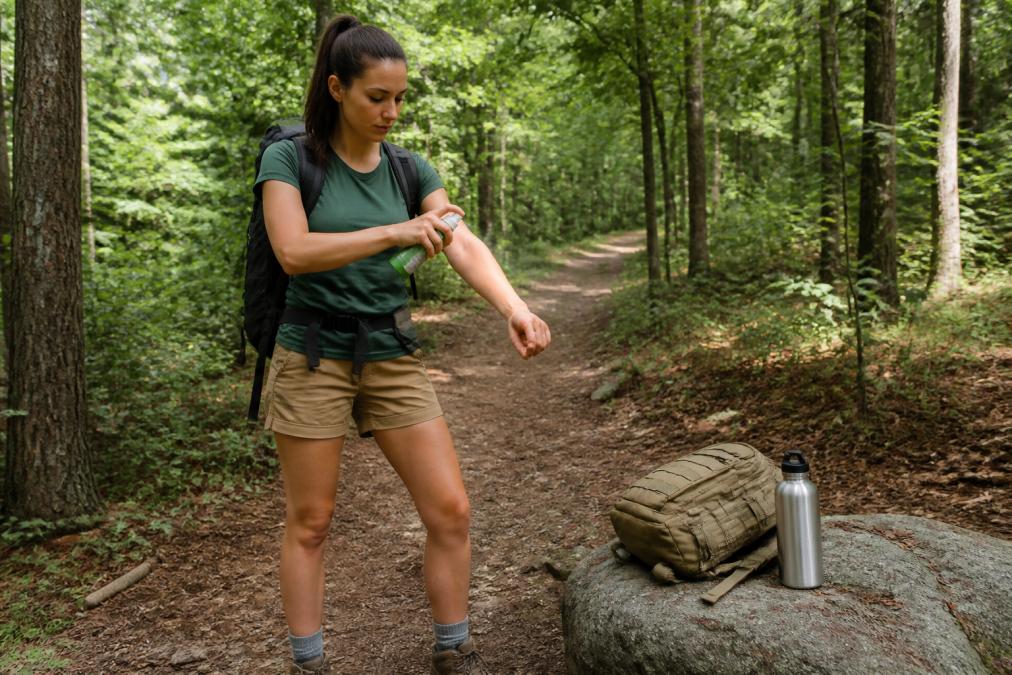
Apply a skin-contact repellent (DEET, Picaridan, or plant-based spray) to exposed skin: ankles, wrists, neck, and gaps between clothing layers. Reapply according to product instructions. TickFree Outdoors offers premium sprays designed for this layered approach, combining fast-drying formulas with long-lasting protection.
On-Trail Reapplication and Monitoring
Every two to three hours on the trail, stop and check for ticks. Run your hands over your clothing, paying special attention to seams, waistbands, and sock lines where ticks congregate. Brush any visible ticks off immediately. If using a plant-based spray with shorter duration, reapply to exposed skin.
When you return home, shower and wash your hiking clothes in hot water. Ticks survive regular wash cycles but hot water kills them. Dry your clothes on high heat for at least ten minutes. Conduct a full-body tick check, paying special attention to warm, moist areas like behind the knees, in the groin, and under the arms.
Chemical-Free and Ultrasonic Alternatives to Tick Patches
For people wanting to avoid any chemical application, ultrasonic devices represent an emerging category worth understanding.
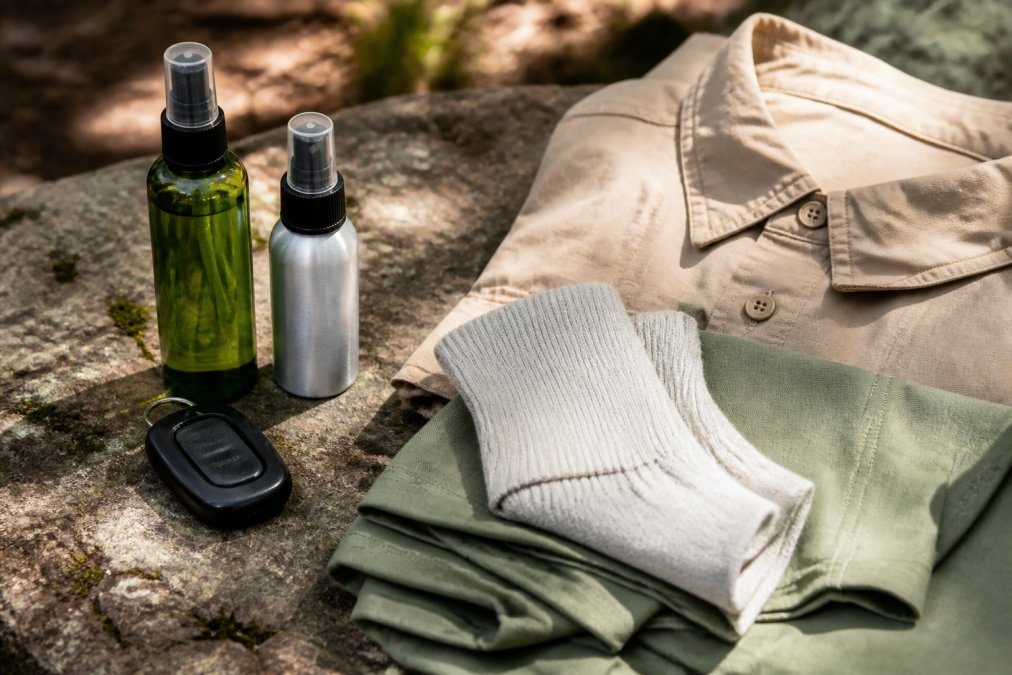
Tickless Human Ultrasonic Tick Repellent operates on a completely different principle than chemical repellents. The device emits ultrasonic pulses designed to repel ticks through sound waves rather than chemical deterrents. It's chemical-free, fragrance-free, and safe for children and pets. The Tickless ECO model provides protection for at least six months, while the Tickless Human variant lasts up to 3,000 hours of use, approximately two years of regular outdoor time.
The appeal is obvious: no chemicals, no skin contact, no reapplication. You clip the device to your clothing or gear, and it works continuously. The device is lightweight and portable, making it practical for extended outdoor stays.
The honest limitation: ultrasonic tick repellents don't offer 100% guaranteed protection. Efficacy varies depending on environmental factors and individual tick behavior. Ultrasonic devices are most suitable as part of a layered strategy rather than your sole tick prevention method. Many people use an ultrasonic device as baseline protection and add permethrin-treated clothing or a skin spray when expecting high tick exposure.
Tickless devices are not classified as pesticides by Health Canada because they don't use chemical active ingredients, meaning they're regulated differently than repellent sprays.
Comparing Efficacy: Duration of Protection and Tick-Borne Disease Prevention
Efficacy isn't just about whether a product repels ticks, it's about how long that protection lasts and whether it prevents tick-borne illnesses like Lyme disease.
Permethrin-treated clothing provides the longest protection window among practical options. A single treatment lasts through six wash cycles or six weeks of regular wear. Critically, permethrin kills ticks on contact rather than merely repelling them, this distinction matters most in high-risk areas where Lyme disease is prevalent.
Plant-based sprays typically provide four to six hours of protection, adequate for a morning or afternoon outing but insufficient for all-day hikes. The reapplication requirement adds cost over time and creates gaps in protection when you forget to reapply.
DEET and Picaridan-based sprays fall in the middle, typically providing four to eight hours of protection depending on concentration and formulation. DEET at higher concentrations (20-30%) lasts longer than lower concentrations (10%).
Tick-borne disease prevention is the ultimate measure of efficacy. Transmission typically requires 24 to 48 hours of attachment. Any method that prevents attachment or kills the tick before that window passes effectively prevents disease transmission. Permethrin-treated clothing shines here because the tick is killed on contact, eliminating transmission opportunity.
| Protection Method | Duration | Tick Killed or Repelled | Best Use Case |
|---|---|---|---|
| Permethrin-treated clothing | 6 weeks (6 wash cycles) | Killed on contact | All-day hikes, extended outdoor stays |
| DEET spray (20-30%) | 4-8 hours | Repelled | Day hikes, moderate exposure |
| Picaridan spray | 4-8 hours | Repelled | Day hikes, sensitive skin |
| Plant-based spray | 4-6 hours | Repelled | Morning/afternoon outings, low-risk areas |
| Ultrasonic device | Continuous (6 months to 2 years) | Repelled | Layered strategy, extended stays |
Choosing Your NatPat Alternative: Decision Framework
The right NatPat alternative depends on three variables: your exposure level, skin sensitivity, and activity pattern.
High-exposure outdoor enthusiasts (hiking multiple times per week, extended backcountry trips, areas with documented Lyme disease) should prioritize permethrin-treated clothing as their foundation. Supplement with a DEET spray (20-30% concentration) for exposed skin. This combination provides the longest protection window available.
Moderate-exposure hikers (weekend outings, day hikes in moderate-risk areas) can use plant-based sprays or lower-concentration DEET/Picaridan sprays applied to exposed skin. Permethrin-treated clothing remains valuable, though a single application often suffices for your activity.
Sensitive-skin users should start with plant-based essential oil formulas or Picaridan-based products rather than DEET. Picaridan specifically has a reputation for causing less irritation while maintaining efficacy. Permethrin applied to fabric only is suitable for sensitive skin when used properly.
Families with young children face a constraint: Health Canada limits DEET to 10% concentration for children under 12. Plant-based options like Bite Insect Repellent (approved for six months and older) or Picaridan-based products are more practical. Permethrin-treated clothing remains safe and effective for children of any age.
Low-risk, casual outdoor time (yard work, short walks in suburban areas) may not justify permethrin-treated clothing costs. A plant-based spray or ultrasonic device provides adequate protection for minimal exposure.
Conclusion
The landscape of tick protection has expanded far beyond simple patch solutions. Whether you choose permethrin-treated clothing, DEET or Picaridan sprays, plant-based formulas, or ultrasonic devices depends entirely on your specific situation, exposure level, skin sensitivity, and outdoor time.
TickFree Outdoors offers a complete range of tick protection solutions designed for Canadian outdoor enthusiasts. From premium sprays with fast-drying formulas to yard treatments extending protection to your home environment, we provide the tools you need to prevent tick bites across all outdoor activities. With worldwide shipping, great prices, and exceptional customer service, getting started with comprehensive tick protection is straightforward. Shop all our tick prevention products today and enjoy your outdoor adventures with genuine peace of mind.
Frequently Asked Questions
Do NatPat tick repellent stickers actually work, or are there better alternatives?
Tick patches like NatPat rely on scent-based masking and volatile organic compounds to repel ticks, but their duration of protection typically ranges from 6 to 8 hours. Many users find that Health Canada-approved alternatives such as permethrin-treated clothing, DEET sprays, or plant-based essential oil formulas offer longer-lasting or more reliable protection, especially in high-tick areas. The effectiveness depends on your exposure level, activity duration, and whether you need continuous protection throughout the day.
What should I look for in a Health Canada approved tick repellent?
Health Canada-approved tick repellents must meet safety and efficacy standards set out under the Pest Control Products Act. Look for products registered with Health Canada that specify their active ingredient (such as DEET, Picaridin, or permethrin), the concentration or strength, and the duration of protection against ticks. Approved options include sprays with 20-30% DEET for adults, permethrin treatments for clothing, and plant-based formulas registered for tick control. Always check the product label for Health Canada registration number and recommended age restrictions.
How long do different tick repellent alternatives actually protect you compared to patches?
Protection duration varies significantly by product type. Permethrin-treated clothing lasts through 6 wash cycles or about 6 weeks of wear. DEET sprays (20-30%) provide 4-6 hours of protection. Plant-based essential oil sprays typically last 5-6 hours. Ultrasonic devices claim 6-month to 2-year operational life without reapplication. Tick patches like NatPat generally last 6-8 hours. For all-day hiking or extended outdoor exposure, permethrin-treated clothing combined with a DEET or Picaridin spray offers the most reliable layered defense against tick-borne disease.
Is DEET or Picaridin better for ticks in heavily wooded Canadian areas?
Both DEET and Picaridin are effective against ticks in high-exposure areas. DEET (at 20-30% concentration) has longer historical use data and provides 4-6 hours of protection. Picaridin (at 20% concentration) offers similar efficacy with a comparable duration and is often preferred by those with sensitive skin because it has a lighter feel and less odor. Health Canada approves both for tick control. In heavily wooded regions like Ontario and British Columbia where Lyme disease risk is higher, either option works well when applied to exposed skin and clothing, though permethrin-treated clothing provides the most durable barrier protection.
This article was written using GrandRanker