

Table of Contents
- Quick Comparison: Long Lasting Tick Protection for Clothes
- Why Permethrin Is Effective Against Ticks
- Permethrin Clothing Treatment Duration: 6 Weeks or 70 Washes?
- How to Apply Permethrin to Clothes (Step by Step)
- Safety, Skin Sensitivity, and Health Canada Rules
- DIY Spray vs Factory-Treated: Cost and Convenience
- Which Option Wins for Long Lasting Tick Protection?
- Frequently Asked Questions
Last Updated: October 2, 2026
Quick Comparison: Long Lasting Tick Protection for Clothes
Long lasting tick protection for clothes comes down to one active ingredient: permethrin. Unlike sprays you apply to skin, permethrin bonds to fabric fibers and kills ticks on contact rather than simply repelling them. That distinction matters, because the ticks that transmit Lyme disease and other tick-borne illnesses are often nymphal ticks the size of a poppy seed, and they are easy to miss during a routine check.
This guide compares the main options for treating clothing and outdoor gear, from DIY spray-on treatments to factory-bonded apparel. Below, we break down how each one performs, how long protection actually lasts, and which approach fits different budgets and habits.
Here's the part most guides skip: "6 weeks" and "70 washes" are not competing claims. They describe two different treatment methods, and mixing them up is the most common mistake we see.
| Option | Protection Duration | Upfront Cost | Best For |
|---|---|---|---|
| DIY permethrin spray | Up to 6 weeks or 6 washes | Low | Treating gear you already own |
| Factory-treated apparel | Up to 70 washes | Higher | Frequent, low-maintenance use |
| Mail-in treatment service | Up to 70 washes | Highest | Protecting specialty or favorite gear |
| Aerosol fabric sprays | Up to 6 weeks | Low | Workwear and flame-resistant clothing |
Why Permethrin Is Effective Against Ticks
Permethrin works because it is an insecticide, not a repellent. Where DEET and picaridin discourage ticks from landing on you, permethrin kills them after contact with treated fabric, which is why it is such a strong prevention strategy for high-exposure activities.
The chemical binds to fabric fibers and stays active there, creating a chemical barrier across your clothing rather than a scent-based deterrent. Health Canada's Pest Management Regulatory Agency reviews and registers permethrin-based fabric treatments before they can be sold, which is why you'll see "PMRA-registered" on legitimate product labels. For a broader look at how Health Canada evaluates these products, see the Health Canada pest control product database.
The practical takeaway: permethrin doesn't just keep ticks off you, it stops them from surviving the trip. That is why public health guidance consistently points to treated clothing as one layer of a complete tick bite prevention strategy.
Permethrin Clothing Treatment Duration: 6 Weeks or 70 Washes?
Both numbers are correct, but they describe different products. DIY spray-on treatments typically hold up for about six weeks or six wash cycles, whichever comes first.
The gap comes down to bonding. A spray sits on the surface of the fabric and wears away with agitation and water. A factory process drives the permethrin deeper into synthetic fibers, so it survives far more wash cycles.
How to Apply Permethrin to Clothes (Step by Step)
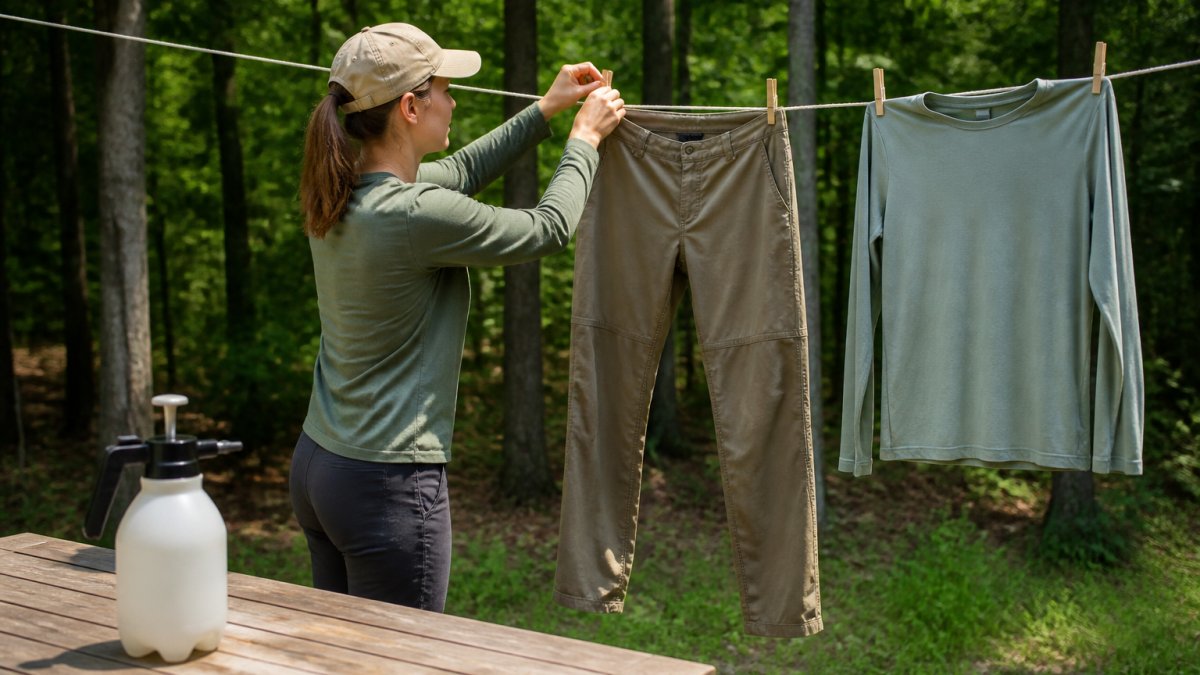
Applying permethrin correctly takes about 15 minutes plus drying time. The key is even coverage and full drying before wear, because the treatment needs to cure onto the fabric to work.
- Set up outdoors or in a well-ventilated space. Never spray indoors.
- Lay clothing flat or hang it so you can reach every surface, inside and out.
- Spray evenly, holding the bottle about 15-20 cm from the fabric. Saturate but don't soak through.
- Let it dry completely, typically 2-4 hours depending on humidity.
- Turn garments inside out and repeat if the label calls for full coverage.
- Store treated items separately from untreated clothing until you wear them.
Material Compatibility: What Permethrin Works On
Permethrin bonds best to synthetic fibers. Cotton, wool, and blends still work, but the treatment tends to fade faster on natural fabrics because the chemical has less to grip.
- Best: nylon, polyester, and synthetic blends (hiking pants, rain shells, gaiters)
- Good: cotton-synthetic blends
- Weaker: 100% cotton, wool, and heavily textured knits
- Skip: waterproof-breathable membranes you can't replace, and anything you plan to dry-clean
Storage, Shelf Life, and Reapplication Timing
Store treated clothing in a sealed bag away from direct sunlight and heat. Cool, dark storage preserves the treatment longer than hanging items in a hot garage.
Reapply when you hit roughly six wash cycles or six weeks, whichever comes first, for spray treatments. Factory-treated garments hold their protection until the wash count is reached, so keep a rough tally.
Safety, Skin Sensitivity, and Health Canada Rules
Permethrin fabric treatments are designed for clothing, not skin, and that distinction is central to their safety profile. Dermal absorption is low when the product is applied to fabric and allowed to dry fully, which is why labels stress drying time before wear.
Health Canada requires PMRA registration for permethrin products sold for fabric use, and the registration covers specific application methods and concentration limits. Follow the label exactly, and never apply a clothing treatment directly to skin.
What a reaction actually looks like
Most people wear treated clothing with no issue, but a small share of users report skin sensitivity. The pattern is usually a localized rash, redness, or itching at points where treated fabric sits against skin for long periods, such as the waistband, collar, or cuffs. It is more common in people with existing eczema or sensitive skin, and it is more likely if the garment was worn before it fully dried or if it was treated too heavily.
A practical patch-test protocol
Before committing a full kit to a treatment, run a simple test:
- Treat one small item, such as a bandana or a single sock, and let it dry completely per the label.
- Wear it against skin for a few hours on a normal day, not during heavy sweating.
- Watch for redness, itching, or rash over the next 24 hours.
- If nothing appears, proceed with the rest of your gear. If a reaction shows up, stop using that item and wash it thoroughly before deciding whether to try again.
If you have a known allergy to synthetic insecticides or a history of contact dermatitis, check with a healthcare provider before relying on treated clothing.
If a reaction does occur
- Remove the treated garment immediately and wash the skin with mild soap and cool water.
- Do not re-wear the item until it has been washed at least once and you have confirmed the reaction has fully cleared.
- If the rash spreads, blisters, or does not improve within a day or two, seek medical attention and bring the product label with you.
- Report serious reactions to the product manufacturer and to Health Canada's consumer product safety reporting channel.
Storage and shelf life from a safety angle
How you store treated clothing affects both efficacy and safety. Keep treated items in a sealed bag or bin, away from direct sunlight, heat, and food storage areas.
Never store a still-damp treated garment in a sealed bag. Trapped moisture can degrade the treatment and encourage mildew, and it defeats the drying step that makes the product safe to wear.
DIY Spray vs Factory-Treated: Cost and Convenience
The trade-off is simple on the surface: DIY sprays cost less upfront but demand reapplication, while factory-treated gear costs more and asks almost nothing of you afterward. The real decision, though, comes down to cost per protected season and how much maintenance you will realistically keep up with.
The upfront price gap
- DIY spray (Sawyer Products Permethrin Fabric Treatment, from about $14): versatile, works on gear you already own, but you reapply every six weeks or six washes.
- Factory-treated apparel (Insect Shield Repellent Apparel, from about $25): protection lasts up to 70 washes with no reapplication.
- Mail-in treatment (Insect Shield Mail-In Treatment, from about $125): best for protecting high-quality gear you already love, but you ship items away for processing.
- Aerosol fabric sprays (Rainbow Technology Tick & Mosquito Repellent, from about $12.56): formulated for workwear and flame-resistant clothing, with up to six weeks of protection.
Prices reflect listed starting costs from each brand and can change, so check current pricing before you buy.
The number most guides skip: cost per protected season
A single bottle of DIY spray treats roughly one full outfit (pants, shirt, socks, and a hat) and covers about six weeks or six washes.
Factory-treated apparel flips the math. A treated shirt or pair of pants holds up through roughly 70 washes, which for most people is several seasons of regular wear.
Mail-in treatment sits in the middle: you pay the highest per-item fee, but you protect gear you already trust and like, which avoids the cost of replacing a favorite jacket just to get factory bonding.
Where each option actually wins
- DIY spray wins if: you have a closet full of gear you already like, you only need protection for a short trip or a single season, or you want to treat items you cannot easily replace (a specific fit, a discontinued shell).
- Factory-treated wins if: you are outdoors weekly, you dislike re-treatment chores, or you want a set-and-forget layer you can grab without thinking.
- Mail-in wins if: you have specialty gear (hunting apparel, technical shells, flame-resistant workwear) that you want bonded without buying new.
The hidden variable: storage and shelf life
Neither option is maintenance-free if you store gear badly. Treated clothing kept in a hot garage or a sunny closet loses efficacy faster than gear stored cool and dark in a sealed bin. DIY-sprayed items are more sensitive here because the treatment sits closer to the surface. If you treat in spring and store through winter, plan to re-treat before the next season rather than assuming last year's application is still good.
For readers who want a single source for sprays, patches, and yard treatments, TickFree Outdoors offers comprehensive tick protection for people, pets, and yards.
Which Option Wins for Long Lasting Tick Protection?
Factory-treated apparel wins on durability, DIY spray wins on flexibility, and the right answer depends on your habits. If you're outdoors weekly and hate re-treatment chores, factory-bonded clothing delivers the longest-lasting protection per dollar over time.
Whichever route you take, treated clothing is one layer of a complete prevention strategy. Pair it with skin repellent, tick checks, and yard management for full coverage. For a one-stop option, TickFree Outdoors offers sprays, repellent patches, and yard treatments backed by fast worldwide shipping and responsive customer service.
Ticks don't announce themselves, and the nymphs that carry the highest disease risk are the hardest to spot. Building a layered defense around treated clothing, skin protection, and yard care closes the gaps that a single product can't.
Frequently Asked Questions
What can I put on my clothes to keep ticks away?
Permethrin-based fabric treatments are the most reliable option for long lasting tick protection on clothing. Unlike DEET, which is a repellent, permethrin is an insecticide that kills ticks on contact. Spray-on versions from brands like Sawyer and Rainbow Technology bond to fabric fibers and hold up through roughly six weeks or six wash cycles. Factory-treated apparel and mail-in services go further, lasting up to 70 washes because the permethrin is bonded more deeply into the material.
How long does permethrin protection last on outdoor gear?
Duration depends on how the treatment was applied. DIY spray-on permethrin, including products like Sawyer Permethrin Fabric Treatment, typically lasts around six weeks or six wash cycles. Factory-treated apparel and professional mail-in treatments hold up for up to 70 washes. UV exposure and abrasion shorten lifespan regardless of method, so retreat gear at the start of each season. Store treated items in a sealed bag away from direct sunlight to slow degradation.
Are there any side effects of wearing permethrin-treated clothing?
Health Canada regulates permethrin-treated fabrics, and factory-treated clothing is considered safe when used as directed. The main risk comes from applying liquid permethrin, not wearing dried treated fabric. Skin sensitivity is uncommon once the treatment has fully dried, but people with known chemical sensitivities should test a small area first. Never apply permethrin directly to skin, and let sprayed clothing dry completely before wearing. Wash treated items separately from other laundry.
Do tick-repellent clothes lose effectiveness after washing?
Yes, but the rate varies widely. Spray-on treatments from Sawyer and similar brands degrade after about six wash cycles. Factory-bonded apparel and mail-in treatments from Insect Shield retain protection through up to 70 washes. Use a gentle detergent without bleach or fabric softener, and tumble dry on low heat. High heat breaks down the permethrin bond faster. If you wash treated clothing frequently, factory treatment delivers far better value over time.
Is it safe to use permethrin-treated clothing for children?
Factory-treated clothing is generally considered safe for children when the permethrin is bonded into the fabric and fully dried. The concern with DIY sprays is application, not wearing, so never let children handle liquid permethrin or freshly sprayed items. Health Canada requires child-resistant packaging on permethrin products for good reason. For families, factory-treated apparel removes the handling risk entirely. Check the garment label for age guidance and follow the manufacturer's washing instructions.