

Table of Contents
- What Makes Heavy Duty Tick Protection Spray Different
- Health Canada Approved Tick Repellent Options
- DEET vs Icaridin for Ticks: Which Active Ingredient Wins
- Skin-Applied vs. Clothing-Applied Protection
- How to Prevent Tick Bites in Canada: Application and Safety
- Duration of Protection and Reapplication Guidelines
- Environmental Impact and Responsible Use
- Conclusion
Last Updated: August 9, 2026
What Makes Heavy Duty Tick Protection Spray Different
Heavy duty tick protection sprays differ from casual repellents in active ingredient concentration, duration of protection, and performance in high-exposure environments. Most casual repellents fade within hours; heavy duty formulations deliver 8 to 12 hours of protection against disease-carrying ticks. A Health Canada approved tick repellent meets specific regulatory standards for safety and efficacy, ensuring you're not gambling with unproven formulas.
The stakes matter. Tick-borne diseases like Lyme disease are genuinely concerning in Canada, particularly in forested regions across Ontario, Quebec, and British Columbia. Choosing the right heavy duty tick protection spray means understanding the active ingredient, protection window, and real-world performance.
Health Canada Approved Tick Repellent Options
Health Canada registers insect repellents through rigorous review, evaluating safety and effectiveness. "Health Canada Registered" on a label means the product meets Canadian safety standards.
DEET-Based Formulas
DEET (N,N-diethyl-meta-toluamide) remains the gold standard for long-lasting tick protection. Products containing 25% to 30% DEET provide 8+ hours of protection. OFF! Deep Woods Insect Repellent with 25% DEET is widely available and delivers reliable performance in heavily infested areas. Repel 100 offers 98.11% DEET for severe conditions, providing up to 10 hours of protection for multi-day backcountry trips. Health Canada recommends limiting DEET exposure for children under 12 to no more than 10% concentration.
Canadian Shield Insect Repellent (30% DEET) and Muskol BackCountry (30% DEET) are locally produced options formulated for Canadian outdoor conditions. The trade-off with DEET: it can damage certain plastics and synthetic fabrics, and carries a noticeable chemical odor.
Picarikin and Plant-Based Alternatives
Picarikin at 20% concentration offers a compelling alternative to DEET. Natrapel Picarikin Tick & Insect Repellent Eco-Spray and Ben's Tick Repellent deliver 12 hours of protection while avoiding chemical harshness and won't damage plastics. Picarikin carries [EXTERNAL_LINK: Public Health Agency of Canada recommendations for tick prevention | canada.ca/public-health].
For plant-based options, PureGard Botanical Repellent Spray delivers Health Canada registered protection using 30% refined lemon eucalyptus extract, providing 5 hours of tick protection and safe for families with young children. Bite Insect Repellent is Canadian-made, biodegradable, and safe for infants 6 months and older, though protection duration runs 5 hours.
DEET vs Picarikin for Ticks: Which Active Ingredient Wins
The DEET versus picarikin comparison depends on which tick species you're protecting against. Canada's primary tick-borne disease vector is the black-legged tick (Ixodes scapularis), which carries Lyme disease and is now established in parts of Ontario, Quebec, Manitoba, and British Columbia. The American dog tick (Dermacentor variabilis) and Rocky Mountain wood tick (Dermacentor andersoni) are also present, particularly in prairie provinces and British Columbia.
Active Ingredient Performance by Tick Species
Both DEET (25-30%) and picarikin (20%) are effective against black-legged ticks. DEET provides 8 to 10 hours of protection and is highly effective against American dog ticks as well. Picarikin delivers 12 hours of protection against black-legged ticks and performs comparably to DEET against American dog ticks. Plant-based alternatives (lemon eucalyptus at 30%) provide only 5 to 6 hours of protection.
Regional Tick Species and Repellent Strategy
Ontario and Quebec (black-legged tick endemic areas): DEET at 25-30% or picarikin at 20% are both excellent. Picarikin's 12-hour duration is valuable for all-day hikes. Permethrin-treated clothing is essential as a backup.
British Columbia (mixed black-legged and dog tick habitat): DEET at 30% is slightly preferred due to proven efficacy against both species.
Prairie provinces (primarily American dog ticks): Both DEET and picarikin work effectively. Dog ticks are less aggressive climbers, but combining skin-applied repellent with permethrin-treated clothing is still recommended.
Duration and Reapplication by Species
Black-legged ticks are more persistent and aggressive; reapply DEET every 8 hours or picarikin every 12 hours, or immediately after heavy sweating or water exposure. American dog ticks are less aggressive and more easily deterred by lower repellent concentrations.
Permethrin and Tick Species
Permethrin-treated clothing is effective against all Canadian tick species and is particularly valuable against black-legged ticks because they climb aggressively from ground level. Treating socks, pant cuffs, and waistband creates a chemical barrier that kills or repels ticks before they reach your skin. One permethrin application lasts through 6 washings or up to 6 weeks of outdoor use.
Choosing Based on Your Situation
For black-legged tick endemic areas: Use DEET 25-30% or picarikin 20% on skin, combined with permethrin-treated clothing. Picarikin's longer duration reduces reapplication frequency.
For mixed tick habitat: DEET 25-30% offers a slight advantage due to proven efficacy against multiple species.
For shorter outings (under 4 hours): Plant-based alternatives are acceptable if you're willing to reapply every 4 to 5 hours.
For sensitive skin or chemical concerns: Picarikin is gentler than DEET and won't damage synthetic fabrics.
Skin-Applied vs. Clothing-Applied Protection
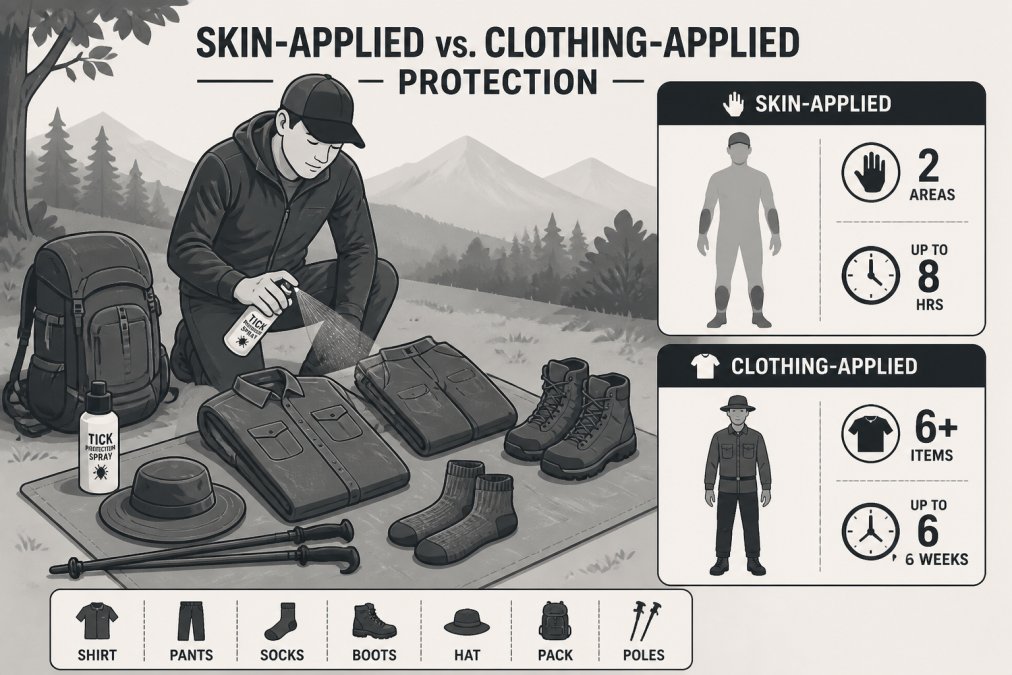
Skin-applied repellents create a protective barrier on exposed skin, lasting 6 to 12 hours depending on sweating and water exposure. Clothing-applied treatments like permethrin bond to fabric fibers and kill ticks on contact rather than just repelling them. A single treatment lasts through 6 washings or up to 6 weeks of outdoor use.
Permethrin's advantage is that it doesn't wash off when you sweat or wade through water. The limitation is that it's toxic to cats before drying. Most outdoor professionals use both approaches: permethrin on clothing for passive, long-lasting protection, plus skin-applied DEET or picarikin for exposed skin.
How to Prevent Tick Bites in Canada: Application and Safety
Proper Application Techniques
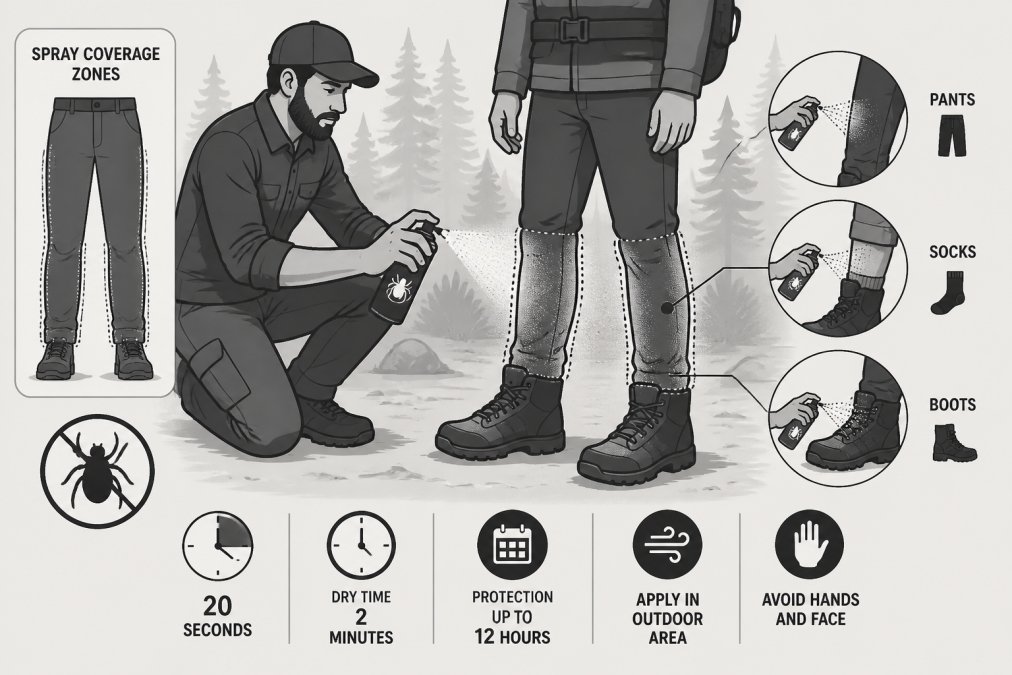
For skin-applied repellents, spray or rub the product evenly across all exposed skin, arms, legs, neck, and behind the ears. Don't miss the tops of your feet and the area around your socks. Allow the product to dry completely before putting on clothing, typically 15 to 30 minutes.
When applying to clothing, hold the spray bottle approximately 15 to 20 centimeters from the fabric and apply a light, even coat. Focus on pants cuffs, sock tops, and waistband. For permethrin products, allow at least 24 hours of drying time before wearing treated clothing.
Reapplication frequency depends on activity level and the specific product. Skin-applied repellents may need reapplication after swimming or heavy sweating. Apply enough for even coverage; excess application doesn't extend protection.
Tick Repellent and Sunscreen Compatibility
Apply sunscreen first and let it dry completely (typically 15 minutes), then apply your tick repellent on top. Avoid mixing sunscreen and repellent in the same container. Sequential application is the safest approach.
Duration of Protection and Reapplication Guidelines
| Product Type | Active Ingredient | Duration | Reapplication Trigger |
|---|---|---|---|
| DEET 25-30% | DEET | 8 hours | After swimming or heavy sweating |
| Picarikin 20% | Picarikin | 12 hours | After swimming or heavy sweating |
| Plant-based (lemon eucalyptus) | Lemon eucalyptus extract | 5 hours | Every 5 hours or after water exposure |
| Permethrin (clothing) | Permethrin | 6 weeks or 6 washings | After 6 washings or visible wear |
Protection duration varies significantly. DEET at 25% provides roughly 8 hours; at 30%, up to 10 hours. Picarikin at 20% consistently delivers 12 hours. Plant-based formulas offer 5 to 6 hours, requiring more frequent reapplication.
Reapplication becomes necessary after swimming, heavy sweating, or when reaching the product's protection window. Many outdoor enthusiasts set reminders to reapply every 6 to 8 hours during extended trips.
Environmental Impact and Responsible Use
Heavy duty tick protection sprays have environmental considerations. DEET can persist in waterways and soil, with potential effects on aquatic organisms at high concentrations. Permethrin is toxic to aquatic invertebrates. Apply only what you need and avoid unnecessary overapplication near water sources.
Plant-based alternatives like lemon eucalyptus offer lower environmental persistence and break down more readily in soil and water. Allow treated clothing to dry completely before swimming or wading.
Expired products should be disposed of according to [EXTERNAL_LINK: local hazardous waste guidelines in Canada | canada.ca/environment-climate-change]. Store repellents in cool, dry places to extend shelf-life and reduce waste.
Choosing the right heavy duty tick protection spray means matching the product to your situation. For multiple days in high-tick areas, a 20% picarikin or 25-30% DEET formula combined with permethrin-treated clothing provides comprehensive protection. For shorter outings or sensitive skin, plant-based alternatives or lower-concentration DEET products may suffice. TickFree Outdoors offers premium sprays, repellent patches, and yard treatments designed for Canadian outdoor conditions, with fast shipping and exceptional customer service. SHOP ALL and find the tick protection solution that fits your outdoor lifestyle.
Frequently Asked Questions
How long does heavy duty tick protection spray actually last on skin and clothing?
Duration varies by active ingredient. DEET-based sprays typically provide 8-10 hours of protection, while Picaridin formulas offer up to 12 hours. Plant-based options like oil of lemon eucalyptus last 5-6 hours. Permethrin fabric treatments bond to clothing fibers for up to 6 weeks or through 6 washings. Reapply skin-applied products after swimming or heavy sweating, and follow product instructions for clothing treatments.
What is the difference between DEET and Icaridin for tick protection?
Both are Health Canada-approved active ingredients with proven efficacy against ticks. DEET (typically 20-30%) provides longer protection (8-10 hours) and repels a broader range of insects. Icaridin (Picaridin at 20%) offers similar tick protection (up to 12 hours) with a lighter feel on skin and less potential damage to plastics and fabrics. Icaridin is odorless and non-greasy, making it preferable for sensitive skin. Both are effective; choice depends on personal preference and intended use.
Are natural tick repellents as effective as DEET for heavy tick areas in Canada?
Natural options like oil of lemon eucalyptus provide genuine protection but typically last only 5-6 hours compared to 8-12 hours for DEET or Picaridin. In high-risk areas like the Pacific Northwest where Lyme disease is common, synthetic repellents offer more reliable, longer-lasting coverage. Natural alternatives work best for shorter outings or as a supplementary layer. Health Canada-registered plant-based formulas are safe and effective for general outdoor use, but heavy-duty protection in tick-dense environments typically requires DEET or Picaridin.
Can I use tick repellent spray with sunscreen?
Yes, but application order matters. Apply sunscreen first and allow it to dry completely (10-15 minutes). Then apply tick repellent spray afterward. This sequence ensures both products work effectively without interference. Avoid mixing products together. If using a combination product, follow label instructions. Reapply both products according to their individual guidelines, especially after swimming or sweating. Some users prefer separate applications for better control over protection timing.
Is permethrin spray legal to use in Canada for personal tick protection?
Permethrin is approved in Canada for fabric and gear treatment (not direct skin application). Health Canada registers permethrin products specifically for treating clothing, tents, and outdoor equipment. Permethrin kills ticks on contact and lasts through multiple washings, making it highly effective for outdoor gear. It is not approved for direct application to skin. Always follow label instructions and ensure treated items dry completely before contact with skin or pets, as wet permethrin can be toxic to cats.
This article was written using GrandRanker