

Table of Contents
- 1. Best Tick Repellent for Dogs: Essential Oils That Work
- 2. How to Check Pets for Ticks After Every Outing
- 3. Tick Prevention Yard Treatments: Landscaping and Cedar Mulch
- 4. Apple Cider Vinegar: A Natural Deterrent for Pets
- 5. Grooming and Daily Inspection Techniques
- 6. Natural Repellent Sprays and DIY Recipes
- 7. Safe Removal of Ticks from Pets
- 8. Environmental Management and Seasonal Risk Assessment
- Frequently Asked Questions
Last Updated: September 15, 2026
1. Best Tick Repellent for Dogs: Essential Oils That Work
The best tick repellent for dogs pairs correctly diluted essential oils with consistent reapplication, since botanical formulas break down faster than synthetic options. This guide from TickFree Outdoors walks through the ten most effective ways to prevent ticks on pets naturally, from yard management to daily checks. Ticks carry serious pathogens, and the nymph stage is the hardest to spot because it is roughly the size of a poppy seed.
Essential oils are concentrated plant extracts that repel ticks through scent compounds ticks avoid. Cedarwood oil, lemongrass, and lavender are the most cited options. The catch is that "natural" does not mean "safe at any dose", essential oils are potent, and the difference between a helpful repellent and a poisoning incident is usually dilution and species.
Safe Dilution Ratios for Dogs
Dilution is where most homemade repellents fail. A practical working range for dogs is a 1% to 2% dilution of total essential oil in a carrier oil. In plain terms:
- Small dogs (under 10 kg): about 1 drop of essential oil per 10 ml of carrier oil (roughly 1%).
- Medium dogs (10-25 kg): about 2 drops per 10 ml (roughly 1.5%).
- Large dogs (over 25 kg): up to 3 drops per 10 ml (roughly 2%).
Use a single oil at a time when you are first testing a dog's tolerance, then blend only after you know there is no reaction. Fractionated coconut oil, sweet almond oil, and olive oil all work as carriers. Never apply undiluted oil to skin or coat, and never exceed a 2% dilution on a pet, higher concentrations do not repel ticks better, they just raise the risk of a reaction.
Breed-Specific Safety Warnings
Not every dog tolerates essential oils equally, and some pets should not receive topical oils at all.
Skip topical essential oils entirely for:
- Puppies under eight weeks old
- Pregnant or nursing dogs
- Pets with liver, kidney, or seizure disorders
- Brachycephalic breeds (pugs, bulldogs, Boston terriers, French bulldogs), whose compressed airways react more strongly to airborne oils
Species matters more than breed. Cats are far more sensitive to essential oils than dogs because they lack efficient liver enzymes for metabolizing many plant compounds. Oils that are commonly used on dogs, including citrus, peppermint, tea tree, wintergreen, and eucalyptus, can be toxic to cats even in diluted form. If a cat shares the household, never apply a dog repellent where the cat grooms, and keep treated dogs separated from cats until the coat is dry.
| Oil | Generally used on dogs (diluted) | Caution |
|---|---|---|
| Cedarwood | Yes | Avoid on broken skin |
| Lavender | Yes | Use food-grade, high-quality only |
| Lemongrass | Yes | Can irritate sensitive skin |
| Peppermint | No | Toxic to cats; irritating to dogs |
| Citrus | No | Toxic to cats |
| Tea tree | No | Toxic to dogs and cats |
| Wintergreen | No | Toxic to dogs and cats |
When in doubt, ask your veterinarian before introducing any new oil. A quick call is cheaper than an emergency visit.
2. How to Check Pets for Ticks After Every Outing
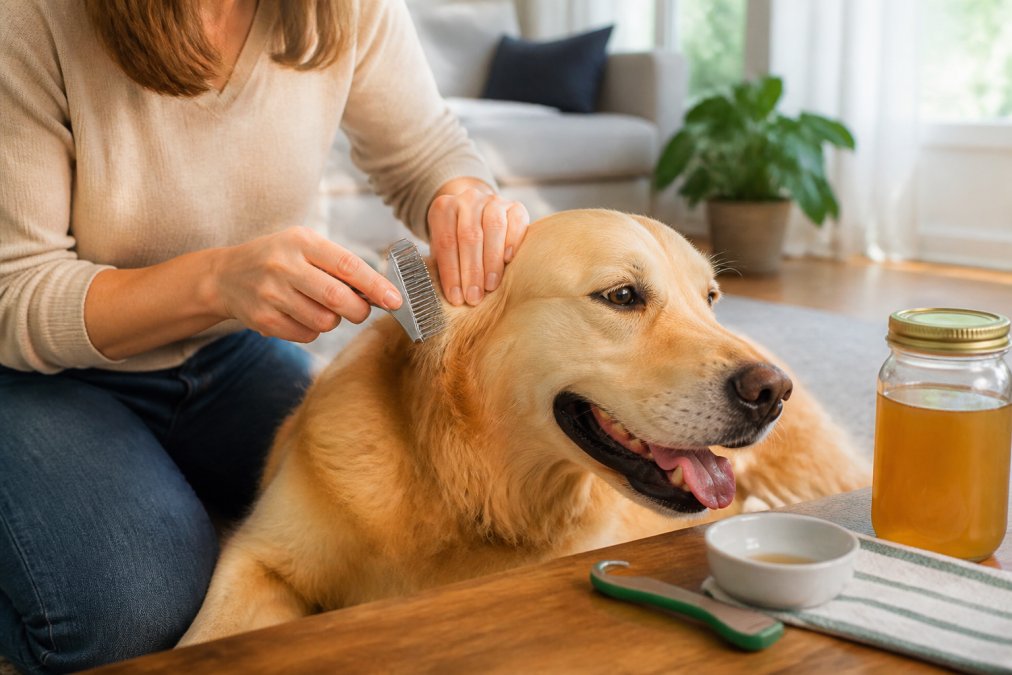
A full tick check takes about three minutes and should happen after every walk, hike, or yard session. Ticks crawl before they attach, so speed matters, the sooner you find one, the less chance it has to transmit anything.
A Step-by-Step Check
Work from head to tail so you do not miss a zone:
- Ears and head. Check inside the ear flap and around the ear canal, then along the jawline and under the chin.
- Neck and collar line. Slide your fingers under the collar and feel the skin all the way around.
- Armpits and chest. Ticks favor warm, thin-skinned folds.
- Between the toes and around the pads. Spread each paw and look between the digits.
- Groin and belly. Run your hands along the inner thighs and lower abdomen.
- Tail base and around the anus. This is a common attachment site that owners skip.
Run your fingers against the grain of the fur, then follow with a fine-toothed stainless steel comb. Feel for a small, hard bump rather than relying on sight alone, an unfed tick is easy to mistake for a scab or a skin tag. If you find one, do not pull it off with your fingers; move straight to the removal steps below.
The Canadian Veterinary Medical Association parasite guidance recommends checking pets within a few hours of outdoor activity, since transmission risk rises the longer a tick stays attached.
Timing and Frequency
During peak season, check after every outing and once more at the end of the day. Ticks that have not yet attached are usually found in the first pass; attached ticks are found on the second. In low-risk months, a daily check is still worthwhile if your pet spends time near wooded edges or tall grass.
Post-Exposure Care for the Bite Site
Most articles stop at removal. What happens next matters too. After a tick is removed, clean the bite with mild soap and water or an antiseptic wipe, then apply a small amount of plain petroleum jelly or a pet-safe soothing balm to keep the area from drying and itching. Do not apply essential oils to an open bite, the skin is compromised and absorption is higher.
Watch the site for the next few days. A small red bump is normal and usually fades. Seek veterinary advice if you see:
3. Tick Prevention Yard Treatments: Landscaping and Cedar Mulch
Tick-Repelling Plants for Your Yard
4. Apple Cider Vinegar: A Natural Deterrent for Pets
5. Grooming and Daily Inspection Techniques
6. Natural Repellent Sprays and DIY Recipes
7. Safe Removal of Ticks from Pets
8. Environmental Management and Seasonal Risk Assessment
| Method | Frequency | Best For |
|---|---|---|
| Diluted essential oil spray | Before every outing | On-pet protection |
| Full body tick check | Daily, peak season | Early detection |
| Cedar mulch barrier | Reapply annually | Yard perimeter |
| Tick-repelling plants | Plant once, maintain | Garden borders |
| Apple cider vinegar spray | Before each walk | Budget option |
| Grooming and combing | Daily | Coat and skin checks |
| DIY repellent spray | Before every outing | Custom formulas |
| Safe tick removal | As needed | Immediate response |
| Lawn mowing and leaf clearing | Weekly | Habitat reduction |
| Seasonal risk review | Monthly | Planning protection |
Frequently Asked Questions
What smells do ticks hate the most?
Ticks are repelled by strong botanical scents, especially cedarwood, lemongrass, lavender, and mint. These essential oils mask the carbon dioxide and body heat that ticks use to find hosts. Diluted sprays or cedar mulch in your yard can help. Always dilute essential oils properly before applying to pets, and test on a small area first to avoid skin irritation.
How do I keep ticks off my dog naturally?
Combine daily inspections with natural repellents. After walks, check your dog's ears, armpits, and between toes. Use a diluted essential oil spray or apple cider vinegar rinse, and keep your yard tick-friendly by mowing regularly and creating a cedar mulch barrier. Consistent grooming and yard maintenance reduce tick encounters significantly.
Are essential oils safe for natural tick prevention on pets?
Some essential oils are safe when heavily diluted, but others like tea tree and citrus can be toxic to dogs. Always dilute with a carrier oil like coconut or olive oil. Avoid using oils on cats, as their livers cannot process many compounds. Consult your veterinarian before starting any essential oil regimen, especially for puppies or pets with health conditions.
How can I make my yard less attractive to ticks?
Ticks thrive in tall grass, leaf litter, and humid areas. Mow regularly, remove leaf piles, and create a 1-meter gravel or cedar mulch barrier between your lawn and wooded areas. Plant mint or marigold borders, and consider a professional botanical yard spray. These steps reduce tick habitat and keep your pets safer during outdoor play.
What is the safest way to remove a tick from my pet?
Use fine-tipped tweezers or a specialized tick removal tool. Grasp the tick as close to the skin as possible and pull straight up with steady pressure. Do not twist or crush the tick. Clean the bite area with antiseptic and wash your hands. Save the tick in a sealed bag for identification if your pet shows symptoms later.